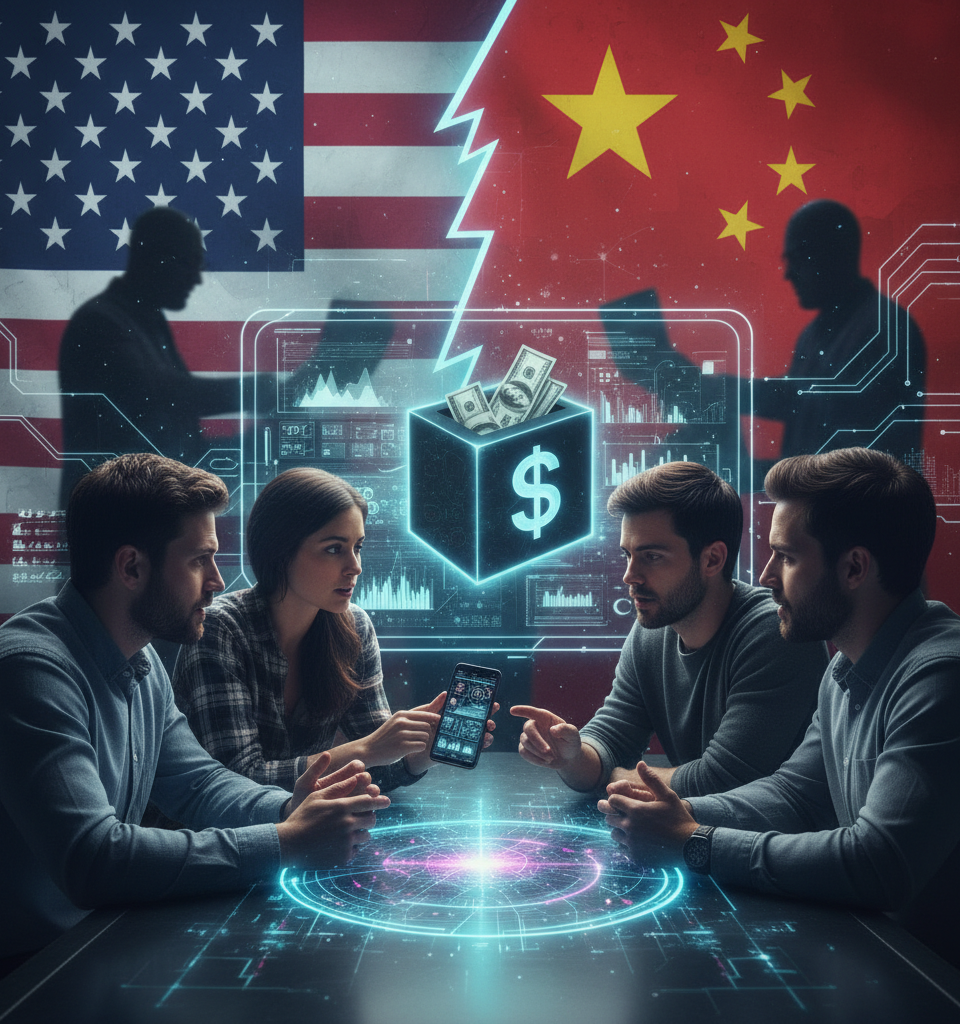
A non-profit organization named 'Build American AI,' with direct ties to a super PAC significantly funded by executives from tech giants like OpenAI and Andreessen Horowitz, is orchestrating a covert campaign utilizing social media influencers to broadcast pro-U.S. AI messaging. Simultaneously, this campaign explicitly aims to amplify public anxieties regarding China's advancements in artificial intelligence. This sophisticated influence operation, unearthed in recent investigations, underscores a growing trend of strategic, and often opaque, lobbying efforts shaping public perception around critical technological battlegrounds.
The Strategic Imperative Behind the Campaign
The emergence of 'Build American AI' and its extensive, dark-money-funded influence campaign is set against a backdrop of escalating geopolitical tensions and a fiercely competitive global race for AI supremacy. The organization's approach, which involves leveraging popular social media figures, represents a novel frontier in political messaging, blending commercial influencer marketing with national security narratives. This strategy is designed to bypass traditional media filters and directly engage a younger, digitally native audience, thereby shaping future policy debates and consumer sentiment more effectively than conventional lobbying.
Unpacking the Network and Funding Sources
At the core of this operation is a complex web of financial and political affiliations. 'Build American AI' reportedly operates as a 501(c)(4) 'social welfare' non-profit, allowing it to conceal the identities of its donors, a common practice for organizations engaged in 'dark money' political spending. Its ties to a super PAC, bankrolled by prominent figures such as OpenAI CEO Sam Altman and Andreessen Horowitz co-founder Marc Andreessen, highlight the deep pockets and vested interests driving this initiative.
The campaign's tactics include distributing carefully crafted scripts and 'talking points' to influencers, ensuring a consistent message that frames Chinese AI as an existential threat to American economic and national security interests, while simultaneously advocating for increased investment and reduced regulation for domestic AI development. Specific expenditures are difficult to trace due to the nature of 501(c)(4)s, but the significant backing suggests a multi-million-dollar effort.
Broader Industry and Geopolitical Repercussions
The implications of such a campaign ripple across industries and international relations. Domestically, the concerted effort to sway public opinion could accelerate legislative action favorable to the U.S. AI sector, potentially influencing everything from research grants to regulatory frameworks. Internationally, the deliberate stoking of fears about Chinese AI could further exacerbate trade tensions and ignite a more aggressive 'tech cold war,' potentially hindering global collaboration on critical AI safety and ethical guidelines. Companies operating in both the U.S. and China might face increased scrutiny and pressure as this narrative gains traction.
Expert Commentary on Ethical and Transparency Concerns
Industry analysts and ethics experts have voiced significant concerns about the transparency and potential manipulation inherent in this dark-money campaign. Dr. Eleanor Vance, a political communications scholar, notes, "The use of undisclosed funding combined with influencer marketing blurs the lines between genuine public discourse and orchestrated propaganda. This approach erodes public trust and makes it incredibly difficult for citizens to discern the true motivations behind the messages they consume." Others point out the potential for these campaigns to create a self-fulfilling prophecy, making geopolitical tensions worse and stifling the open scientific exchange vital for AI's responsible development.
The Path Forward: Scrutiny and Counter-Narratives
The revelation of 'Build American AI's' activities is expected to intensify calls for greater transparency in political spending and lobbying, particularly within the nascent and highly influential AI sector. Regulators and policymakers may face pressure to update disclosure laws to account for digital influence campaigns and the complex funding structures often employed. Furthermore, as the campaign continues, it will be crucial to monitor its efficacy and the potential for counter-narratives to emerge, challenging the one-sided portrayal of the U.S.-China AI dynamic. The debate is far from over, and the outcome will significantly shape the future trajectory of global AI development and international relations.