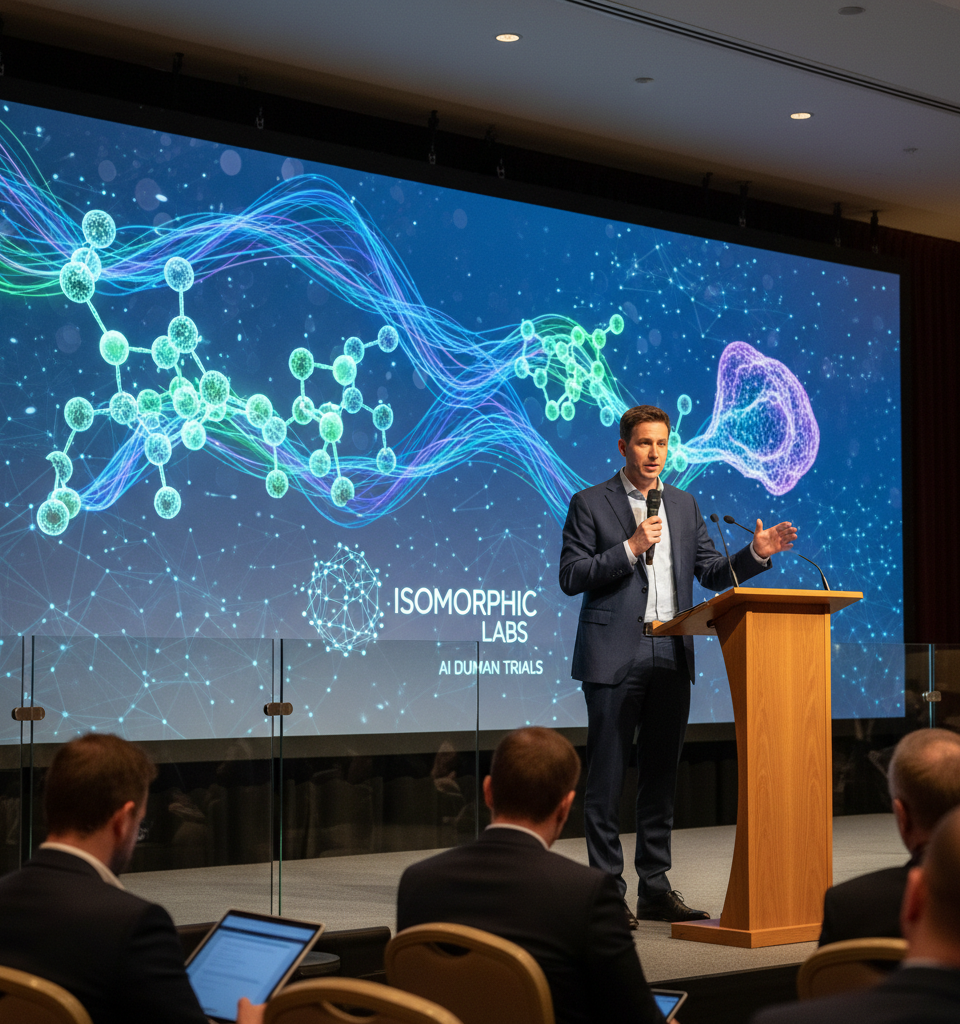
Isomorphic Labs, the AI-driven drug discovery company founded by Google's DeepMind, is preparing to move several novel drug candidates into human clinical trials. The announcement was made by President Max Jaderberg at the recent WIRED Health conference in London, where he affirmed the startup has cultivated a “broad and exciting pipeline of new medicines.” This transition from preclinical development to human testing marks a critical milestone, representing one of the most advanced applications of artificial intelligence in the traditionally laborious and costly pharmaceutical development process.
The Promise of AI in Pharmaceutical Research
This advancement underscores the growing conviction within the scientific community that AI can revolutionize drug discovery. Traditional drug development is notoriously time-consuming and expensive, often taking over a decade and costing billions of dollars per successful drug. The high failure rate—estimated to be over 90% in clinical trials—further highlights the inefficiency. AI, particularly machine learning and deep learning, offers the potential to drastically reduce these timelines and costs by predicting molecular interactions, identifying promising drug targets, and optimizing compound structures with unprecedented speed and accuracy. Isomorphic Labs, leveraging the formidable AI capabilities inherited from DeepMind's foundational research, aims to compress years of lab work into months, accelerating the delivery of vital new therapies.
Key Milestones and Strategic Partnerships
While specific drug candidates and trial details remain under wraps for competitive reasons, Jaderberg’s statement confirms an internal “pipeline of new medicines” ready for the crucial human testing phase. This progress follows Isomorphic Labs' strategic partnership forged in 2023 with Eli Lilly and Company, a deal potentially worth up to $1.7 billion, involving an upfront payment of $45 million and subsequent milestone payments. A similar partnership was also established with Novartis, underscoring the pharmaceutical industry’s growing confidence in AI-driven approaches. These collaborations provide not only significant capital but also crucial expertise in clinical development and regulatory navigation, essential for bringing AI-designed therapies to market.
Reshaping the Pharmaceutical Landscape
The impending human trials by Isomorphic Labs hold profound implications for the pharmaceutical sector. Success in these trials could validate AI as a powerful, indispensable tool for drug discovery, potentially leading to a paradigm shift in how new medicines are conceptualized and developed. Established pharmaceutical giants, traditionally relying on vast R&D departments and conventional screening methods, are increasingly looking to merge AI into their operations, a trend accelerated by the promising results from companies like Isomorphic Labs. This could foster a new era of competitive innovation, where speed and precision in molecular design become primary differentiators, potentially opening doors to treatments for currently untreatable diseases.
Expert Perspectives and Industry Outlook Analysts and industry experts view Isomorphic
Labs' announcement as a significant step forward, albeit with cautious optimism. Dr. Helena Chang, a pharmaceutical industry consultant, commented, “While preliminary, the move to human trials is a crucial validation point for the AI-first drug discovery model. The ultimate success will depend on clinical outcomes, but the promise of increased efficiency and novel targets simply cannot be ignored.” The sector is watching closely, understanding that a successful AI-designed drug could unlock substantial investor interest and further accelerate the adoption of advanced computational methods across the entire drug development lifecycle, from target identification to lead optimization.
The Road Ahead: From Trials to Treatments As Isomorphic
Labs embarks on human clinical trials, the next phase will be critical and lengthy. The company will need to navigate the rigorous stages of clinical development, including Phase 1 for safety, Phase 2 for efficacy, and Phase 3 for broader patient populations, before seeking regulatory approval. The successful progression of these AI-designed drug candidates could not only deliver novel treatments to patients but also solidify AI’s role as an intrinsic, transformative force in global healthcare. The journey ahead will be closely watched by the scientific community, investors, and patients worldwide, as the promise of artificial intelligence edges closer to tangible medical realities, potentially ushering in a new generation of therapeutic breakthroughs derived from computational innovation.