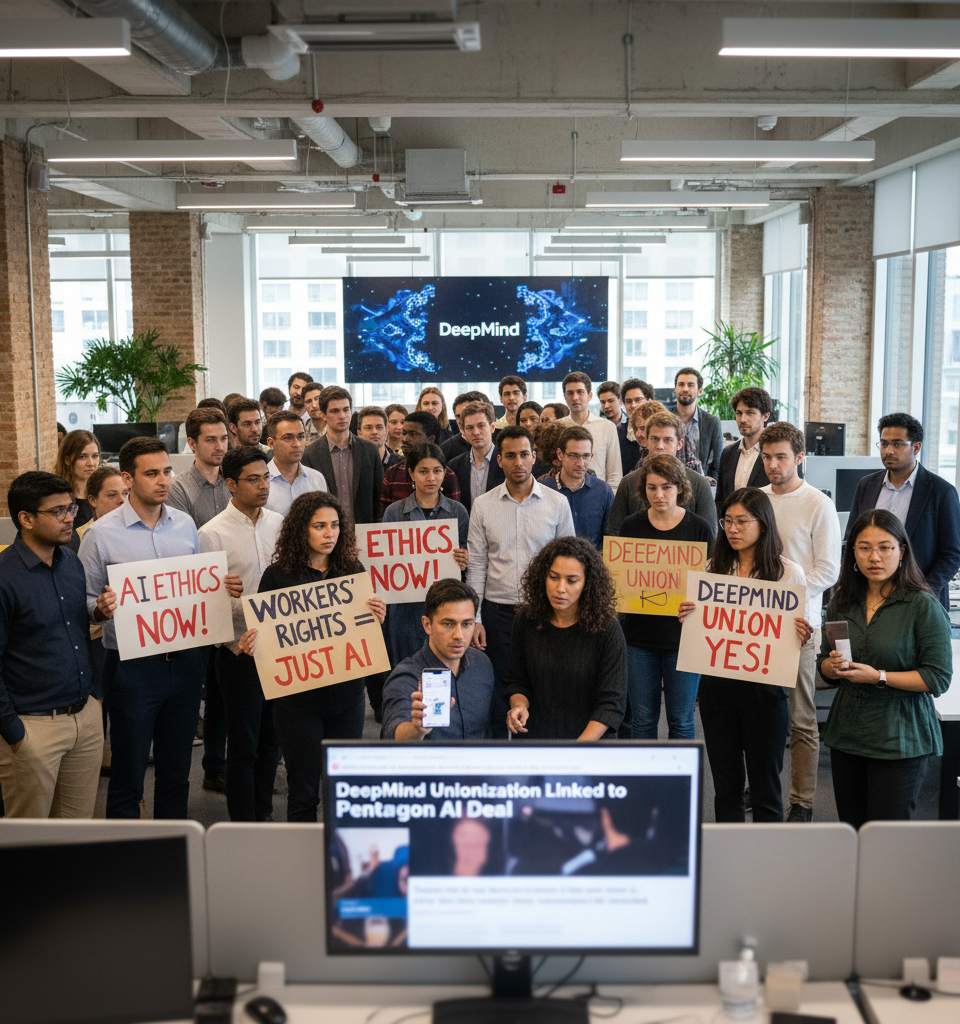
London, UK – Employees at DeepMind, Google's artificial intelligence research powerhouse, have achieved a significant milestone by voting to unionize earlier this week. This collective action, approved by a substantial majority of the London-based workforce, is understood to have been directly influenced by growing internal dissent regarding the company's alleged participation in Project Maven, a controversial U.S. Pentagon initiative to apply AI to drone footage analysis. The successful union drive at a high-profile division of Alphabet, Google's parent company, signals a potential inflection point for labor relations across the technology industry.
Context & Historical Precedent
Historically, the tech sector has largely remained an un-unionized bastion of capitalism, often characterized by high salaries, extensive perks, and a culture of individual achievement. However, in recent years, a nascent but determined labor movement has begun to take root, driven by concerns ranging from ethical AI development and workplace diversity to precarious contract work and executive compensation. Google itself has faced prior internal activism, notably with the widespread employee walkouts in 2018 protesting the company's handling of sexual harassment allegations and its prior involvement in Project Maven, which ultimately led to Google's withdrawal from the contract. The DeepMind unionization effort, however, represents a more formalized and legally recognized collective bargaining unit, setting a powerful precedent.
Key Details and Motivations
The union, established under the auspices of a leading UK trade union, reportedly secured the support of over 70% of DeepMind's eligible employees in the UK, exceeding the threshold required for official recognition. While the immediate impetus appears to be Project Maven, which critics argue blurs the lines between advanced AI research and military applications, sources close to the unionization effort indicate broader concerns. These include issues of algorithmic accountability, data ethics, and a desire for greater employee input on the ethical implications and deployment of cutting-edge AI technologies. The drive underscores a growing sentiment among tech workers that their expertise carries a moral responsibility, particularly when applied in sensitive or potentially harmful contexts.
Industry and Market Impact
This unionization at DeepMind sends a clear message throughout the tech industry, particularly to other major players like Meta, Amazon, and Apple. It demonstrates that even highly compensated, specialized employees at leading innovation companies are willing to organize to assert influence over corporate direction and ethical policies. For Google, it introduces a new dynamic into its operational framework, potentially impacting decision-making processes for future government contracts and sensitive AI research. Investors will be watching closely to see how this affects product development timelines, employee retention, and public perception, especially as ethical AI governance becomes an increasingly prominent topic in global regulatory discussions.
Expert Perspective
Dr. Anya Sharma, a labor relations expert at the London School of Economics, commented on the development: "This move by DeepMind workers is highly significant. It challenges the long-held belief that tech employees are immune to the motivations for unionization. The catalyst being an ethical concern like military AI deployment rather than purely economic demands highlights a maturing workforce that prioritizes moral and societal impact alongside compensation. This could be a bellwether for wider unionization efforts, particularly in sectors dealing with dual-use technologies where the ethical stakes are incredibly high." She added that companies ignoring employee ethical concerns do so at their peril, risking reputational damage and internal fragmentation.
What's Next: Future Implications
The immediate next step for the newly formed union will be to formalize its structure and begin negotiations with DeepMind and Alphabet management on a collective bargaining agreement. Key areas of focus are expected to include policies on ethical AI development, transparency surrounding government contracts, and employee representation in key strategic decisions concerning technology usage. The success of this union could inspire similar movements within other Google divisions globally and across the broader tech landscape. It also puts pressure on regulatory bodies to consider employee voices more explicitly in discussions around AI governance and corporate responsibility. The tech industry, long accustomed to unilateral decision-making, faces a future where employee activism and collective bargaining are poised to play a much more prominent role.