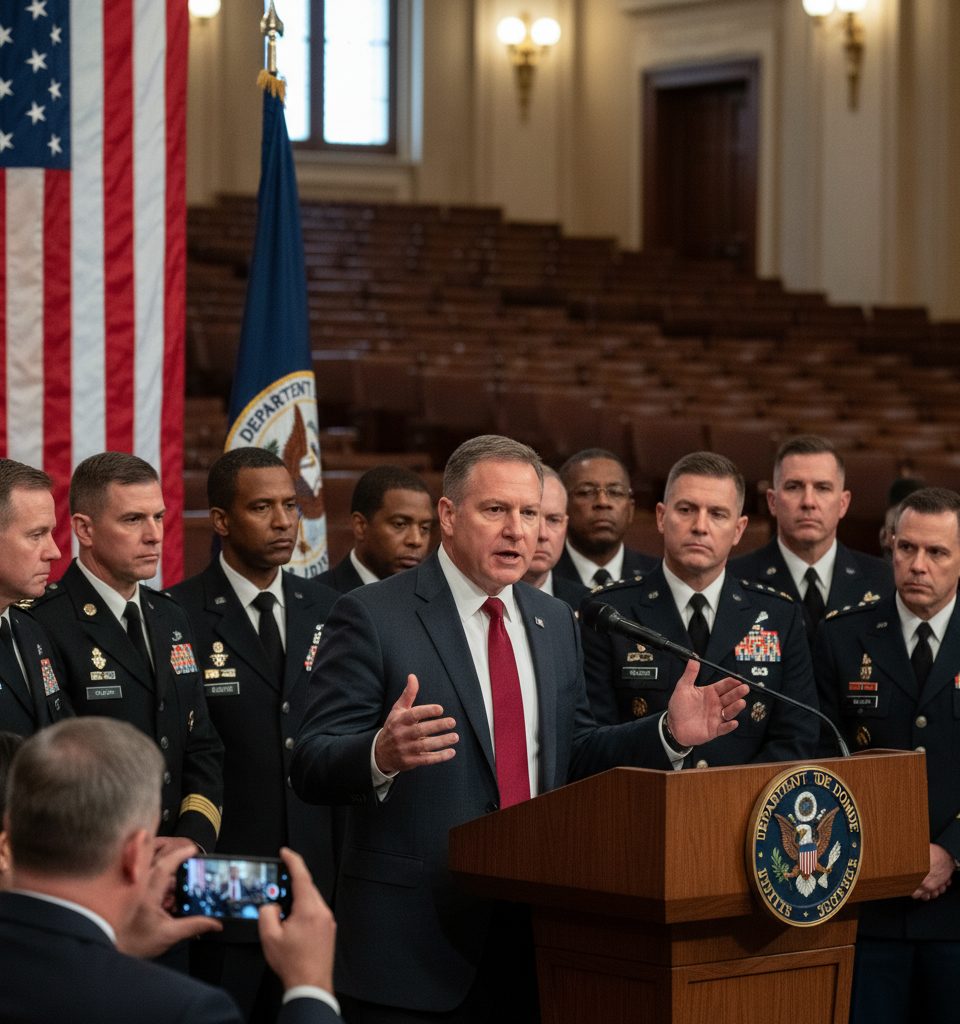
Defense Secretary Pete Hegseth on Monday delivered an Easter message to Department of Defense staff members, drawing an unexpected and striking comparison between the Christian narrative of Jesus's resurrection and the recent successful rescue of a downed U.S. airman in Iran. The remarks, conveyed through an official email, have quickly become a focal point of discussion regarding the appropriate intersection of religious expression and governmental communication, particularly within the sensitive realm of national defense.
Context and Significance: A Historical Precedent
Hegseth's comparison isn't merely a casual aside; it taps into a deeply rooted American tradition of civil religion, while simultaneously testing its boundaries. Historically, U.S. presidents and high-ranking officials have often invoked religious themes in public discourse, particularly during times of national crisis or celebration. However, directly equating a contemporary military operation, even a successful and commendable one, with a core theological event like the resurrection introduces a complex layer of interpretation. This incident occurs against a backdrop of increasing scrutiny over expressions of faith within federal agencies, particularly those with diverse workforces spanning various religious and non-religious beliefs.
Unpacking the Details: The Rescue and the Rhetoric
The central event referenced by Secretary Hegseth was the dramatic rescue earlier this month of Captain Michael "Phoenix" Miller, a U.S. Air Force pilot whose F-35 jet was downed during a reconnaissance mission over Iranian territory. Captain Miller, initially feared captured or killed, was subsequently extracted by a highly covert special operations team in a mission lauded for its precision and daring. In his Easter message, Hegseth reportedly stated, "Just as the tomb was empty on that first Easter morning, so too was Captain Miller's cockpit, for he had been raised from the dust of certain peril by the unwavering hand of American courage and, dare I say, divine intervention." This explicit language has raised eyebrows across bureaucratic and legal circles.
Industry and Political Ramifications: Navigating a Diverse Landscape
The immediate impact of Secretary Hegseth's email is multifaceted. Within the Department of Defense, it could foster a sense of shared purpose among religious employees while potentially alienating others, including those of different faiths or no faith at all. Politically, the remarks are likely to be embraced by religious conservatives, who often advocate for a more prominent role of faith in public life, while drawing criticism from proponents of strict church-state separation. Legal scholars are already weighing in on whether such pronouncements, delivered via official government channels, constitute an endorsement of religion, potentially violating the Establishment Clause of the First Amendment.
Expert Perspectives: Constitutional Boundaries and Inclusivity
Constitutional law experts are offering varied interpretations. Professor Elena Rodriguez of Georgetown Law observed, "While individuals in government are free to express their personal faith, the line becomes blurred when those expressions are made in an official capacity and disseminated through government communications. The key question is whether this creates an environment where non-Christians, or the non-religious, feel marginalized or pressured." Conversely, Dr. David Peterson, a political theologian at the American Enterprise Institute, commented, "Secretary Hegseth's remarks can be seen as an attempt to find common ground and inspiration through a culturally significant holiday. To strip all religious allusions from public discourse would be to deny a fundamental aspect of American identity for many."
Looking Ahead: Policy Review and Public Discourse
The incident is expected to prompt an internal review within the Department of Defense regarding guidelines for official communications concerning religious holidays and themes. Advocacy groups promoting church-state separation, such as Americans United for Separation of Church and State, have indicated they are monitoring the situation closely and may consider formal challenges. Furthermore, the episode is likely to fuel broader public and media discussions about the role of faith in military leadership and the appropriate boundaries of religious expression in government. Future official communications from leading federal officials will undoubtedly be scrutinized with increased intensity in the wake of Secretary Hegseth's Easter message.