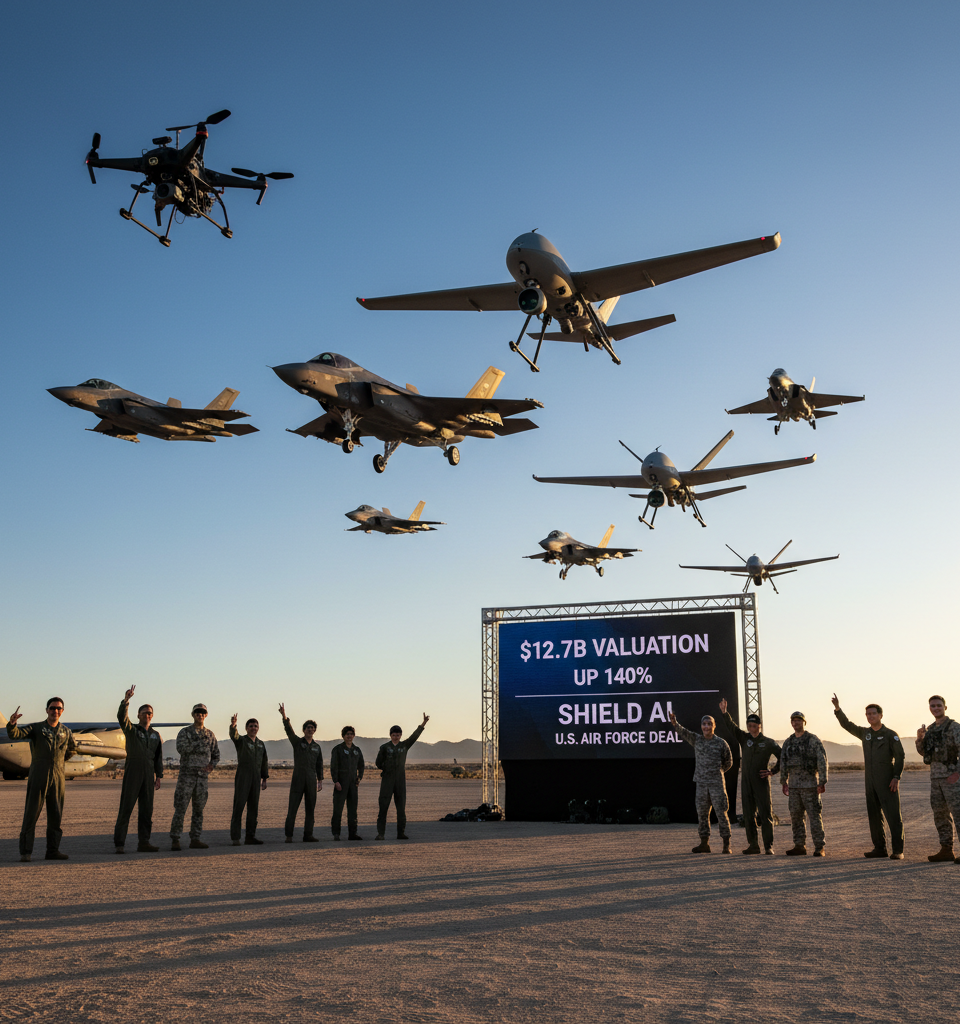
SAN DIEGO, CA – [DATE] – Shield AI, a burgeoning force in autonomous defense technology, has witnessed its valuation surge to an impressive $12.7 billion, marking an extraordinary 140% increase over the past year. This significant financial milestone comes on the heels of a landmark contract award from the U.S. Air Force, designating Shield AI as the exclusive software provider for Anduril Industries’ advanced Fury uncrewed fighter jet. The deal underscores a pivotal shift in military procurement towards intelligent, AI-driven solutions and firmly establishes Shield AI as a leading innovator in the rapidly evolving defense landscape.
A New Era of Defense Autonomy
The dramatic increase in Shield AI's valuation is not merely a financial indicator; it reflects a profound strategic recalibration within the defense sector. For decades, military hardware development has been dominated by traditional aerospace giants. However, the U.S. Department of Defense's accelerated push towards AI-powered autonomy and swarming capabilities – central tenets of its Replicator Initiative – has created fertile ground for agile, software-focused startups like Shield AI. The Air Force contract for the Fury jet is a testament to this shift, signaling a departure from legacy systems and an embrace of sophisticated, software-defined platforms designed for future conflicts.
Key Deal Specifics and Growth Drivers
While the precise financial terms of the Air Force contract remain undisclosed, its strategic importance is undeniable. Shield AI's Hivemind AI piloting software is designed to enable autonomous decision-making and collaborative flight in complex environments, moving beyond pre-programmed routes to true intelligent autonomy. This capability is critical for the Fury jet, which is envisioned as a loyal wingman operating alongside manned aircraft, performing high-risk missions without human pilots. The valuation jump from approximately $5.3 billion to $12.7 billion within a 12-month period highlights investor confidence not only in Shield AI's proprietary technology but also in the long-term revenue potential tied to the U.S. military's multi-billion-dollar autonomous systems initiatives. This growth trajectory mirrors a broader trend where defense-tech startups are attracting substantial venture capital, challenging established contractors.
Redefining the Defense Industrial Complex
Shield AI's meteoric rise and its strategic partnership with Anduril for the Fury program signify a disruption to the traditional defense industrial complex. Historically, prime contractors like Lockheed Martin and Boeing have dominated major aircraft development. However, the Air Force's embrace of a new generation of defense-tech companies indicates a willingness to prioritize speed, innovation, and software-centric design. This shift is expected to foster greater competition and accelerate technological advancements in areas like AI, robotics, and advanced manufacturing, potentially lowering development costs and speeding up deployment cycles for critical military capabilities. This paradigm shift could also pave the way for other nimble tech firms to gain traction in a sector often perceived as impenetrable.
Expert Perspectives on Strategic Impact
Defense analysts are closely watching Shield AI's trajectory. "This valuation affirms the Department of Defense's commitment to rapidly fielding next-generation autonomous systems," commented [FictionalDefenseAnalystName], a senior fellow at the Center for Strategic and International Studies. "Shield AI's Hivemind software platform is not just about making drones fly themselves; it's about network-centric warfare and enabling human-machine teaming at scale. The Air Force contract suggests a genuine belief that these startups can deliver capabilities faster and more effectively than traditional players, forcing a reevaluation of defense procurement strategies." Experts also point to the modularity and adaptability of software-defined platforms as key advantages in an era of rapidly evolving threats.
The Road Ahead: Scaling, Integration, and Global Reach
Looking forward, Shield AI faces the significant challenge of scaling its technology and integrating it seamlessly into the Air Force's operational frameworks. The success of the Fury program will be a critical benchmark for the company and for the broader adoption of AI in uncrewed combat aircraft. Beyond the U.S. Air Force, Shield AI is also exploring opportunities with allied nations, positioning its autonomously piloted systems as essential components for joint operations. Future developments likely include enhancing Hivemind’s capabilities for increasingly complex mission sets, incorporating advanced sensor fusion, and expanding its application across a wider range of air, and potentially, ground and sea platforms. The company's ability to consistently deliver on promised capabilities will be paramount in maintaining its competitive edge and realizing its full market potential.
The investment in Shield AI is a clear signal that the future of defense is intelligent, autonomous, and increasingly software-defined. As global powers race to develop cutting-edge military technologies, companies like Shield AI are at the forefront, shaping the future of warfare with their innovative AI solutions.