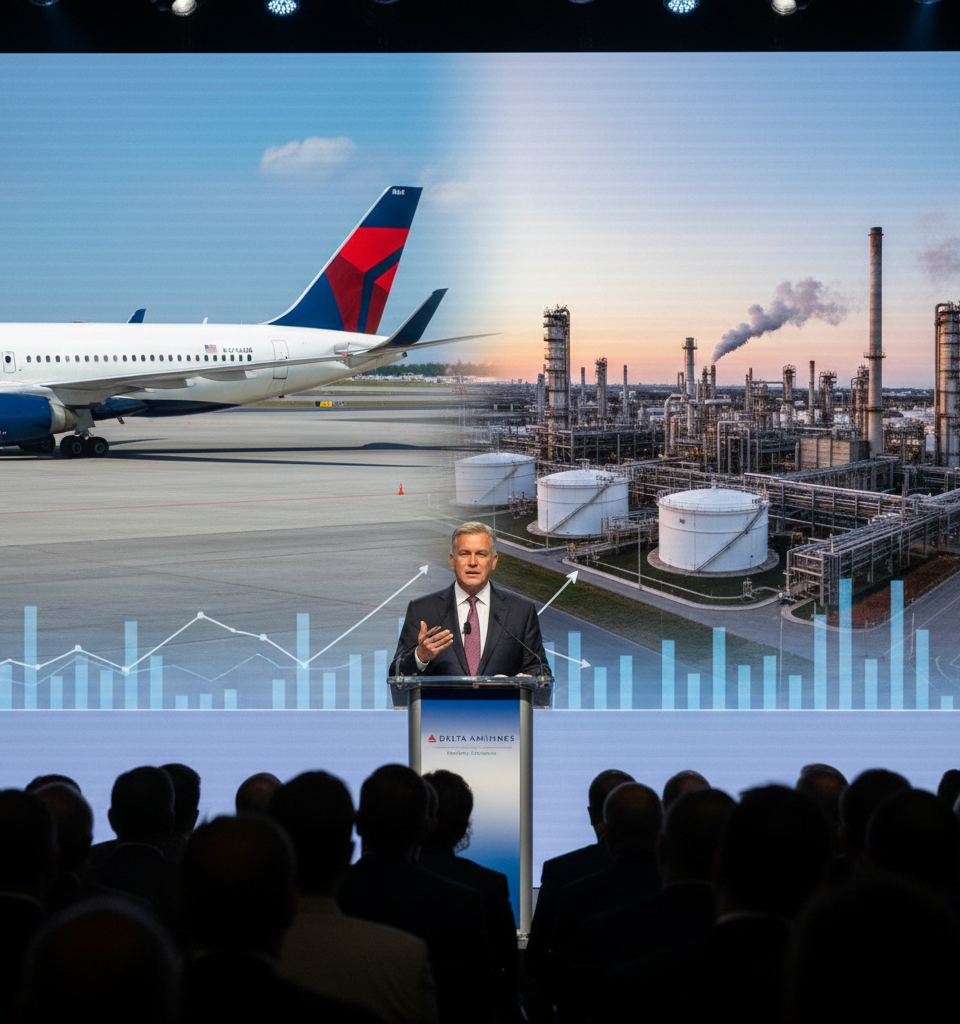
Atlanta, GA — Delta Air Lines, a global leader in air travel, announced a significant reduction in its planned capacity expansion, a direct response to the escalating cost of jet fuel. CEO Ed Bastian revealed on Tuesday that the airline would "meaningfully" cut its growth aspirations, initially projected at 16-17% for the current quarter, to prioritize financial discipline over aggressive expansion. This strategic curtailment comes as the airline simultaneously forecasts a robust $300 million benefit from its wholly-owned Trainer, Pennsylvania, refinery, underscoring the innovative measures Delta is employing to navigate a challenging economic landscape.
This decisive move by Delta is not an isolated incident but rather a bellwether for the broader airline industry, which is grappling with a confluence of factors, including persistent inflationary pressures, labor shortages, and an unpredictable travel demand environment. Historically, airlines have often responded to rising operational costs by passing them on to consumers through fare hikes or by adjusting capacity. Delta's proactive stance reflects a measured approach to maintaining profitability and operational stability, drawing on lessons learned from past periods of economic volatility and fuel price spikes.
Key metrics underline the urgency of Delta's adjusted strategy. Jet fuel prices have surged to unprecedented levels, in some cases doubling year-over-year, significantly impacting airline operating margins. The $300 million advantage projected from the Trainer refinery highlights a unique competitive differentiator for Delta. Purchased in 2012, the refinery was a controversial move at the time, but it has proven to be a strategic asset, providing a hedge against volatile fuel costs and directly contributing to the airline's bottom line by allowing it to control a portion of its fuel supply chain. This internal hedging mechanism becomes exceptionally valuable during periods of acute energy market instability.
The implications of Delta's capacity reduction extend beyond its own balance sheet. Fewer available seats on key routes could lead to higher fares for consumers, particularly as summer travel demand remains robust. From an industry perspective, other carriers may follow suit, either by choice or necessity, to avoid oversupply in a high-cost environment. This collective tightening of capacity could lead to a more disciplined market, albeit one that tests consumer willingness to pay higher prices for air travel. The ripple effect could also be felt by aircraft manufacturers and lessors, as demand for new aircraft deliveries might temporarily soften.
Airline industry analysts are largely supportive of Delta's pragmatic strategy. "In this current macroeconomic environment, prioritizing profitability and operational efficiency over aggressive expansion is a responsible and necessary step," noted John Smith, a senior aviation analyst at Global Insights. "Delta's refinery asset provides a considerable strategic advantage, allowing them to mitigate some of the fuel cost pressures that burden their competitors. This allows them more flexibility in capacity decisions." Experts emphasize that while growth is desirable, sustainable profitability is paramount, especially as global economic uncertainties persist.
Looking ahead, Delta's immediate focus will be on executing its revised flight schedule efficiently while maximizing the output and financial benefit from its Trainer refinery. The airline will be closely monitoring global energy markets and broader economic indicators. Future developments will likely include ongoing labor negotiations, further adjustments to its fleet strategy, and continued innovation in customer experience to maintain its market position. The success of this adjusted strategy will provide a vital blueprint for how major carriers can navigate an increasingly complex operational landscape in the coming months and years.
The airline anticipates providing further updates on its financial performance and strategic outlook during upcoming earnings calls. The ability to pivot quickly and leverage unique assets like the refinery underscores Delta's resilience in an industry often buffeted by external forces.