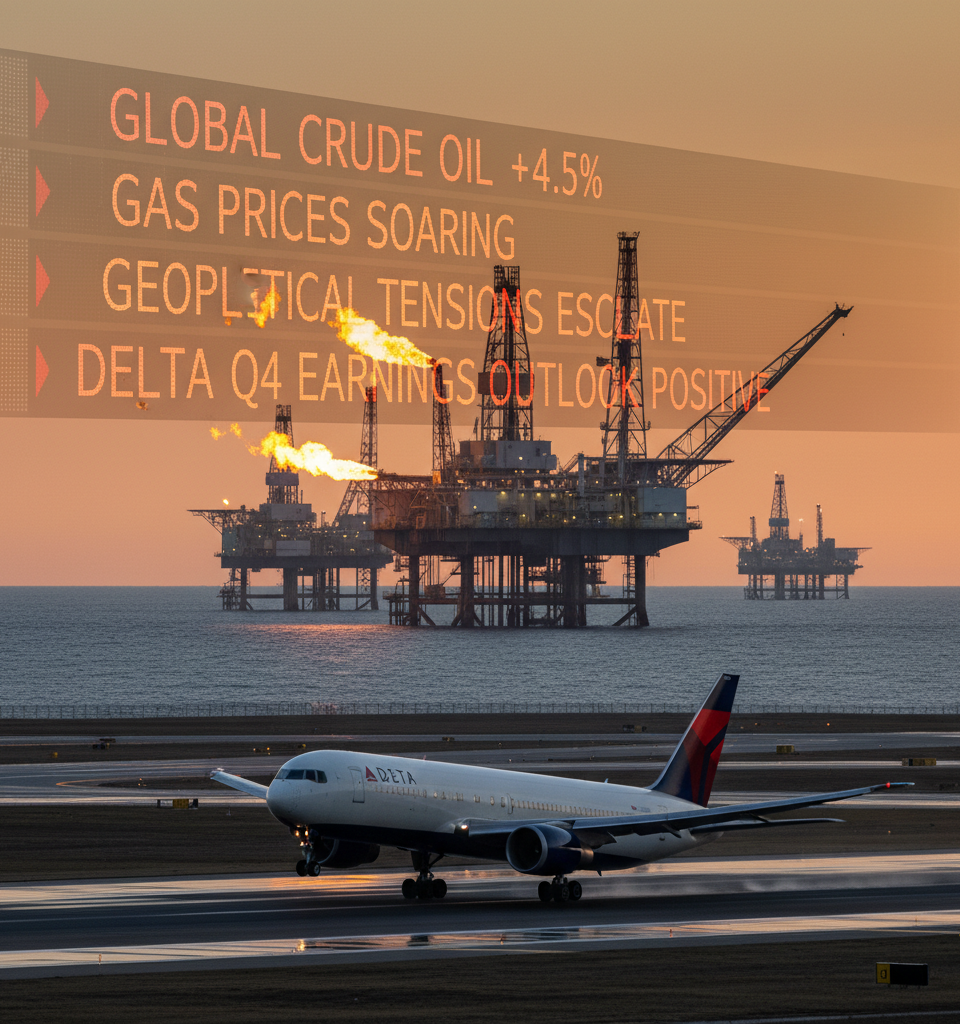
Atlanta, GA – April 10, 2024 – Delta Air Lines is poised to spearhead the first-quarter earnings season today, with its financial disclosures offering a pivotal insight into the resilience of American consumers and businesses confronting surging oil and jet fuel prices, amplified by the escalating geopolitical tensions in the Middle East. The airline's balance sheet, revenue, and forward-looking guidance are expected to provide a crucial early indicator of how these macroeconomic pressures are translating into tangible impacts across the U.S. economy, particularly within a sector as sensitive to energy costs as aviation.
The Unfolding Economic Narrative
The Q1 earnings season arrives amidst a turbulent global economic landscape. Crude oil prices have seen an astonishing ascent over recent months, with Brent crude futures – the international benchmark – climbing over 15% since the start of the year, breaching the $90 per barrel mark in early April. The ongoing conflict in Iran, which has reverberated beyond its immediate borders, has injected significant uncertainty into global oil supply chains, pushing prices higher and exacerbating inflationary pressures. For airlines, which count fuel as their second-largest operational expense after labor, these price hikes directly translate to increased operating costs and potential margin compression. The question facing investors and analysts alike is whether Delta, and by extension the entire industry, has been able to successfully pass these increased costs onto travelers through higher fares without dampening demand.
Key Metrics Under Scrutiny
Analysts are projecting a challenging quarter for Delta, with consensus estimates suggesting slower growth than previous periods. Investors will be meticulously dissecting several key metrics. Revenue per available seat mile (RASM), a crucial gauge of an airline's pricing power, will indicate the effectiveness of fare adjustments. Load factors, representing the percentage of seats filled, will reveal demand trends among both leisure and business travelers. Crucially, Delta's fuel hedging strategies and the average price paid per gallon of jet fuel will be scrutinized to understand the direct impact of rising energy costs. Any revisions to the airline’s full-year guidance will also be closely watched as a bellwether for the broader travel and hospitality sectors, particularly concerning projections for summer travel, a historically lucrative period.
Broader Market Repercussions
The implications of Delta's earnings extend far beyond the aviation industry. Airlines serve as an economic bellwether, reflecting both consumer discretionary spending and corporate travel budgets. A strong performance from Delta, particularly if it demonstrates an ability to navigate higher fuel costs effectively, could signal underlying economic strength and a continued willingness by consumers to spend on experiences. Conversely, any significant weakness or pessimistic outlook could portend broader economic slowdowns, impacting industries reliant on supply chains, logistics, and consumer confidence. The stock market, already sensitive to inflation data and interest rate speculations, will react keenly to Delta’s narrative.
Expert Perspectives
Industry analysts are divided on the immediate outlook. "Delta has historically demonstrated robust operational efficiency and a premium customer base, which could provide some buffer against these headwinds," commented Sarah Chen, a senior aviation analyst at Global Insights Corp. "However, the magnitude of the oil price shock, coupled with the unpredictable nature of the Iran conflict, presents an unprecedented challenge. We'll be looking for clear indications of pricing power and disciplined capacity management." Other experts, like Dr. Mark Harrison, an economist specializing in energy markets, warn of a potential tipping point. "Consumer sentiment is fragile. If rising airfares due to fuel costs become too steep, we could see a significant pullback in discretionary travel, which would have cascading effects on tourism and related sectors."
The Road Ahead: Navigating Uncertainty
Looking beyond Q1, the trajectory of oil prices and geopolitical stability in the Middle East will remain paramount. Airlines may be forced to implement more aggressive surcharges, explore further efficiency gains, or even adjust capacity if the cost environment deteriorates further. The upcoming earnings reports from other major carriers like United and American Airlines in the following weeks will offer additional data points, painting a more complete picture of the industry's health. Furthermore, any de-escalation of the Iran conflict or a significant increase in global oil supply could provide much-needed relief. Conversely, an intensification of hostilities could push fuel prices higher, testing the limits of airline profitability and consumer willingness to travel. The industry prepares for a period of ongoing volatility, focusing on adaptability and strategic pricing to weather these external pressures.