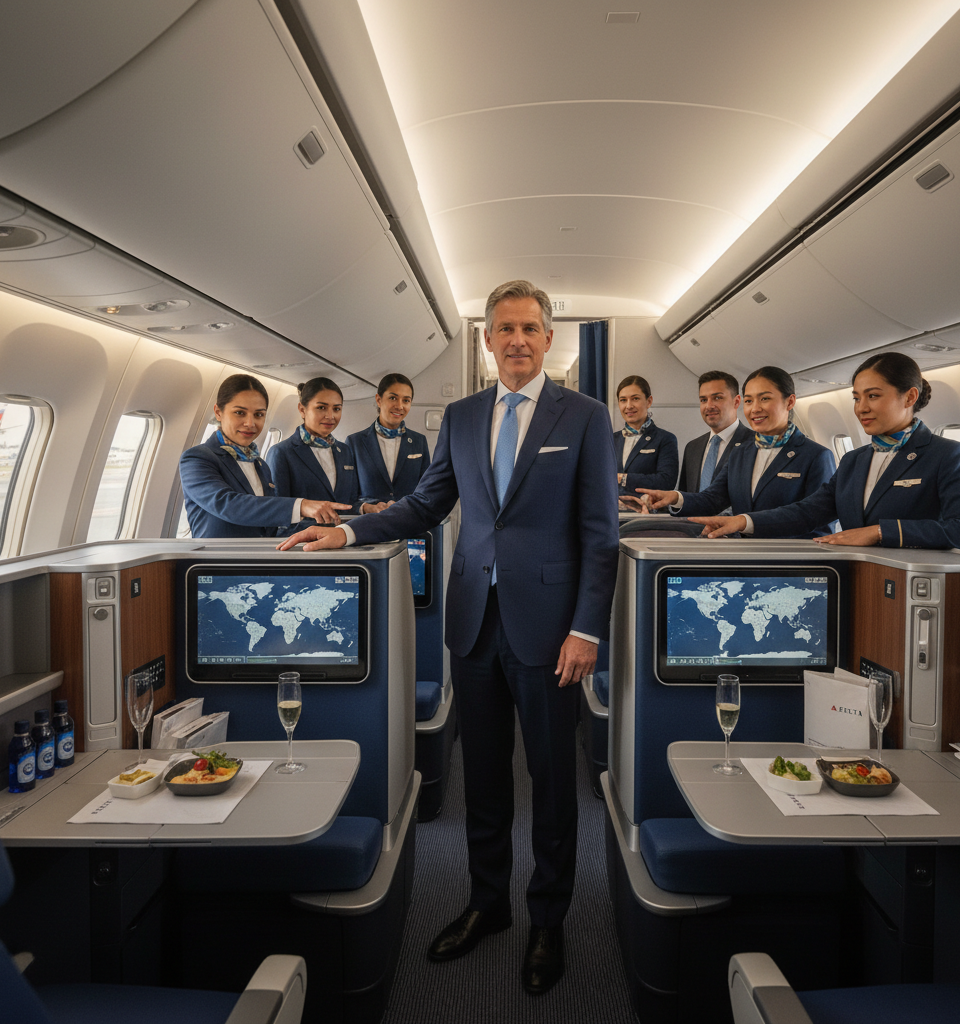
Delta Air Lines, led by CEO Ed Bastian for the past 15 years, has successfully executed a long-term strategy to establish itself as a premier brand in the highly competitive airline industry. This deliberate pivot has yielded substantial financial results, with the airline now commanding an impressive 20% more revenue per seat compared to its rivals, as confirmed by Bastian to Fortune's Editor-in-Chief Alyson Shontell. This achievement underscores a fundamental redefinition of value within the aviation sector, moving away from a solely price-driven approach to one focused on enhanced service, comfort, and reliability.
The Strategic Imperative: Beyond Low-Cost Competition
This strategic evolution did not happen overnight. For decades, the airline industry often found itself in a race to the bottom, with carriers competing primarily on price, leading to thin margins and volatile profitability. Bastian’s vision for Delta challenged this paradigm. Recognizing that a significant segment of travelers values reliability, comfort, and a seamless experience over the absolute lowest fare, Delta began investing heavily in its product. This included significant cabin upgrades, improved in-flight entertainment, enhanced airport lounges, and a robust operational performance that minimizes delays and cancellations. The declaration, “Delta is not a low-cost airline,” encapsulates a corporate philosophy that has permeated every aspect of the company’s operations.
Key Pillars of Delta's Premium Transformation
The 20% revenue premium per seat is a powerful indicator of this strategy's success. This premium is not merely a consequence of higher ticket prices in first or business class, but rather an average across all cabin classes, reflecting a higher perceived value by passengers. Delta’s investments have been multifaceted: from multi-billion dollar expenditures on new aircraft with better amenities and increased legroom, even in economy, to technological advancements enhancing baggage tracking and self-service options. The airline has also prioritized operational excellence, consistently ranking high in on-time performance and baggage handling, which significantly contributes to customer satisfaction and loyalty. Loyalty programs like Delta SkyMiles have also been strategically leveraged to incentivize repeat business and build a dedicated customer base willing to pay more for the Delta experience.
Reshaping the Airline Industry Landscape
Delta's success in cultivating a premium brand image has significant implications for the broader airline industry. It demonstrates that there is a viable and highly profitable alternative to the low-cost carrier model that has dominated much of the modern aviation narrative. This forces competitors to re-evaluate their own strategies, potentially inspiring further investments in customer experience rather than solely focusing on cost-cutting measures. While budget airlines will always cater to a specific market segment, Delta has proven that a well-executed premium strategy can capture substantial market share and command higher pricing power, directly challenging the notion that air travel is solely a commodity.
Expert Analysis: A Sustainable Competitive Advantage
Industry analysts widely commend Delta's long-term strategic clarity. John Grant, a senior analyst at OAG, noted, "Delta's commitment to consistent investment in product and service, even during downturns, has forged a brand loyalty that few other airlines can match. Their ability to command a price premium in a highly commoditized industry is a testament to the power of perceived value." Furthermore, market observers frequently highlight Delta’s strong financial discipline and a proactive approach to fleet management and network optimization as crucial elements supporting its premium positioning. The airline's strategic alliances, such as its joint ventures with international carriers, further extend its premium offering globally, providing a seamless high-quality experience across continents.
The Path Forward: Sustaining Premium and Expanding Reach
Looking ahead, Delta's challenge will be to sustain this premium positioning amidst evolving passenger expectations and potential economic shifts. The airline is expected to continue its aggressive investment in technology, personalization, and sustainability initiatives, all of which align with the values of its premium customer base. Future developments may include further enhancements to in-flight connectivity, expanded biometric boarding processes, and continued fleet modernization with more fuel-efficient and environmentally friendly aircraft. The continued focus on customer service and operational integrity will be paramount as Delta aims to solidify its status as the industry's benchmark for premium air travel, further widening the gap between itself and its competitors and potentially inspiring a new wave of customer-centric innovation across the sector.