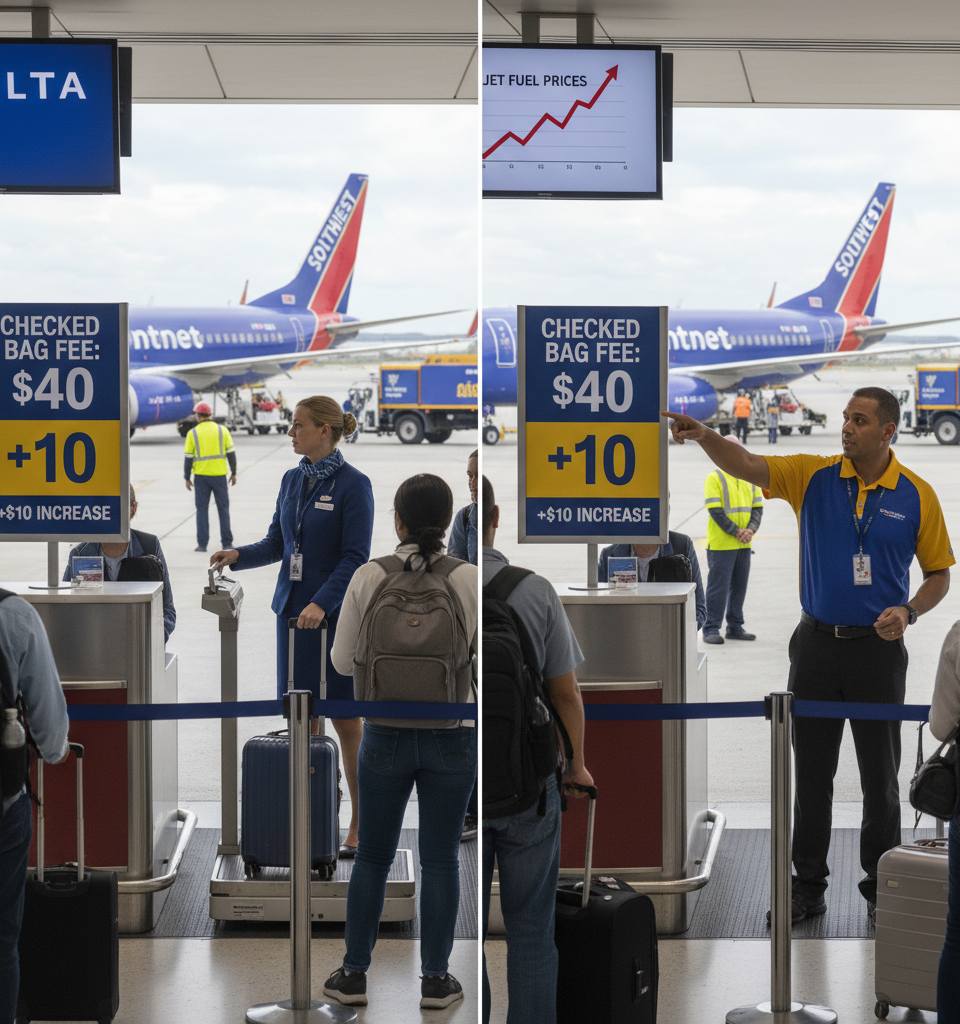
WASHINGTON D.C. – In a move reflecting mounting operational pressures across the aviation sector, Delta Air Lines and Southwest Airlines have both announced a $10 increase to their checked baggage fees. This decision aligns them with other major U.S. carriers, including United Airlines and JetBlue, which have similarly adjusted their pricing structures in recent weeks. The standardized increase across these airlines primarily targets the first and second checked bags, adding a new layer to passenger travel expenses.
The fee hike underscores the challenges airlines face in managing profitability amidst a volatile economic landscape. Jet fuel, a significant operational expense, has seen substantial price surges, directly impacting carriers' bottom lines. Industry analysts suggest that these fee adjustments are a direct response to offset these escalating costs rather than a move to generate excessive new revenue streams. Air travelers are now increasingly confronted with a patchwork of ancillary fees that contribute significantly to the overall cost of their journeys, a trend that began escalating over a decade ago.
The Ripple Effect Across the Industry
The coordinated nature of these fee increases – with Delta and Southwest following the lead of United and JetBlue – signals a broader industry-wide strategy to adapt to economic realities. While specific figures for the average cost increase per passenger have not been detailed by all airlines, the $10 per bag increment can quickly accumulate, particularly for families or travelers with multiple pieces of luggage. For instance, a return trip with one checked bag would now cost an additional $20 with the affected carriers. This pattern of synchronized fee adjustments often emerges when external cost pressures, such as fuel prices, affect all players relatively equally.
Historically, ancillary fees, including those for checked bags, seat selection, and inflight services, have become a crucial component of airline revenue. Airlines initiated these charges years ago, often citing the need to keep base ticket prices competitive while allowing passengers to customize their travel experience. However, the latest round of increases appears to be more directly linked to the current high price of jet fuel rather than a general enhancement of service offerings.
Economic Headwinds and Consumer Impact
The persistent elevation of jet fuel prices presents a significant challenge for the airline industry. Unlike some other sectors, airlines have limited flexibility to absorb sharp increases in fuel costs without impacting their financial performance. These fee adjustments are a direct mechanism to pass some of these higher input costs onto the consumer, thereby protecting profit margins. This strategy, while necessary from an airline's perspective, invariably leads to higher travel expenses for passengers, potentially influencing travel decisions for some segments of the population.
Consumer advocacy groups have frequently criticized the proliferation and increase of ancillary fees, arguing that they make the true cost of air travel less transparent. With these latest adjustments, passengers are advised to meticulously review the fee structures of their chosen airlines prior to booking and departure. The competitive landscape among airlines, traditionally driven by base ticket prices, is now increasingly influenced by the total cost of travel, including all potential fees.
Looking Ahead: Fuel Prices and Fare Structures
The immediate implication of these fee hikes is a direct increase in the cost of air travel for many passengers. For the airlines, it’s a necessary measure to stabilize financial performance in the face of macroeconomic pressures. The long-term trajectory of these fees will largely depend on the future stability of jet fuel prices and broader economic conditions. If fuel prices remain high or continue to climb, it is plausible that airlines may explore further adjustments, either through additional fee increases or, eventually, through higher base ticket fares.
Industry observers will be closely monitoring how these changes affect passenger demand and booking patterns. While air travel demand has shown remarkable resilience in recent years, consecutive increases in ancillary fees could, at some point, begin to temper this enthusiasm. Airlines often engage in a delicate balancing act, seeking to cover costs without alienating their customer base. This latest round of checked bag fee increases is a clear indicator of the current economic environment's profound influence on the operational strategies of major air carriers.