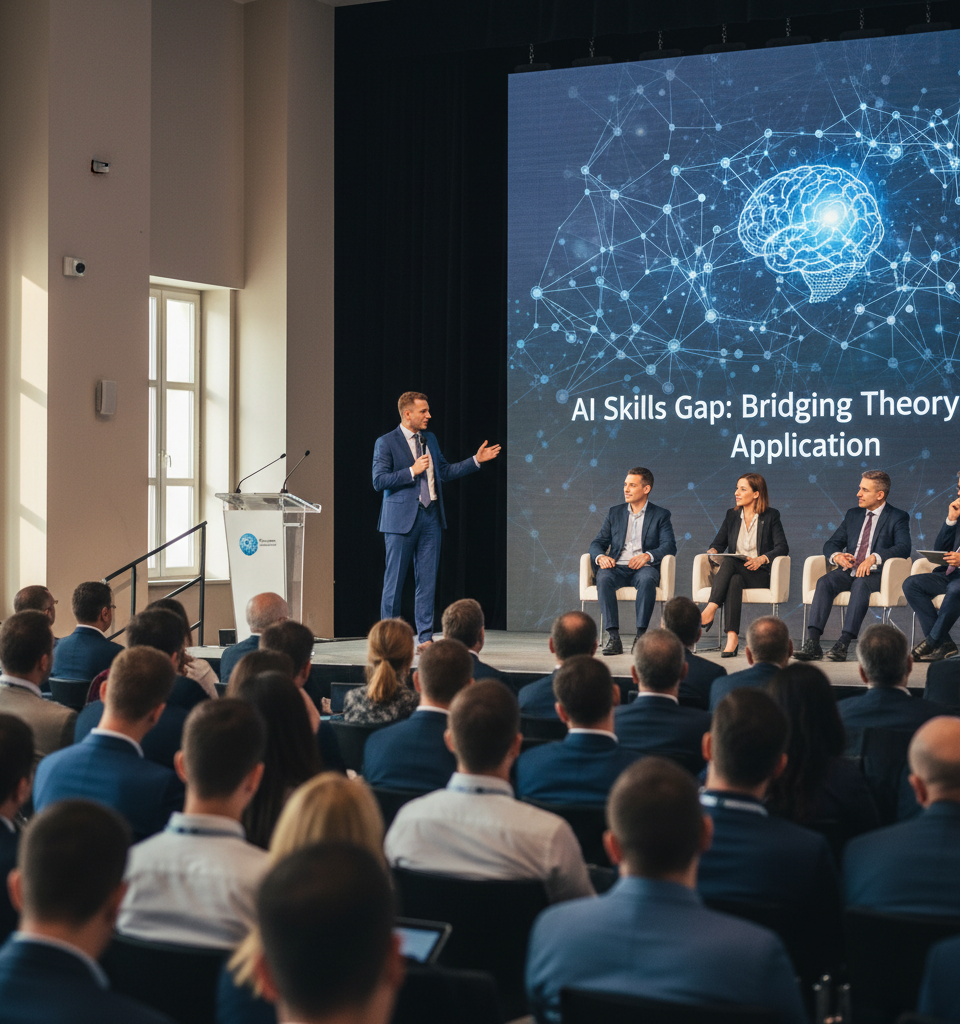
Denis Brovarnyy, a seasoned professional with extensive experience on both sides of the tech industry's hiring and training divide, is spearheading innovative educational programs designed to equip professionals with the practical skills needed for the rapidly evolving artificial intelligence landscape. His work, highlighted recently, focuses on closing the notorious gap between theoretical knowledge acquired in traditional courses and the hands-on capabilities required to contribute effectively to a tech team. This endeavor is particularly pertinent as businesses globally shift from tentative AI exploration to robust, widespread deployment, generating an unprecedented demand for a skilled workforce capable of immediately impacting AI-driven projects.
The Widening Chasm in Tech Education
For years, the tech industry has grappled with a significant disconnect between academic output and enterprise needs. Graduates, armed with degrees and certifications, often find themselves ill-prepared for the real-world complexities of software development, data science, and indeed, AI implementation. This problem has been exacerbated by the breakneck pace of technological advancement, especially in artificial intelligence. Where once companies could afford to invest in extensive on-the-job training for new hires, the current speed of AI adoption makes such luxuries increasingly costly to ignore. The financial implications of this skills deficit are substantial, with companies reporting millions in lost productivity and delayed project timelines due to a lack of immediate, deployable talent.
Brovarnyy's Approach: Beyond the Textbook
Brovarnyy's methodology emphasizes experiential learning and project-based curricula that mirror actual industry challenges. His programs are meticulously crafted to fill the interstitial space between theoretical understanding and practical application. "We're not just teaching algorithms; we're teaching how to troubleshoot, how to work effectively in a team, and how to deliver production-ready AI solutions," Brovarnyy stated in a recent interview. Instead of focusing solely on foundational principles, the curriculum integrates current industry best practices, tools, and platforms, ensuring participants are proficient in technologies like TensorFlow, PyTorch, and cloud-based AI services from AWS, Google Cloud, and Azure. This rigorous, hands-on approach aims to reduce the onboarding time for new recruits from several months to a matter of weeks, significantly increasing the return on investment for companies hiring these trained professionals.
Industry Imperative: AI's Implementation Phase
Organizations across sectors are no longer merely experimenting with AI; they are embedding it into their core operations. A recent report by McKinsey & Company indicated that 50% of companies have already adopted AI in at least one business function, up from 20% in 2017, with over 70% of respondents expecting to increase their AI investments. This shift from proof-of-concept to large-scale deployment means the demand for AI talent is exploding. Industries ranging from finance and healthcare to manufacturing and retail are actively seeking individuals who can not only understand AI principles but also design, develop, and maintain complex AI systems. The ability to manage data pipelines, deploy models responsibly, and integrate AI into existing IT infrastructures has become paramount.
Expert Insights on the Future of Tech Talent
Industry analysts and education experts largely concur with Brovarnyy's assessment. Dr. Anya Sharma, a leading analyst in workforce development, commented, "The traditional education model struggles to keep pace with an industry as dynamic as AI. Brovarnyy's focus on bridging the 'utility gap' is precisely what the market desperately needs. Companies can no longer afford to 'upskill' from scratch; they need battle-ready talent." She further noted that the value of such practical training is reflected in higher starting salaries and faster career progression for those who complete these action-oriented programs, often commanding 15-20% higher entry-level compensation compared to their purely academically trained peers.
The Evolution of Tech Education
The long-term implications of this shift are profound for both tech education providers and employers. The success of Brovarnyy's model suggests a future where internships, apprenticeships, and specialized bootcamps become even more critical components of a comprehensive tech education. Universities may need to increasingly collaborate with industry experts to refine their curricula and incorporate more real-world projects. Looking ahead, ongoing professional development will be crucial, given AI's rapid evolution. Brovarnyy's initiatives are not just about initial training; they also lay the groundwork for continuous learning pathways, ensuring that the workforce remains agile and adaptable to future technological paradigms, including the advent of more sophisticated Generative AI and Artificial General Intelligence (AGI) applications. The ultimate goal is to cultivate a sustained pipeline of highly competent AI professionals capable of driving economic growth and technological innovation. Companies will need to invest more heavily in partnerships with specialized training institutions and potentially develop internal academies that replicate Brovarnyy's model of practical, outcome-oriented learning. This collaborative ecosystem will be essential for navigating the complexities of an AI-first world and ensuring that the workforce is always one step ahead of the curve, ready to implement the next wave of disruptive technologies rather than simply reacting to them. The evolution underway promises a more skilled, effective, and resilient tech workforce capable of fully harnessing the transformative power of AI.