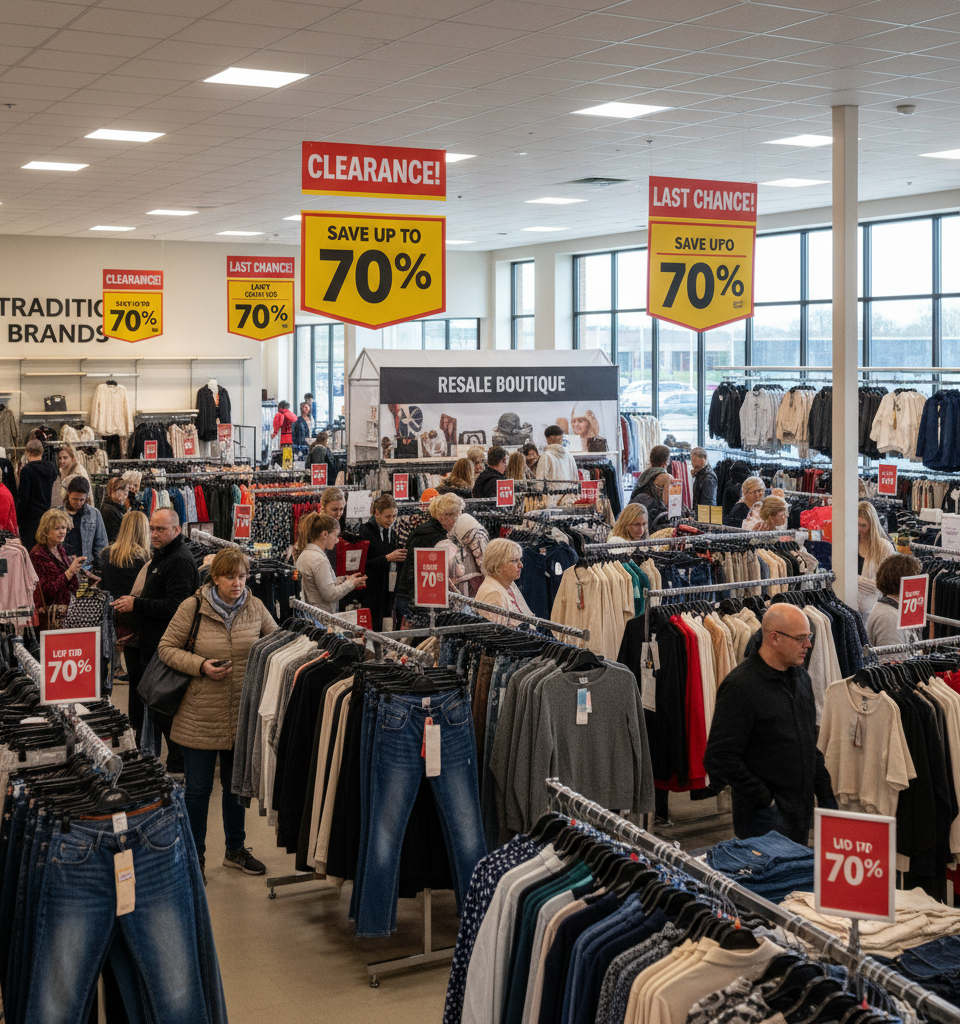
The retail industry is undergoing a significant transformation, with conventional department stores experiencing a marked decline in market share as consumers increasingly flock to the rapidly expanding secondhand apparel sector. This paradigm shift, driven by factors ranging from sustainability concerns to value-seeking behaviors, presents a formidable challenge to long-established retail models. However, new research from Bank of America analysts indicates that off-price retailers, known for their discounted new merchandise, appear to be largely immune to the competitive pressures exerted by the booming resale market.
The Rise of Resale and Department Store Decline
The ascendancy of the resale market is not a new phenomenon, but its acceleration has reached a critical juncture, directly impacting the traditional retail hierarchy. Platforms like ThredUp and Poshmark, alongside luxury consignment sites, have democratized access to pre-owned goods, making secondhand shopping a mainstream activity. This growth is particularly pronounced among younger demographics who prioritize value, unique finds, and environmentally conscious consumption. Meanwhile, department stores, many of which have struggled with declining foot traffic, dated inventories, and an inability to adapt quickly to changing consumer demands, are finding it increasingly difficult to compete on price, novelty, or sustainability credentials.
Off-Price Retailers' Unique Position
Bank of America's analysis underscores a crucial distinction between off-price retailers and their full-price department store counterparts. Off-price giants, including TJX Companies (T.J. Maxx, Marshalls) and Ross Stores, operate on a fundamentally different business model. They acquire brand-name merchandise, often current-season overstock or irregulars, at significant discounts from manufacturers and sell it at 20% to 60% below full retail. This model provides a treasure-hunt shopping experience and access to new, branded goods at unmatched prices, a proposition that the resale market, despite its growth, cannot fully replicate for consumers seeking new items.
Market Dynamics and Consumer Behavior
Data consistently points to the robust growth of the secondhand market, which is projected to reach approximately $70 billion by 2027, significantly outpacing traditional retail growth. This growth is fueled by a confluence of factors: inflation prompting consumers to seek better value, an increased focus on sustainable fashion, and the novelty of discovering unique, often out-of-production, items. While department stores struggle to retain their value proposition in this environment, off-price retailers benefit from a consumer segment that prioritizes new branded merchandise at a discount, differentiating them from both the full-price and resale sectors.
Expert Insights on Resilience
Retail analysts emphasize that off-price players derive their resilience from several core strengths. Their agile buying models allow them to react quickly to fashion trends and supply chain fluctuations, ensuring a constant flow of fresh merchandise. Furthermore, their brick-and-mortar presence offers an experiential shopping model that online resale platforms, while convenient, often cannot replicate. "The off-price model is inherently anti-competitive with secondhand largely because they offer new products, often with original tags, at prices that are competitive and often superior to what one might find for a pre-owned item of the same brand," stated one senior retail analyst. This distinction is crucial in understanding why their market share remains largely unaffected by the resale boom.
Looking Ahead: Continued Diversification and Adaptation
The retail landscape will undoubtedly continue to evolve, with further segmentation and specialization expected. Department stores face an urgent need to re-evaluate their strategies, potentially incorporating their own resale initiatives, enhancing exclusive brand offerings, or developing unique experiential retail concepts to stay relevant. Off-price retailers, while currently well-positioned, will need to maintain their keen understanding of consumer demand and supply chain efficiencies to safeguard their competitive edge. The ongoing expansion of both off-price and resale sectors signals a permanent shift in consumer purchasing habits, demanding adaptability across the entire retail spectrum for sustained success.
Strategic Implications for Investors and Retailers
For investors, the contrasting fortunes of department stores and off-price retailers in the face of resale growth present clear indicators for portfolio allocation. Companies that demonstrate flexibility, a strong understanding of their target demographic, and an ability to offer compelling value – whether through new discounted goods or curated secondhand items – are likely to thrive. Retailers, meanwhile, must acknowledge that the days of homogenous, full-price offerings are waning. The future belongs to those who successfully carve out and defend niche segments, offering distinct value propositions in a market increasingly defined by diversity and conscious consumption.