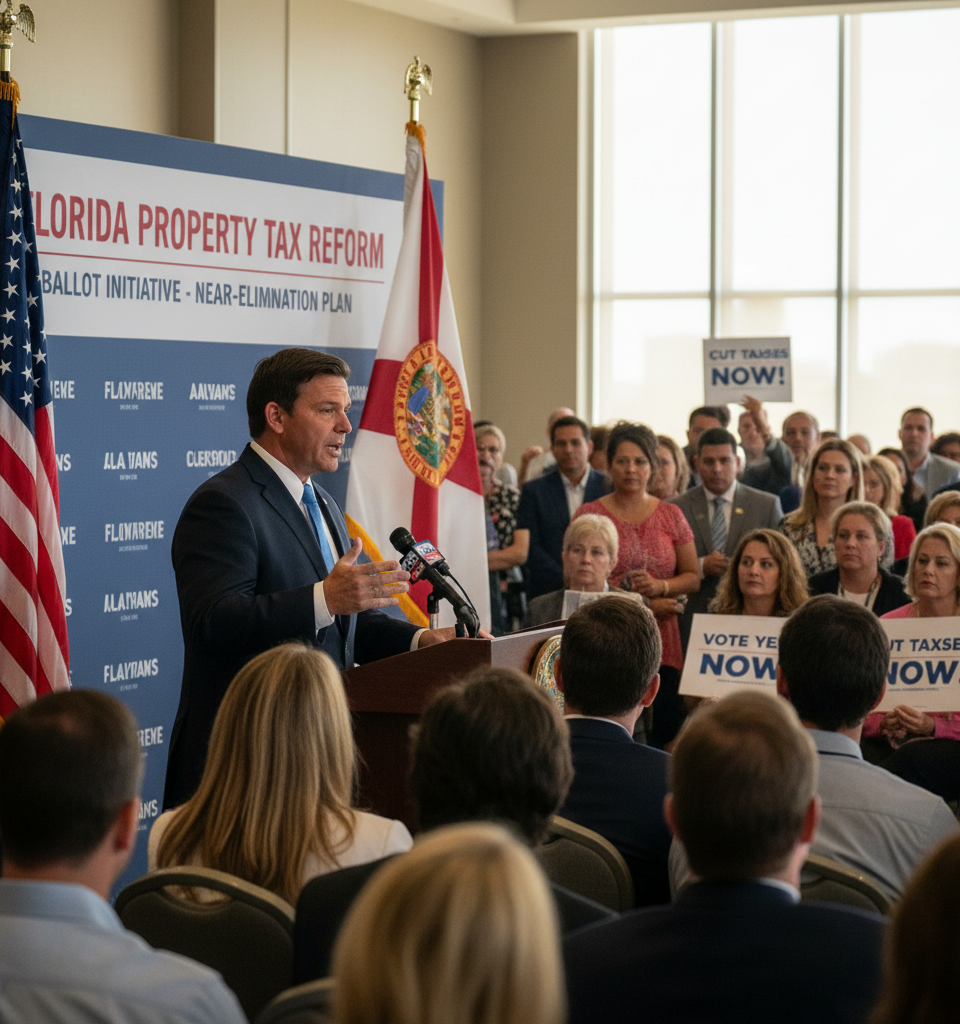
Florida Governor Ron DeSantis has announced an ambitious plan to effectively abolish property taxes within the state through a proposed ballot initiative. The governor has called for a special legislative session to commence on Monday, providing state lawmakers with the immediate opportunity to deliberate and potentially advance his proposal to voters.
Context and Significance
This initiative marks a potentially transformative shift in Florida's fiscal landscape, which has long relied on property taxes as a primary revenue source for local governments, schools, and essential services. The move comes amidst ongoing debates about affordability and government spending, particularly in a state experiencing rapid population growth and escalating property values. Eliminating property taxes, if approved, would fundamentally alter the cost of homeownership and the funding mechanisms for public services, likely necessitating a comprehensive restructuring of the state's tax system.
Key Details of the Proposal
While the specifics of how the revenue gap would be filled remain to be fully detailed, the core of DeSantis’s plan revolves around presenting Florida voters with a constitutional amendment via a ballot initiative. The special legislative session called for Monday is crucial, as lawmakers must approve the language and mechanism for placing such an initiative on an upcoming election ballot. The governor's office has framed this as a measure designed to provide significant financial relief to homeowners and businesses, potentially stimulating economic activity by reducing one of the most substantial ongoing costs associated with property ownership in the state.
Potential Economic and Social Impact
The impact of such a policy change could be far-reaching. Economically, a near-elimination of property taxes might make Florida an even more attractive destination for residents and businesses, potentially accelerating migration and investment. However, critics are likely to raise concerns about the substantial revenue hole it would create for local governments and school districts, which depend heavily on these funds. The proposal would necessitate the identification of alternative, stable, and sufficient funding sources to prevent widespread cuts to public services, from education and infrastructure to emergency services and local governance. The shift could also affect property values themselves, as the burden of annual taxation is removed.
Challenges and Legislative Pathway
The most immediate challenge lies within the special legislative session. Lawmakers must navigate the complexities of drafting a ballot initiative that is both constitutionally sound and politically viable. Gaining the necessary supermajority support in both chambers for a constitutional amendment to appear on the ballot is typically a high bar. Should it pass the legislative hurdle, the initiative would then face the ultimate judgment of Florida's electorate, requiring a certain percentage of voter approval to be enacted. Discussion during the special session is expected to be intense, focusing not only on the principle of tax elimination but also on the practicalities of implementation and the long-term financial stability of the state and local entities.
Looking Ahead
The special legislative session, beginning Monday, will be the first major test of this ambitious proposal. It will provide the initial forum for public debate and legislative scrutiny on a plan that could fundamentally redefine Florida's economic and governance model. The outcome of these discussions will determine whether Florida voters will ultimately have the opportunity to decide on a measure that could virtually eliminate property taxes, ushering in a new era for finance and residency in the Sunshine State. The path forward involves careful legislative crafting, public discourse, and, ultimately, voter approval.