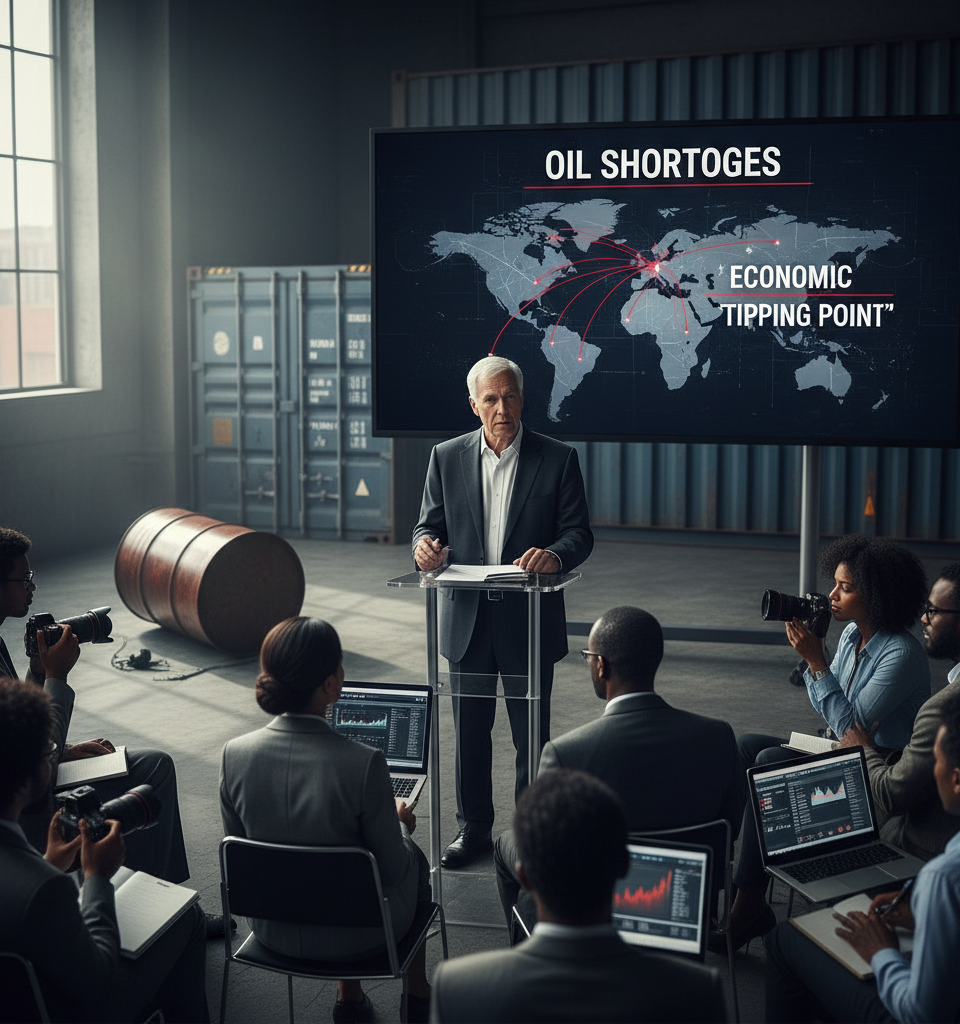
The Unseen Crisis: Cumulative Strain on Global Systems
Meyer’s insights underscore a crucial psychological and economic phenomenon: the tendency for societies to underestimate systemic risks until they manifest in an undeniable, catastrophic manner. This 'boiling frog' syndrome, where gradual increases in pressure go unnoticed until a sudden breaking point, is particularly pertinent in the context of energy markets. The global economy has been grappling with fluctuating oil prices and supply concerns for several years, exacerbated by geopolitical tensions, underinvestment in new production, and a complex energy transition away from fossil fuels. While individual price hikes or localized disruptions might be absorbed, Meyer's concern is about the cumulative strain, which could lead to an abrupt and severe breaking point.
Specifics of Vulnerability: Fragile Supply Chains and Consumer Blind Spots Speaking at a recent industry event,
Meyer elaborated on the vulnerability of current global systems. He emphasized that the intricate web of modern supply chains, optimized for efficiency over resilience, is highly susceptible to energy shocks. A major industrial plant, for instance, might rely on consistent, affordable oil for its operations, transportation of raw materials, and distribution of finished goods. A prolonged or severe energy crunch could force its closure, initiating a domino effect across interconnected industries. Meyer stressed that consumers, often insulated from the intricacies of global logistics, typically only react when tangible consequences, such as empty shelves or significant price surges for essential goods, become undeniable. The DHL CEO did not specify a particular timeline or a projected magnitude of price increase that would trigger this 'tipping point,' but his message was one of urgency regarding preparedness.
Broad Economic Repercussions and Industry-Wide Fallout Should
Meyer’s prediction materialize, the repercussions for the broader economic landscape would be immense. Industries heavily reliant on fossil fuels, including manufacturing, agriculture, and especially transportation and logistics, would face unprecedented operational challenges. Shipping costs would skyrocket, potentially leading to hyperinflation in consumer goods. Global trade flows could be severely hampered, triggering contractions in global GDP. The aviation sector, already navigating a complex recovery from the pandemic, would face renewed headwinds, while trucking and maritime shipping – the backbone of global commerce – could see significant operational curtailments, impacting everything from food supply to pharmaceutical distribution. Small and medium-sized enterprises, with less financial buffer, would be particularly vulnerable to such a crisis.
Expert Commentary: Echoes of Concern and Calls for Resilience Analysts and economic experts largely echo
Meyer’s concerns, albeit with varying degrees of optimism regarding mitigating factors. Dr. Lena Schmidt, a lead energy economist at the Global Economic Forum, commented, "Mr. Meyer's warning is astute. The global economy has developed a dangerous complacency regarding foundational energy inputs. We've seen significant underinvestment in oil and gas production capacity alongside an aggressive, albeit necessary, push towards renewables. This creates a volatile transition period where supply shocks can have disproportionate impacts." Other experts point to the need for greater strategic energy reserves, diversified energy portfolios, and enhanced supply chain visibility and resilience as critical safeguards against such a scenario.
Forward Outlook: Resilience Strategies and Geopolitical Volatility
The immediate future will likely be characterized by continued volatility in global energy markets. Geopolitical tensions, particularly in major oil-producing regions, will remain a significant wild card. Businesses, urged by leaders like Meyer, are increasingly exploring strategies to build resilience into their operations. This includes diversifying energy sources, investing in digital supply chain twins for better predictive analytics, and regionalizing production where feasible to reduce reliance on long, vulnerable global routes. Policymakers, on their part, face the delicate balancing act of accelerating the energy transition while ensuring energy security in the interim. The 'tipping point' Meyer warns of may not be a single event, but rather a culmination of sustained pressures, demanding proactive and collective global action to avert a larger crisis.