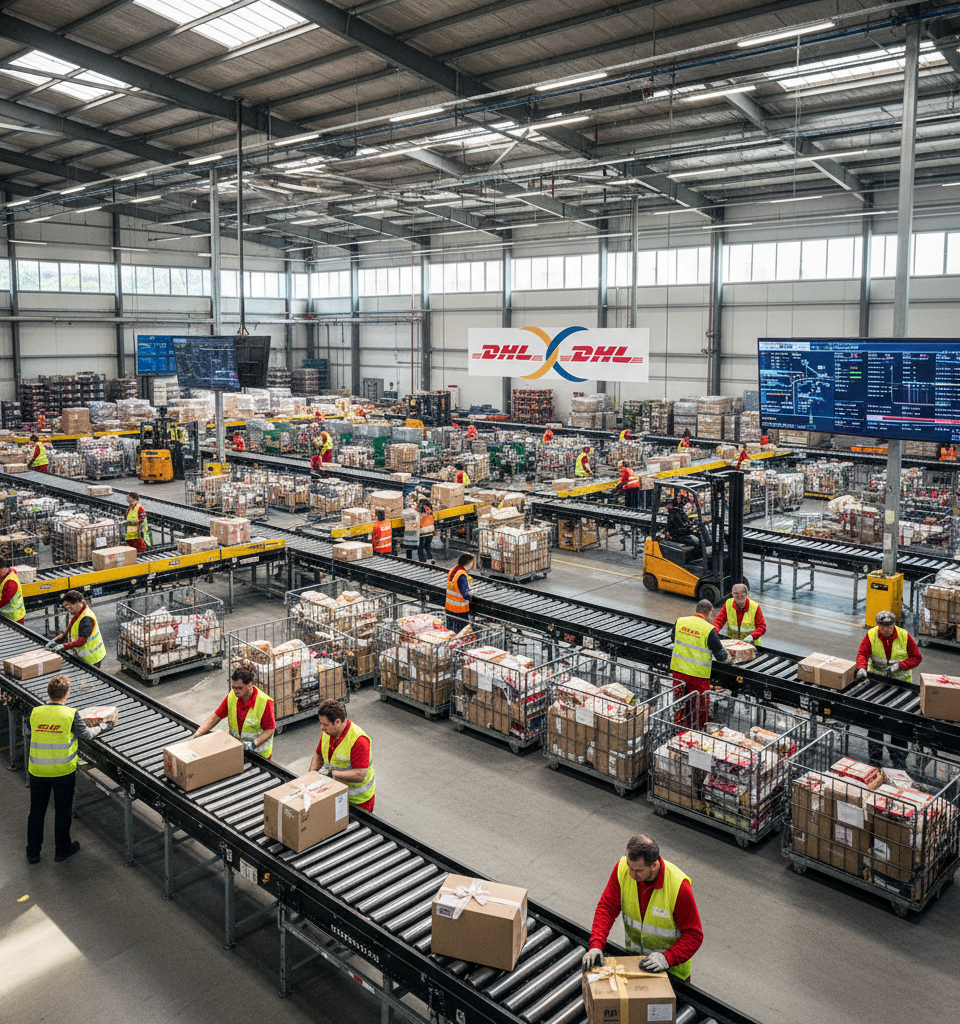
Bonn, Germany – DHL, the global logistics giant, successfully navigated the unprecedented surge in mail and parcel volumes during the recent Easter holiday season, a testament to its strategic investments in creating a unified parcel network between Deutsche Post and DHL Express. This integration, which has been years in the making, proved instrumental in managing the significant increase in e-commerce traffic, preventing widespread delays and demonstrating a new benchmark for operational efficiency in the highly competitive last-mile delivery sector.
The increasing prevalence of e-commerce, exacerbated by shifting consumer habits, has consistently challenged logistics providers to scale operations rapidly. The Easter period, while not as historically challenging as Christmas, has seen a steady rise in parcel volumes, particularly with the growth of online retail for gifting and seasonal goods. DHL's proactive approach to merging the operational capabilities of its domestic postal service, Deutsche Post, with its international express arm, DHL Express, was a crucial strategic move to address this evolving market landscape and create a more agile and robust delivery ecosystem.
Key to this success was the seamless integration of sorting facilities, transport routes, and delivery personnel. Sources within DHL indicate that investments exceeding €500 million over the past three years were directed towards upgrading infrastructure, implementing advanced AI-driven routing software, and training a flexible workforce capable of handling diverse parcel profiles. This created a powerful synergy, allowing for dynamic re-routing of packages and optimized resource allocation across both networks. For instance, smaller parcels destined for urban areas could be efficiently channeled through the Deutsche Post infrastructure, while more urgent or international shipments leveraged DHL Express's expedited services, all under a single, overarching logistical framework.
This operational triumph has significant implications for the broader logistics and e-commerce industries. It underscores the critical need for carriers to invest in adaptable and integrated systems to cope with the volatile nature of modern consumer demand. Competitors such as FedEx and UPS are likely scrutinizing DHL's model, as the ability to flex capacity and leverage existing assets across different service tiers becomes paramount. The unified network not only enhances delivery speed and reliability but also offers potential cost efficiencies by optimizing asset utilization and reducing the need for redundant infrastructure.
Industry analysts have largely lauded DHL's strategic foresight. "What DHL has achieved with this unified network is a genuine competitive advantage," stated Dr. Werner Schmidt, a logistics expert at the Kiel Institute for the World Economy. "They've essentially created a plug-and-play system for parcel delivery, allowing them to absorb peak season shocks with remarkable elasticity. This isn't just about handling more parcels; it's about doing so sustainably and reliably, which directly impacts customer satisfaction and, ultimately, market share." Schmidt estimates that this integration could yield an additional 5-7% in operational efficiency during peak periods.
Looking ahead, DHL aims to further refine its unified network. Plans include expanding automation within sorting centers, deploying more electric delivery vehicles, and integrating advanced predictive analytics to anticipate demand fluctuations with even greater accuracy. The success of the Easter peak season serves as a powerful proof of concept, suggesting that this integrated model will be a cornerstone of DHL's strategy as it navigates the continuously expanding global e-commerce market. The company anticipates continued growth in parcel volumes, forecasting a compound annual growth rate (CAGR) of 8-10% in its e-commerce-related shipments over the next five years, making the resilience of this network absolutely critical.