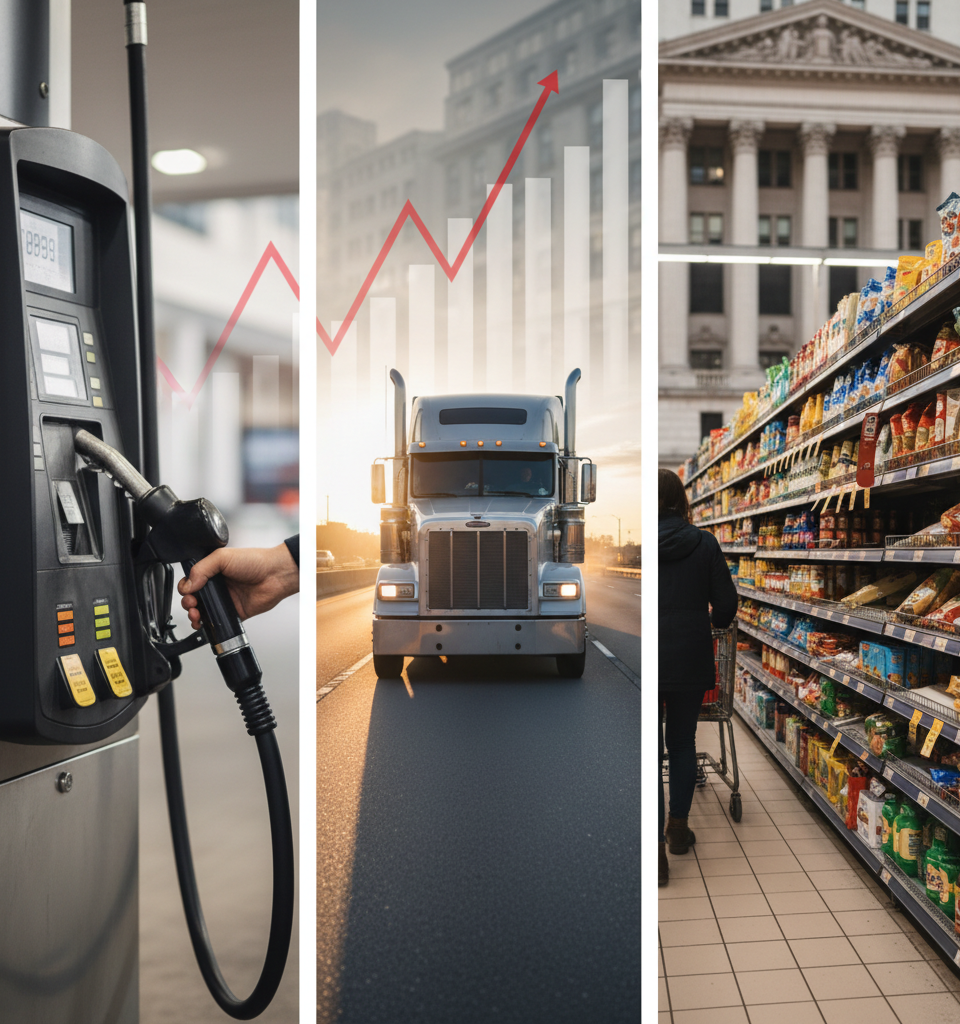
Global supply chain costs for businesses are directly threatened as record-breaking diesel prices escalate operating expenses for transportation and logistics. This economic pressure could force re-evaluation of sourcing strategies and impact the profitability of cross-border trade.
Diesel prices have reached another record high, an economic development that carries significant implications for the American economy and global commerce. Although many consumers do not directly purchase diesel, its cost is embedded in nearly every good and service, making it a critical, yet often overlooked, economic indicator. This latest surge in diesel costs arrives at a pivotal moment, influencing the Consumer Price Index (CPI) and drawing attention from key financial institutions like the Federal Reserve and the European Central Bank.
The Unseen Driver of Inflation
Diesel fuel powers the trucks, trains, and ships responsible for transporting the vast majority of goods across the country and around the world. From raw materials to finished products, nearly every item on store shelves has traveled via diesel-powered transport at some point. Consequently, rising diesel prices translate directly into higher freight costs for businesses, which are then typically passed on to consumers in the form of elevated prices for goods. The current record highs suggest a future increase in consumer expenses, particularly noticeable in essential purchases like groceries.
Economic Ripple Effects
The impact of surging diesel prices extends far beyond transportation. Agriculture relies heavily on diesel for farm machinery, meaning higher fuel costs could lead to increased food production expenses. Manufacturing, construction, and waste management industries also depend on diesel-powered equipment, indicating a broad-based inflationary pressure across multiple sectors. This pervasive influence makes diesel a fundamental component of the overall inflation picture, catching the attention of central banks tasked with managing price stability.
Central Banks and Consumer Spending
The simultaneous focus on diesel prices by the CPI, the Federal Reserve, and the European Central Bank underscores the severity of the situation. The CPI will reflect these higher costs, indicating broader inflationary trends. Central banks, particularly the Federal Reserve, monitor inflation closely when setting monetary policy. Persistent increases in fuel costs could influence their decisions on interest rates, potentially leading to measures aimed at cooling the economy to combat inflation. Similarly, the European Central Bank would be observing these trends for their potential impact on European economies, given global trade dependencies.
Looming Impact on Consumer Bills
For the average consumer, the most tangible effect of record diesel prices is likely to appear in their grocery bills. The cost of bringing food from farms to processing plants, and then to supermarkets, is heavily influenced by transportation expenses. As these costs climb, food retailers and suppliers are expected to adjust their pricing. This anticipated rise in grocery costs would place additional strain on household budgets already contending with broader inflationary pressures.
Forward Outlook
As diesel prices remain at record levels, businesses and consumers alike face a period of heightened financial pressure. Companies may need to re-evaluate logistics strategies, potentially seeking more efficient shipping methods or adjusting supply chains to mitigate costs. For individuals, increased budgeting for essential goods, particularly food, could become necessary. The trajectory of diesel prices will continue to be a critical indicator for inflation trends and the broader economic health in the coming months, influencing policy decisions and household spending patterns alike.