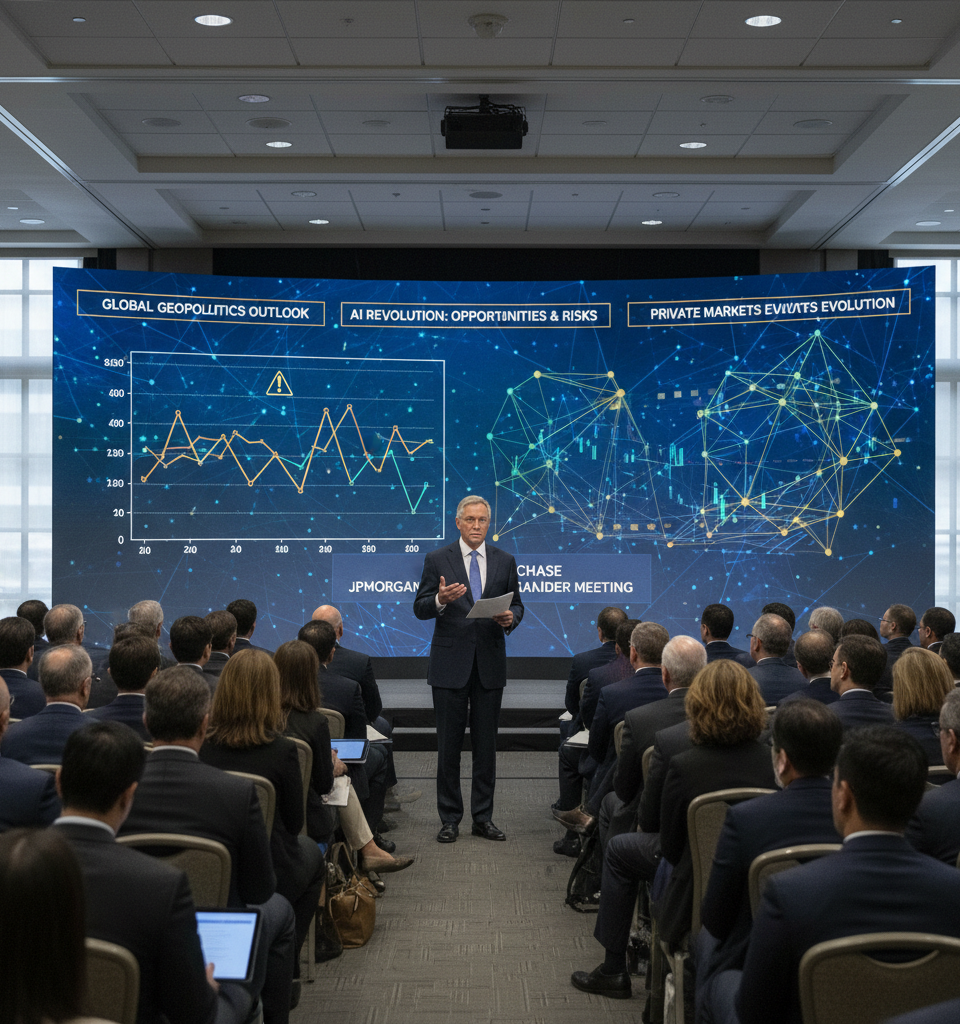
NEW YORK, NY – April 8, 2024 – Jamie Dimon, the influential Chairman and CEO of JPMorgan Chase & Co., has delivered a comprehensive and cautionary message in his highly anticipated annual letter to shareholders, emphasizing a confluence of interconnected risks that could significantly impact the global economy and American society. Released today, the letter dissects an intricate web of challenges ranging from geopolitical instability and the profound implications of artificial intelligence to potential opaque vulnerabilities within private markets, all while framing these concerns against the backdrop of America's impending 250th anniversary and a perceived erosion of national unity.
Dimon's annual missive is widely regarded as a significant barometer of financial and economic sentiment within the banking industry. This year, it carries particular weight, transcending mere financial reporting to touch upon societal introspection. By drawing a parallel between present-day challenges and the nation's historical milestones, Dimon underscores a belief that economic prosperity is inextricably linked to stable domestic policy and a unified national purpose, lamenting a decline in civic responsibility and proposing a recommitment to fundamental American ideals.
Central to Dimon’s assessment are several key points. He expressed deep concern over the escalating geopolitical landscape, citing the ongoing conflicts in Ukraine and the Middle East, along with intensified U.S.-China tensions, as significant threats to global trade and stability. On artificial intelligence (AI), Dimon articulated both its immense potential for societal transformation and its inherent dangers, from cybersecurity threats and job displacement to ethical dilemmas and the potential for misuse. He revealed that JPMorgan Chase already employs over 2,000 AI experts and utilizes 400 AI applications across various operations, but stressed that the full scope of AI's impact remains largely unknown. Furthermore, Dimon pointed to the rapid growth and decreasing transparency in private markets, specifically private credit and private equity, as areas harboring potential systemic risks that are less regulated and often less liquid than public markets, making them susceptible to unforeseen shocks.
These warnings come at a critical juncture for the global economy. The ripple effects of prolonged geopolitical conflicts are already evident in volatile energy prices, disrupted supply chains, and rising inflation. The advent of AI, while promising productivity gains, presents a societal reckoning regarding workforce adaptation and regulatory frameworks. The unchecked expansion of private markets, which now collectively manage trillions of dollars, raises questions about financial stability, particularly in an environment of higher interest rates and potential economic slowdowns. Dimon underscored that these myriad factors, if not properly managed, could collectively challenge the resilience of the global financial system.
Industry analysts and economists have largely echoed Dimon's concerns, particularly regarding geopolitical fragmentation and the structural shifts brought about by AI. "Dimon's letter serves as a crucial reality check for investors and policymakers," noted Dr. Eleanor Vance, a senior economist at the Institute for Global Economics. "His emphasis on private markets is particularly prescient; the opacity and interconnectedness of these unregulated segments could transmit stress across the financial system in unexpected ways, much like the shadow banking system did during the 2008 crisis." Other experts highlighted the call for national unity as a rare, but significant, departure for a bank CEO, indicating the gravity with which Dimon views the current sociopolitical climate.
Looking ahead, the implications of Dimon's warnings are profound. Companies, particularly financial institutions, will likely accelerate their focus on cybersecurity defenses against AI-enabled threats and adapt their business models to harness AI's benefits while mitigating its risks. Regulatory bodies globally are anticipated to face increased pressure to scrutinize and potentially regulate private markets more rigorously to prevent systemic vulnerabilities. On the geopolitical front, businesses will continue to grapple with supply chain diversification and scenario planning for an increasingly fragmented world. Dimon's letter serves not merely as an overview of risks but as a strategic playbook for navigating an era of unprecedented complexity and uncertainty.
The letter also touched upon economic policy, advocating for fiscal responsibility and comprehensive reforms to bolster U.S. competitiveness. He criticized the nation's growing debt burden and called for bipartisan cooperation on critical issues including infrastructure, education, and healthcare. Dimon's forceful articulation of these challenges and his calls for renewed civic engagement position the letter as a critical document for understanding the evolving perspectives of one of Wall Street's most prominent figures as the U.S. looks toward its next 250 years.
JPMorgan Chase, under Dimon's leadership, remains a titan in the financial sector, reporting robust earnings and navigating a dynamic economic environment. The bank's strategic initiatives, including significant investments in technology and global expansion, reflect an optimistic outlook tempered by a clear-eyed assessment of pervasive risks. This letter serves as a directional guide for both the bank and the broader financial community, emphasizing vigilance and adaptability in an age of rapid change and escalating challenges.