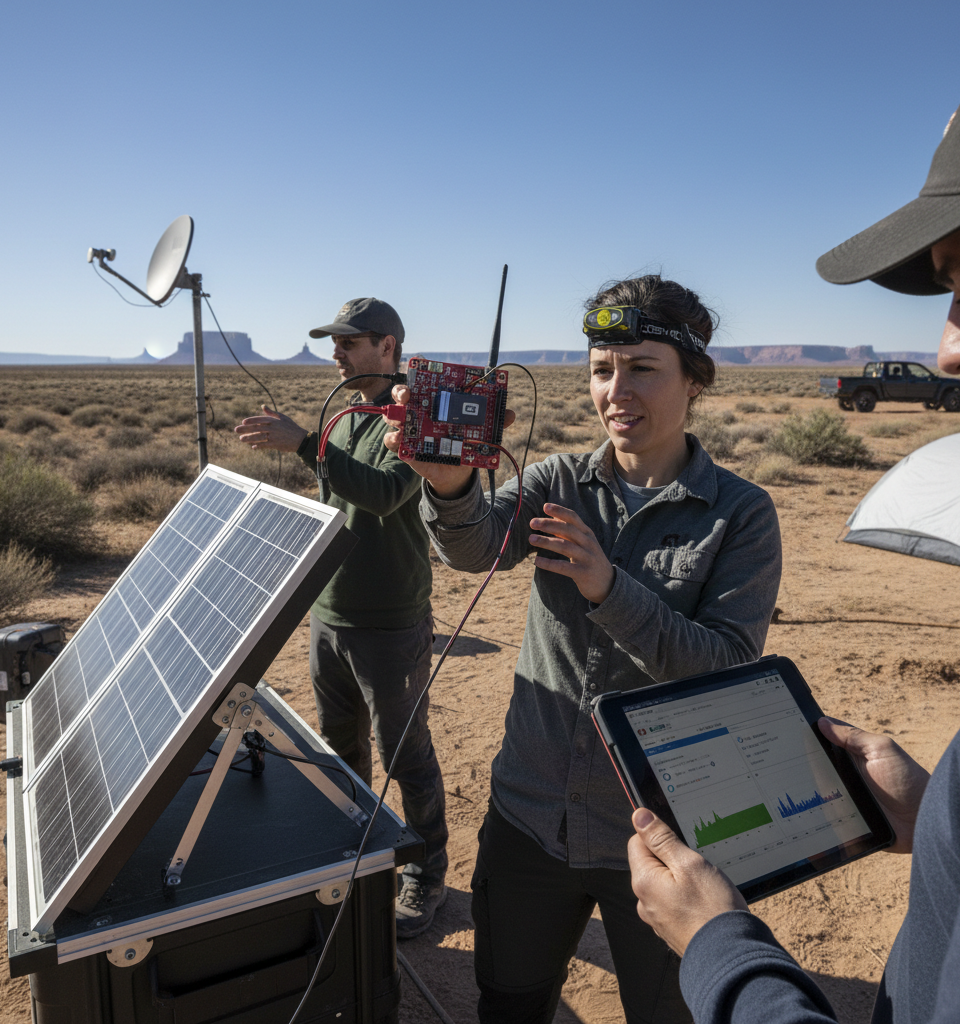
An innovative project has emerged showcasing the potential of a self-built Wi-Fi router, leveraging the versatility of a Raspberry Pi to provide robust connectivity and remote power management. This custom router is specifically designed for off-grid applications, enabling seamless integration with Starlink satellite internet and offering direct control over a solar power station. The creator highlighted the do-it-yourself (DIY) methodology as a key driver behind the project, emphasizing the desire for tailored functionalities not readily available in commercial offerings.
Driving Factors Behind DIY Approach
The decision to construct a bespoke router stemmed from specific requirements for an off-grid setup. Conventional commercial routers often lack the flexibility and specialized features needed for dynamic environments, particularly those relying on satellite internet and independent power generation. By opting for a Raspberry Pi, the developer gained granular control over software and hardware configurations, allowing for a system precisely engineered to meet these unique challenges. This approach underscores a growing trend among tech-savvy individuals to bypass off-the-shelf solutions in favor of custom-built, optimized systems that address niche operational demands.
Technical Integration with Starlink and Solar
At the core of this system is the Raspberry Pi, acting as the central processing unit for the custom router. Its compact size, low power consumption, and open-source nature make it an ideal platform for such an application. The router's primary function is to distribute the internet signal received from a Starlink terminal, providing reliable Wi-Fi connectivity across the off-grid location.
Beyond internet distribution, a critical feature is its capability to interface with and control a solar power station. This integration allows for real-time monitoring of energy production and consumption, as well as the ability to manage power distribution, potentially optimizing battery life and ensuring consistent energy supply. The exact protocols and programming languages used for solar integration were not detailed, but typically involve APIs or custom scripts interacting with the solar power management system.
Broader Implications for Remote Infrastructure
This DIY router project has significant implications for the development of remote and off-grid infrastructure. The combination of high-speed satellite internet, decentralized power generation, and intelligent network management opens new possibilities for operations in geographically isolated areas. Industries such as remote agriculture, environmental monitoring, disaster relief, and even remote residential living could benefit immensely from such adaptable and self-sufficient network solutions. The ability to control vital systems like power generation through a locally managed network enhances operational resilience and reduces dependency on external services.
The Rising Trend of Bespoke Technology Solutions
The initiative reflects a broader societal and technological shift towards bespoke solutions, particularly in areas where commercial products fall short or are prohibitively expensive. The accessibility of single-board computers like the Raspberry Pi, coupled with a wealth of open-source software and community support, empowers individuals to innovate and solve complex problems independently. This trend is not confined to networking but extends to home automation, personal computing, and specialized industrial applications, indicating a future where customized technology plays an increasingly pivotal role in various sectors.
Future Potential and Scalability
Looking ahead, the success of this project could inspire further developments in personalized network infrastructure. There is potential for this design to be scaled or adapted for more complex off-grid communities or larger industrial sites. Future enhancements might include integrating additional sensors for environmental monitoring, developing more sophisticated power management algorithms, or incorporating redundant systems for enhanced reliability. The modular nature of Raspberry Pi-based solutions means that such systems can evolve over time, adding new functionalities as needs change or as new technologies become available.
This pioneering effort demonstrates that with ingenuity and readily available technology, robust and feature-rich network solutions can be crafted to meet specific demands, especially in challenging off-grid environments. The project stands as a testament to the power of DIY innovation in reshaping how we approach connectivity and power management in remote settings.