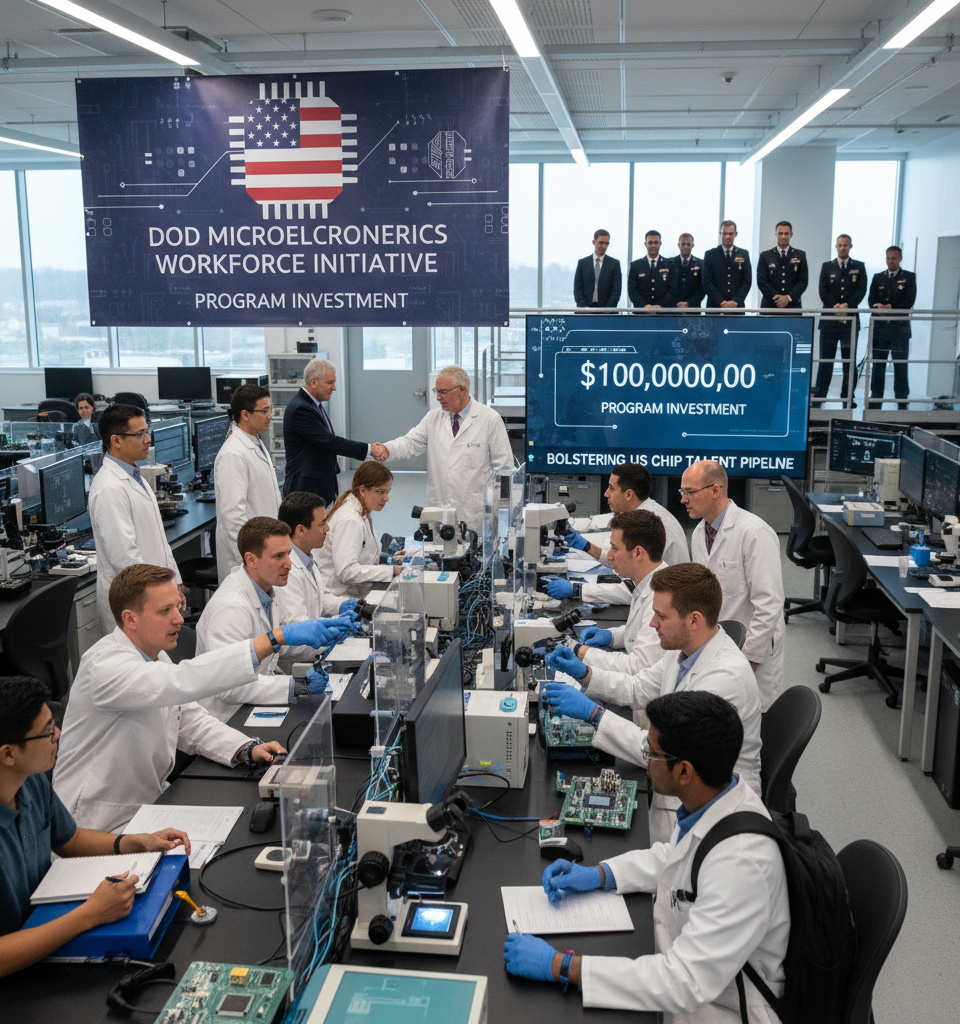
The Department of Defense (DoD) has dramatically increased its commitment to strengthening the nation's microelectronics workforce, announcing a $90 million expansion to its existing contract with the Purdue University-led Scaling Microelectronics and Optics Learning Environment (SCALE) consortium. This brings the total value of the initiative to $100 million, solidifying the multi-university program's role in attracting and developing a highly skilled technical talent pool essential for next-generation defense technologies. The heightened investment signals an urgent national priority to address critical workforce shortages in the semiconductor sector and fortify domestic innovation capabilities.
Context and Strategic Imperative
This substantial financial injection arrives amidst escalating concerns over U.S. competitiveness in advanced microelectronics manufacturing and design. The global semiconductor shortage, exacerbated by geopolitical tensions and supply chain disruptions, has highlighted America's reliance on foreign fabrication facilities, particularly in Asia. The CHIPS and Science Act of 2022, authorizing over $52 billion in subsidies for domestic semiconductor production and research, directly addresses these vulnerabilities. The SCALE program, initially launched with a $10 million DoD contract, predates much of the CHIPS Act funding but aligns perfectly with its strategic objectives. It aims to create a sustainable pipeline of engineers, scientists, and technicians capable of supporting the demanding requirements of defense systems, from artificial intelligence to advanced communications.
Program Specifics and Reach
The SCALE consortium, now encompassing 35 academic institutions across the United States, including prominent partners like Arizona State University, focuses on delivering specialized education and training in areas critical to microelectronics. These include semiconductor device physics, fabrication processes, packaging, and secure system design. The program emphasizes hands-on experience and real-world applications, preparing graduates for immediate contributions to both defense and commercial sectors. This decentralized university network allows for a broader and more inclusive talent search, tapping into diverse academic environments and geographic regions to cultivate expertise that is often highly localized and specialized.
Industry and National Security Impact
The expanded SCALE program is expected to have a profound impact on both the defense industrial base and the broader U.S. semiconductor industry. By nurturing a larger, more proficient domestic workforce, the initiative directly supports efforts to repatriate semiconductor manufacturing and research, reducing dependencies on foreign supply chains. This move is crucial for national security, as advanced microelectronics are integral to virtually every modern military system, from cyber warfare capabilities to hypersonic weapons. A robust talent pipeline is not just about producing more chips; it's about ensuring these chips are cutting-edge, resilient, and secure against potential adversaries.
Expert Perspectives
Industry analysts and national security experts widely laud the DoD's increased investment. "This isn't just about throwing money at a problem; it's a strategic investment in human capital, which is the most critical component of any advanced technological endeavor," commented Dr. Eleanor Vance, a semiconductor policy analyst at the Center for Strategic and International Studies. "The long timelines for developing semiconductor expertise mean that programs like SCALE need sustained, significant funding to make a real difference. $100 million sends a clear message about long-term commitment." She added that the distributed nature of the consortium is vital for reaching a diverse pool of students and academics.
Future Implications and Developments
Looking ahead, the expanded SCALE program is anticipated to significantly increase its student enrollment and research output. Future developments will likely include deepened partnerships with private industry, potentially leading to more internship opportunities and direct career pathways for graduates. There is also an expectation for the consortium to adapt its curriculum to rapidly evolving technological advancements in microelectronics, such as quantum computing and novel materials science. The success of SCALE could serve as a blueprint for similar workforce development initiatives in other critical technology sectors, further solidifying the U.S.'s technological leadership and national security posture for decades to come.