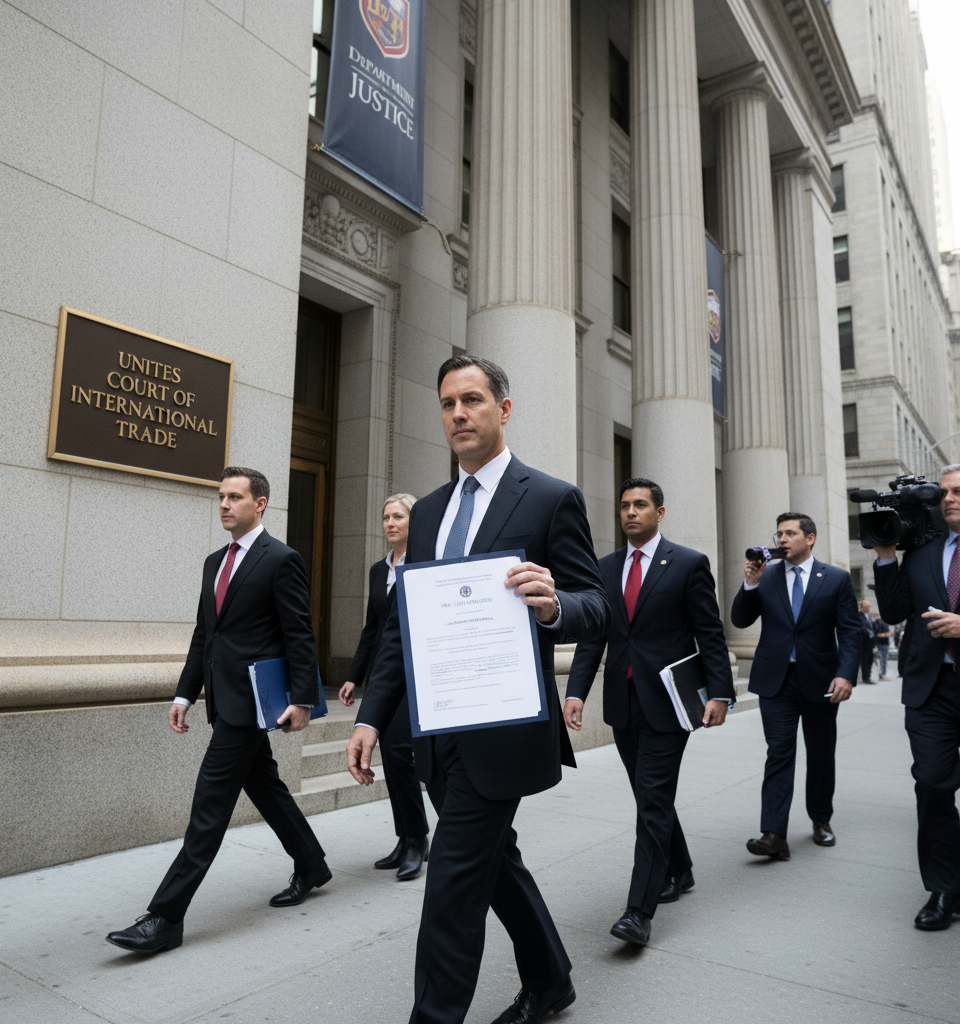
The U.S. Department of Justice (DOJ) has formally appealed a critical decision by the Court of International Trade (CIT), arguing that the judicial body lacks the inherent authority to order comprehensive refunds for all finally liquidated entries. This legal challenge, filed recently, zeroes in on the scope of the CIT's power, specifically questioning its ability to issue a broad mandate that would compel the U.S. government to refund duties previously paid on certain imported goods.
The appeal by the DOJ targets an interpretation of judicial authority that could have far-reaching implications for trade policy and government revenue. The underlying dispute involves tariffs imposed by the Trump administration, which have been the subject of extensive litigation. The CIT’s move to mandate refunds for all finally liquidated entries represents a significant judicial intervention, prompting the DOJ to seek clarification and potentially a reversal from a higher court. This action underscores the ongoing tension between executive trade policy and judicial oversight.
The core of the DOJ's argument centers on the principle of sovereign immunity and the specific statutory limitations on the CIT's jurisdiction. They contend that while the CIT has the power to review individual tariff assessments, it does not possess the authority to unilaterally dictate the refunding of duties for an entire class of liquidated entries without specific legislative authorization. Such a mandate, they assert, ventures into the realm of policymaking, which is traditionally reserved for the legislative and executive branches. The Department of Justice's filing highlights concerns that if allowed to stand, this precedent could significantly broaden the judiciary's role in fiscal matters related to trade.
The immediate impact of this appeal is a stay on any refund disbursements that would have been initiated under the CIT's order. Importers who were anticipating refunds for duties paid under the contested tariffs will now face further delays as the legal process unfolds. The broader industry, particularly sectors heavily reliant on international trade, is closely watching the developments, as the outcome could influence future challenges to tariff decisions and the certainty of trade operations. Companies that have contested these tariffs are now preparing for a prolonged legal battle.
Legal experts are divided on the potential outcomes. Some suggest the DOJ's argument regarding the limits of judicial authority has merit, pointing to historical precedents where courts have been cautious about issuing sweeping mandates that could have significant fiscal consequences. Others argue that the CIT's initial ruling was a necessary check on executive power, ensuring that duties collected under potentially unlawful or improperly implemented tariffs are returned to affected parties. The appeal will likely serve as a test case for the boundaries of judicial review in trade disputes.
Several trade associations have already voiced their concerns regarding the appeal. Many importers, who have borne the financial brunt of these tariffs for years, view the CIT's original order as a much-needed rectification. The appeal introduces renewed uncertainty, potentially prolonging their financial exposure and delaying the recovery of substantial sums. The financial implications for businesses, particularly Small and Medium-sized Enterprises (SMEs), could be considerable if the refund process is indefinitely stalled or ultimately reversed.
Looking ahead, the appeal will proceed through the U.S. Court of Appeals for the Federal Circuit. The process is expected to be lengthy, potentially spanning several months or even longer, depending on the complexity of the arguments and the court's calendar. The appellate court's decision will not only determine the fate of the contested refunds but also establish a crucial precedent concerning the jurisdictional limits of the Court of International Trade and the balance of power between the branches of government in trade matters.
Should the DOJ’s appeal succeed, it would likely mean that importers seeking refunds would need to pursue individual claims or rely on more targeted legal avenues, rather than benefiting from a broad, court-ordered mandate. Conversely, if the CIT’s original decision is upheld, it could empower the trade court with a more expansive role in rectifying perceived overreaches in tariff imposition, potentially leading to more frequent and broader refund orders in future trade disputes. This legal challenge underscores the complex and often contentious nature of international trade law and its enforcement in the United States.