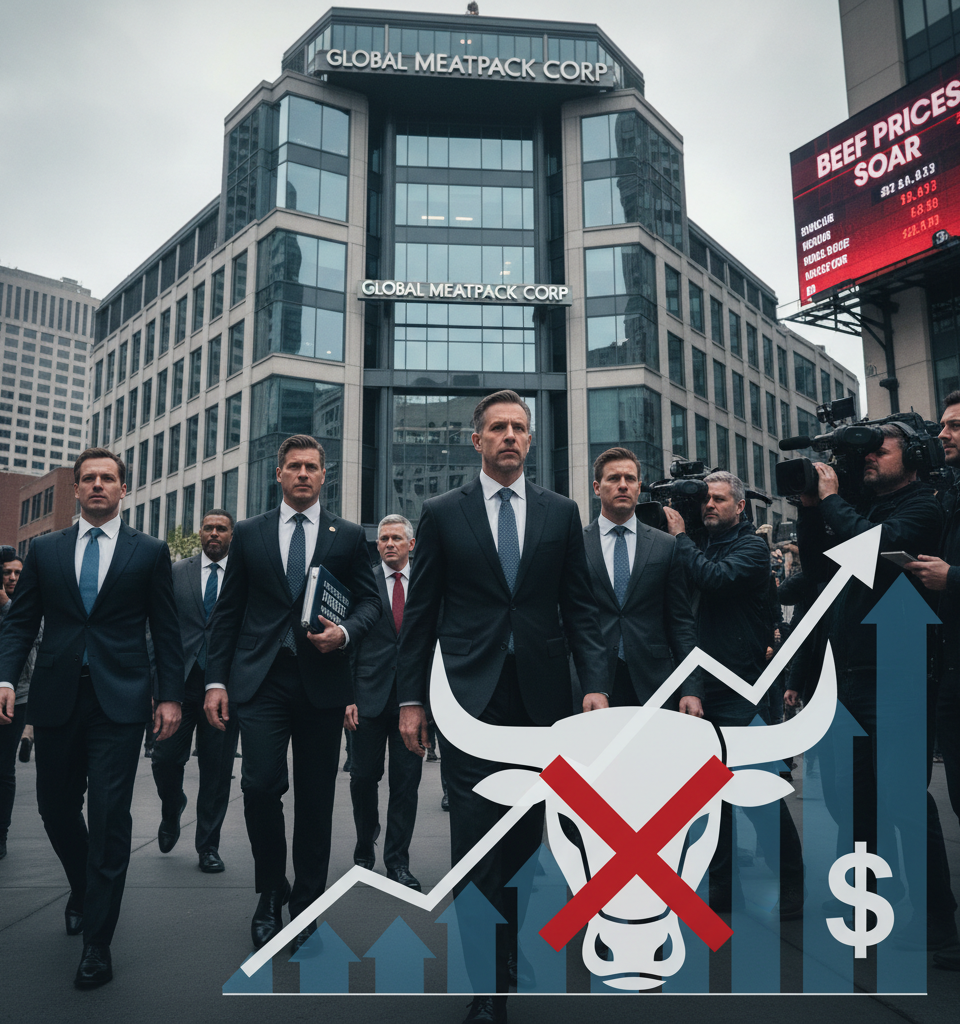
The U.S. Department of Justice (DOJ) has officially confirmed an ongoing antitrust investigation targeting the nation's largest beef producers. This revelation, made by a top DOJ official this week, underscores a concerted governmental effort to leverage "every law enforcement tool available to help reduce food prices" amidst persistent inflation impacting American consumers.
Context of Rising Food Prices and Market Concentration
This investigation arrives at a time of heightened public and congressional scrutiny over surging food costs. Beef prices, in particular, have seen significant increases over the past year and a half, contributing substantially to household grocery bills. The meatpacking industry is notably concentrated, with just four major companies—Tyson Foods, JBS S.A., Cargill, and National Beef Packing Company—controlling an estimated 85% of the fed cattle market. This high degree of market power has long raised concerns among farmers, ranchers, and consumer advocates about potential price manipulation and anti-competitive behavior. Historically, such market structures have been ripe for scrutiny under antitrust laws, intended to ensure fair competition and protect consumers from exploitation.
Key Details of the DOJ Probe
While details of the ongoing investigation remain under wraps, the official's statement confirms a proactive stance by the DOJ. The probe is expected to examine various aspects of the beef supply chain, including cattle procurement practices, pricing structures, and potential collusion among the dominant players. This is not the first time the beef industry has faced such scrutiny; past inquiries have explored similar allegations of price fixing and anti-competitive conduct. The current investigation suggests a renewed and perhaps more aggressive approach by the Biden administration, which has consistently highlighted competition as a key pillar in its economic policy agenda. The focus is not only on protecting consumers but also ensuring fair returns for independent cattle ranchers who have frequently voiced complaints about disproportionate pricing power held by processors.
Industry and Market Impact
News of the intensified DOJ investigation sent ripples through the agribusiness sector. While the immediate stock market reaction from the publicly traded entities involved has been muted, the potential long-term implications are significant. Should anti-competitive practices be proven, the companies could face substantial fines, divestitures, or other structural remedies. More broadly, the probe could lead to increased regulatory oversight across the entire food supply chain, potentially impacting operating models and strategic planning for other major food processors. For consumers, a successful antitrust action could, in theory, lead to more competitive pricing and a greater supply of affordable beef, though such effects would likely materialize over an extended period.
Expert Perspectives
Economists and antitrust experts largely commend the DOJ's proactive stance. Dr. Eleanor Vance, a professor of agricultural economics at a leading university, notes, "The high concentration in the beef packing industry has been a red flag for decades. This investigation is a crucial step towards ensuring that market dynamics are driven by genuine competition, not by artificial constraints or collusion." She adds, "A successful prosecution could set a significant precedent for other concentrated sectors of the food industry." Legal analysts suggest the DOJ will be looking for evidence of coordinated practices, such as information sharing on pricing or capacity, that would stifle competition among the major packers. The challenge will be distinguishing between legitimate cost-driven price increases and those resulting from anti-competitive behavior.
What's Next for the Investigation
The investigation is expected to be a complex and lengthy process. The DOJ will likely issue subpoenas for extensive internal documents, communications, and financial records from the targeted firms. Interviews with executives, employees, and industry stakeholders, including cattle ranchers and distributors, will also be critical.
Depending on the evidence uncovered, the investigation could culminate in civil litigation, seeking injunctions or monetary penalties, or even criminal charges if deliberate and widespread collusive behavior is found. The outcome could significantly reshape the landscape of the American beef industry, potentially leading to increased competition, a more equitable distribution of profits across the supply chain, and ultimately, more stable and fair prices for consumers. The focus on “every law enforcement tool” indicates a willingness to pursue all available avenues to ensure market integrity.