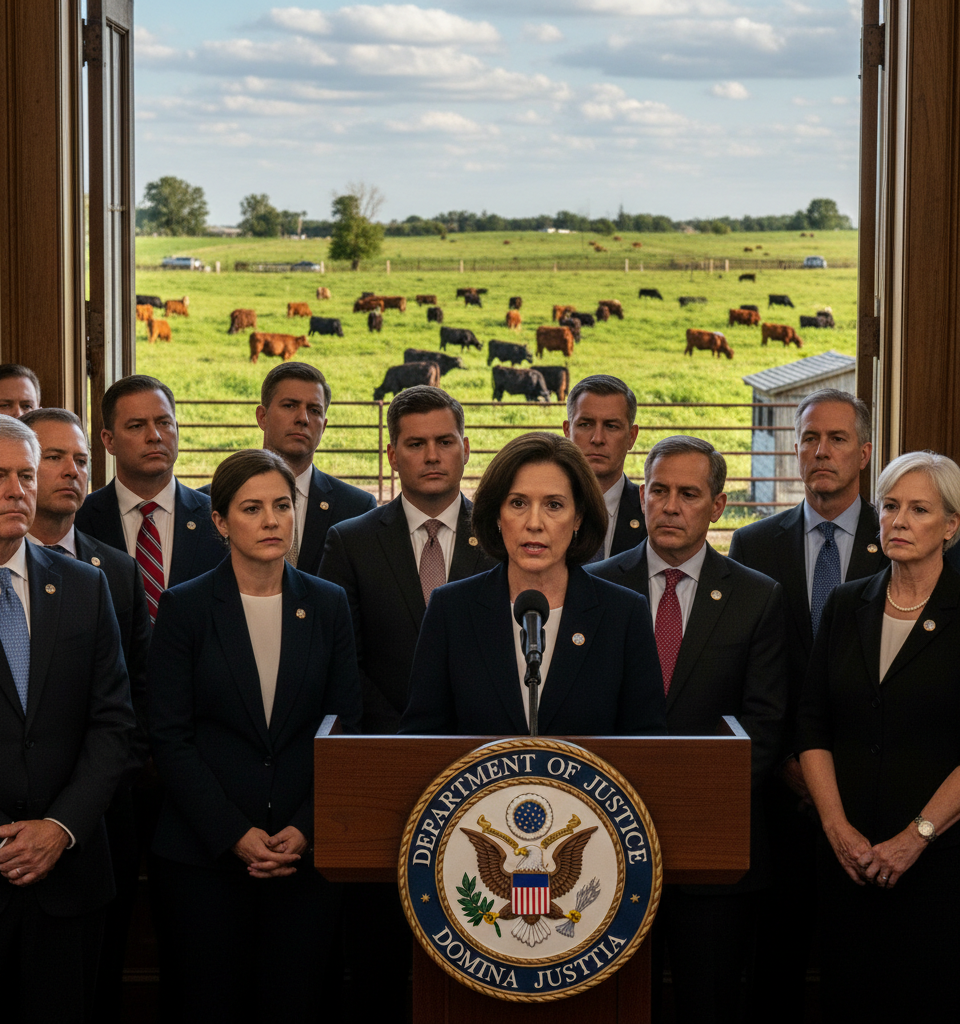
The U.S. Department of Justice (DOJ) has formally acknowledged an ongoing antitrust investigation into major beef processing companies, a development that signals heightened federal concern over competition within the concentrated sector. This probe specifically targets the widespread use of alternative marketing agreements (AMAs) between cattle feedlots and meatpackers, financial arrangements that operate outside the traditional open auction system. The confirmation, which emerged from recent legal filings and congressional inquiries, underscores a critical juncture for an industry grappling with accusations of anti-competitive behavior and calls for greater transparency.
Context and Background
For decades, the structure of the American beef industry has drawn criticism due to its increasing consolidation. Four major meatpacking companies—Cargill, JBS, National Beef, and Tyson Foods—control approximately 85% of the nation's beef processing capacity. This market dominance has fueled persistent concerns among cattle ranchers and smaller feedlot operators who argue that the lack of competition suppresses live cattle prices while allowing meatpackers to command higher prices for beef.
The use of AMAs, which can include forward contracts, formula pricing, or grid pricing, has been a particular flashpoint, with critics contending these private deals further obscure price discovery and disadvantage producers who rely on open market sales. The current investigation follows a period of significant price volatility in both live cattle and retail beef, exacerbated by disruptions such as the COVID-19 pandemic and cyberattacks on processing facilities.
Key Details
The DOJ's investigation centers on whether these alternative marketing agreements contribute to an uncompetitive environment, potentially violating antitrust laws. While the specifics of the probe remain confidential, sources close to the matter indicate investigators are examining pricing data, contract terms, and communications between processors. Critics, including organizations like the Ranchers-Cattlemen Action Legal Fund, United Stockgrowers of America (R-CALF USA), contend that AMAs create an uneven playing field.
They argue that these contracts often prioritize established relationships between larger feedlots and packers, leaving smaller producers with fewer options and less leverage. S. Department of Agriculture (USDA) data, a trend that alarm bells for many in the producer community.
This shift has corresponded with a sustained decline in cattle producer's share of the retail dollar.
Industry and Market Impact
The beef industry is a cornerstone of the U.S. agricultural economy, contributing billions of dollars annually. This antitrust probe introduces significant uncertainty for beef processors, who could face substantial fines or even structural remedies if violations are found. For cattle ranchers, the investigation offers a glimmer of hope that federal intervention could lead to a more equitable market. However, any significant changes to marketing practices or industry structure would inevitably ripple through the entire supply chain, potentially affecting consumer prices and product availability. Analysts suggest that increased regulatory oversight, regardless of the outcome of this specific probe, is likely to be a defining feature of the beef market in the coming years, prompting processors to re-evaluate their compliance strategies and market transparency efforts.
Expert Perspective
Economic experts and agricultural policy analysts are closely watching the developments. Dr. Sally Jones, an agricultural economist specializing in market structure, commented, "The shift away from cash bids fundamentally alters price discovery.
" Others, however, caution that AMAs can also provide benefits such as predictable supply for packers and reduced price risk for feedlots, and a wholesale dismantling of these arrangements without careful consideration could introduce new market inefficiencies.
What's Next
The DOJ's investigation is expected to be a lengthy and complex process, potentially spanning several months or even years. The outcome could range from consent decrees dictating changes in business practices to significant fines, or in more extreme scenarios, even forced divestitures. Congress also continues to pressure the industry and regulators; lawmakers have introduced legislation aimed at increasing transparency in cattle markets and mandating minimum levels of cash trade. The USDA is simultaneously pursuing its own initiatives to promote fair competition and strengthen the Packers and Stockyards Act. The beef industry, already navigating fluctuating consumer demand and global trade dynamics, now faces intense federal scrutiny that promises to reshape its operational and competitive landscape for the foreseeable future.