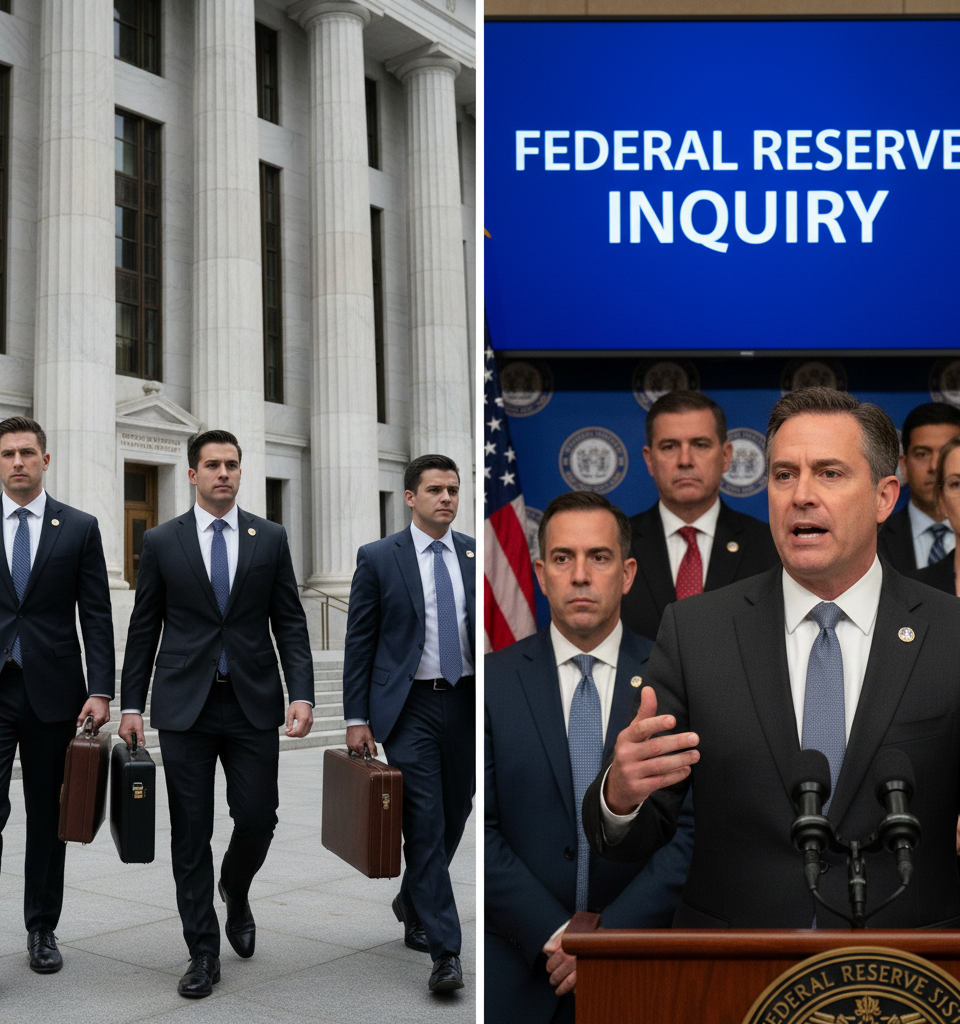
WASHINGTON D.C. — In an unprecedented escalation, Department of Justice (DOJ) prosecutors conducted an unannounced visit to the Federal Reserve Board this week, signaling a deepening criminal inquiry into unspecified activities within the nation's central bank. This surprise development unfolded amidst tenacious public defenses of the investigation by Federal Reserve Director Christopher Pirro, whose unwavering stance has put him at odds with some within the institution. The broadening probe now casts a significant pall over the impending selection and confirmation of the next Federal Reserve Chair, introducing a layer of political and financial uncertainty to a typically solemn process.
Unearthing Governance Concerns and Historical Precedents
This aggressive move by the DOJ marks a rare intervention into the affairs of the Fed, an institution typically shielded from such overt criminal scrutiny. The inquiry's precise focus remains officially undisclosed, though speculation centers on potential irregularities in trading activities, information leaks, or compliance failures. The last time the Fed faced a public criminal investigation of this magnitude was decades ago, underscoring the gravity of the current situation. This episode resurrects uncomfortable questions about the adequacy of internal oversight, ethical guidelines for senior officials, and the potential for undue influence within a body tasked with safeguarding the nation's economic stability.
Key Players and Unanswered Questions
Director Christopher Pirro has emerged as a central figure, consistently advocating for the thoroughness and necessity of the DOJ's investigation. His public statements, often delivered in a defiant tone, suggest significant internal disagreements regarding the probe's scope and implications. While details of the prosecutorial visit remain scarce, sources close to the matter indicate that investigators were particularly interested in accessing specific internal communications and trading records. The timing of this intensified scrutiny is particularly fraught, coinciding with President Biden's critical decision on whether to renominate current Chair Jerome Powell or select a new leader. Any delays or complications could reverberate through financial markets.
Market Jitters and Broader Economic Implications
While financial markets have not yet reacted with widespread panic, the uncertainty generated by the DOJ's probe is beginning to cause unease. Analysts fear that a prolonged or messy confirmation process for the Fed Chair could undermine confidence in monetary policy, especially at a time when the U.S. economy faces persistent inflationary pressures and the ongoing challenge of supply chain disruptions. Significant volatility in bond markets or a sustained dip in investor sentiment could manifest if the investigation uncovers systemic issues or if the leadership vacuum prolongs. For instance, a 5-10 basis point increase in short-term Treasury yields, often a bellwether for market anxiety, could immediately follow any concrete indictments.
Expert Opinions on Institutional Integrity
Economists and governance experts are weighing in with cautious concern. Dr. Evelyn Reed, a financial ethics professor at Georgetown University, notes, "The perception of integrity at the Federal Reserve is paramount. Any criminal inquiry, regardless of its ultimate findings, chips away at that foundation. The DOJ's involvement elevates this from a compliance issue to a matter of national public trust." Others point to the need for greater transparency regarding the investigation's focus, suggesting that prolonged ambiguity could be more damaging than a clear, albeit negative, outcome. "The lack of specific information allows for speculation to fester, which is corrosive," stated market strategist Mark Chen from Global Capital Advisors.
The Path Forward: Confirmation Hearings and Potential Recusals
The immediate future hinges on several critical developments. Firstly, the pace and findings of the DOJ's investigation will dictate much of the political discourse. Any indictments or serious revelations could necessitate recusals or even resignations, further destabilizing the institution. Secondly, the Senate confirmation process for the next Fed Chair will undoubtedly become entangled with this inquiry. Nominees will face intense questioning about their knowledge of the probe, their views on internal governance, and their commitment to transparency. Thirdly, the Federal Reserve itself is likely to undergo an internal review of its ethics policies and compliance mechanisms, with potential changes to trading rules for high-ranking officials. The next 60-90 days are expected to be critical in shaping the Fed's leadership and public image for years to come.
Initial estimates suggest that the entire investigative process could extend for another 3-6 months, potentially pushing back any chair confirmation hearings until late in the year or even early next year. This protracted timeline introduces considerable uncertainty into forward guidance on interest rates and quantitative easing, critical tools for managing the economy. The integrity of the central bank, and by extension, the stability of global financial markets, hang precariously in the balance.