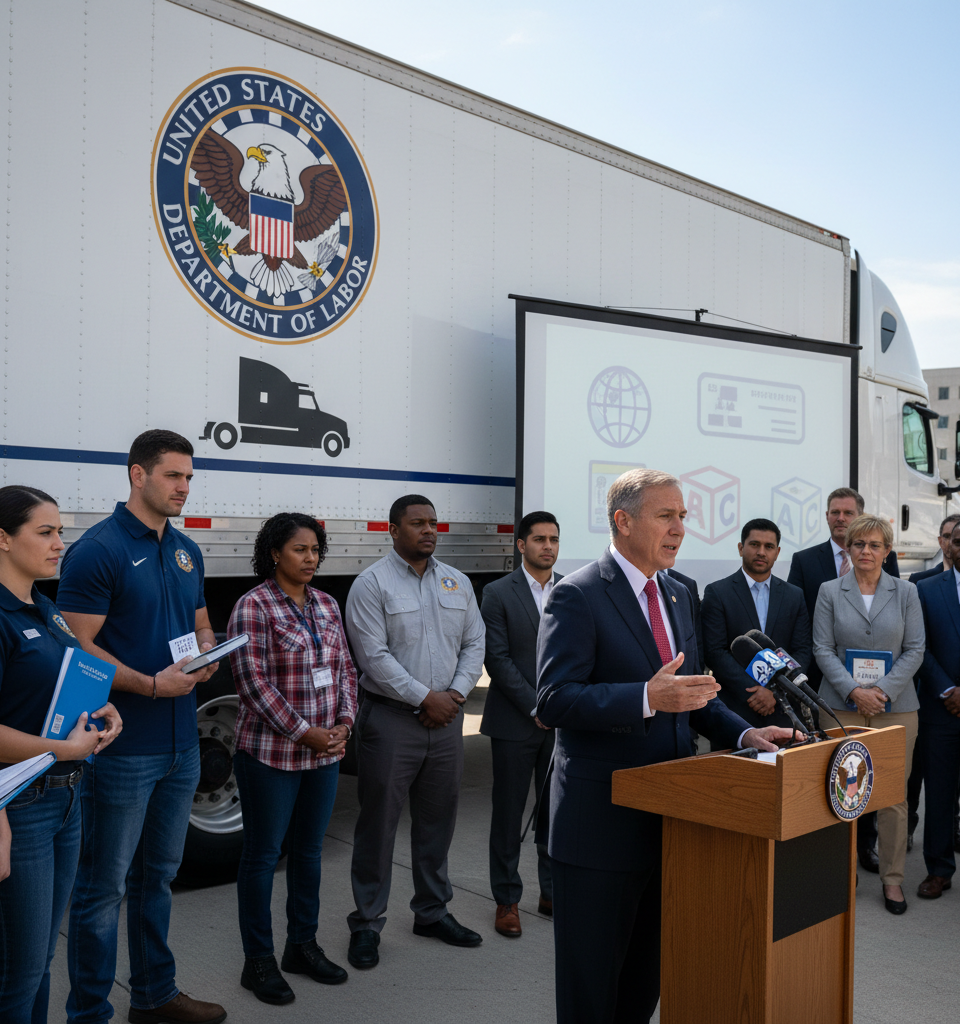
The Department of Labor (DOL) is set to implement a new English Language Proficiency (ELP) mandate for foreign truck drivers, with the regulation slated to take effect in mid-June. The agency stated that this timeframe is designed "to allow the regulated community time to review and will be applied prospectively to filings thereafter," signaling a significant shift in requirements for international laborers entering the U.S. trucking sector.
This upcoming mandate introduces a critical new hurdle for foreign national truck drivers seeking employment in the United States. Historically, while certain visa categories had English proficiency components, a direct and universal ELP requirement specifically for foreign truck drivers by the DOL represents a notable regulatory expansion. The move comes amid ongoing discussions regarding workforce standards, public safety, and the integration of foreign workers into essential industries.
Key details of the forthcoming policy indicate that its application will be prospective, meaning it will affect all relevant filings submitted after the mid-June implementation date. The DOL's emphasis on providing the "regulated community" time for review suggests that the agency anticipates a period of adjustment for employers, recruitment agencies, and the drivers themselves. Specifics regarding the benchmark for English proficiency, such as whether it will align with existing frameworks like the Common European Framework of Reference for Languages (CEFR) or a custom DOL standard, are expected to be clarified as the mid-June deadline approaches.
The industry landscape, particularly the trucking and logistics sectors, is expected to experience considerable impact. The U.S. trucking industry has long grappled with driver shortages, and foreign nationals often fill crucial gaps. This new ELP mandate could potentially complicate recruitment efforts for companies relying on international talent. While proponents of such a measure might cite enhanced communication for safety and operational efficiency, industry associations may raise concerns about potential bottlenecks in securing vital labor resources.
While the DOL has not released detailed economic impact assessments alongside this announcement, a general understanding is that the measure could influence operational costs for carriers. Companies might need to invest in language training programs for prospective hires or adjust their recruitment strategies to focus on drivers who already meet the new proficiency standards. The announcement did not include any expert opinions or analyses, but observers within the freight and immigration sectors will undoubtedly be dissecting the long-term implications.
Looking ahead, the roll-out of this ELP mandate will be closely watched. Stakeholders will be keen to see the precise language of the regulation, including any exemptions or provisions for unique circumstances. The DOL's decision to implement the rule prospectively suggests that currently active filings or those completed before mid-June may not be subject to the new requirement, offering a brief window before full enforcement begins. The broader ramification for labor supply chains and cross-border logistics will unfold in the months following its mid-June enforcement.