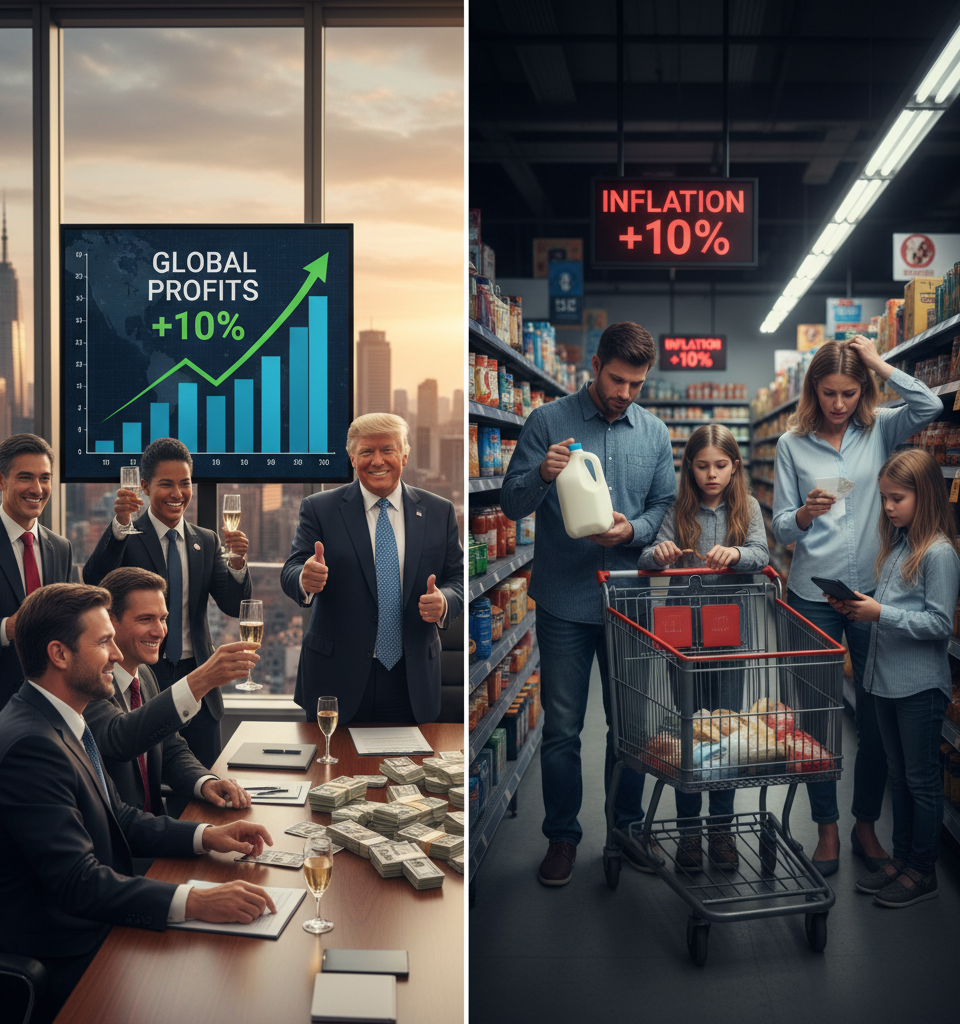
The U.S. dollar, a cornerstone of global finance, depreciated by approximately 10% during the Trump administration's tenure, from its peak in early 2017 to late 2020. This significant weakening, a phenomenon often lauded by the former President as beneficial for American industry, has indeed offered a competitive edge to large multinational corporations while simultaneously imposing what some economists term a 'hidden tax' on American consumers, raising the cost of everything from imported vacations to grocery staples.
Context and Background
Donald Trump consistently articulated a belief that a strong dollar disadvantages American businesses in the global marketplace, hindering exports and making foreign goods comparatively cheaper. This stance marked a divergence from the long-held Treasury Department tradition of promoting a strong dollar policy. Historically, a strong dollar has been viewed as a sign of economic health and stability, attracting foreign investment. However, proponents of a weaker currency argue it makes U.S. exports more attractive to foreign buyers and boosts the profitability of American companies operating abroad when their foreign earnings are converted back into dollars.
Key Details and Impacts
The 10% decline in the dollar’s value, measured against a basket of major currencies, has had a dual effect. For S&P 500 companies with significant international operations, particularly those generating a substantial portion of their revenue overseas, a weaker dollar translates to increased earnings when foreign profits are repatriated. For instance, a tech giant selling software in Europe sees its euro-denominated revenues become more valuable in dollar terms.
Estimates suggest this currency tailwind could boost earnings per share for some multinational firms by several percentage points. Conversely, for American households, the impact is less direct but pervasive. Goods imported from countries like China, Germany, or Mexico become more expensive in dollar terms.
This includes everything from consumer electronics and clothing to certain food items, as well as the cost of international travel, making European holidays or Japanese electronics pricier.
Industry and Market Dynamics
Industries heavily reliant on exports, such as manufacturing, aerospace, and agricultural sectors, have generally welcomed the weaker dollar. It enhances their competitiveness on the global stage, potentially leading to increased sales volumes and market share. However, sectors that depend on imported raw materials or components face higher input costs, which can erode profit margins or necessitate price increases for consumers. Retailers selling imported goods also contend with higher procurement costs, which are often passed on to the end-user. The travel industry, while benefiting from an influx of foreign tourists drawn by a relatively cheaper U.S., sees American outbound tourism becoming more expensive, potentially dampening demand for international vacations among U.S. citizens.
Expert Perspectives
Economists offer a spectrum of views on the dollar's depreciation. Some, like those at JP Morgan Chase, acknowledge the short-term earnings boost for large U.S. multinationals but caution about the inflationary pressures it can create domestically. Dr. Melinda Rogers, a professor of international economics at a prominent East Coast university, explains, "While a weaker dollar can make our exports more competitive, it also acts as a subtle inflationary force. Every imported item, from bananas to BMWs, effectively costs more. For the average American family, this translates into a higher cost of living, even if it's not immediately obvious." Others argue that beyond the immediate trade balance, a persistently weakening currency can signal a lack of confidence in the U.S. economy, potentially deterring foreign investment in the long run.
What's Next?
The trajectory of the dollar remains a key focus for economists and policymakers. Future monetary policy decisions by the Federal Reserve, particularly regarding interest rates, will play a significant role. Higher interest rates typically strengthen a currency by attracting foreign capital seeking better returns. Geopolitical developments and global trade relations also exert considerable influence. Should the U.S. continue to prioritize export competitiveness through a weaker dollar, consumers could anticipate ongoing inflationary pressures on imported goods and services. Conversely, a shift towards a stronger dollar policy would likely alleviate these consumer costs but present fresh challenges for export-oriented businesses. The subtle interplay between currency valuations and daily economic life ensures the dollar's performance will continue to be a closely watched indicator.