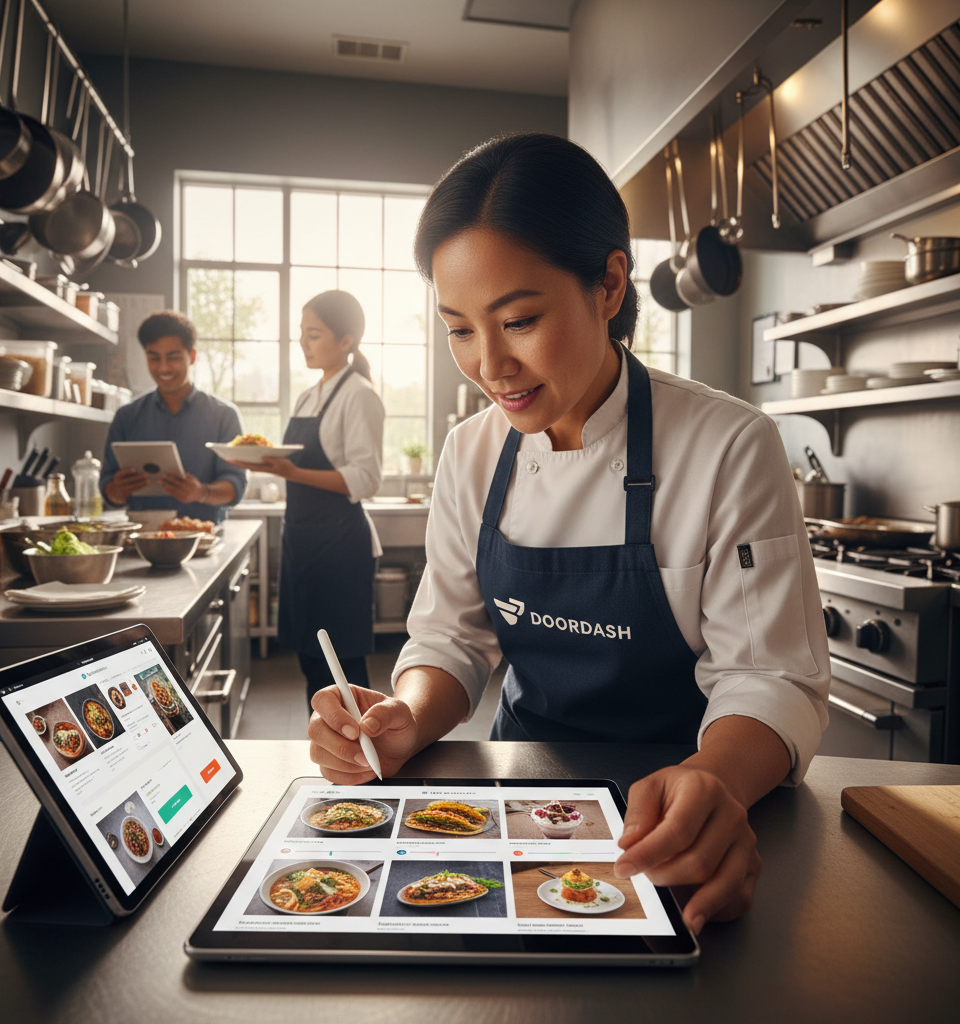
DoorDash announced on Monday the integration of several advanced artificial intelligence capabilities aimed at profoundly transforming its merchant experience. These new tools are specifically engineered to expedite the onboarding process for new businesses, utilize AI for automatic enhancement and editing of food photography, and enable merchants to generate professional-grade websites swiftly using existing content. This strategic enhancement underscores DoorDash's commitment to equipping its partners with cutting-edge technology to thrive in an increasingly digital marketplace.
Context and Background
The food delivery and logistics sector has witnessed explosive growth over the past decade, driven by technological advancements and shifting consumer habits. However, merchants, particularly smaller businesses and independent restaurants, often face significant hurdles in digital transformation, including time-consuming administrative tasks and the high cost of professional marketing assets. DoorDash, as a dominant player in this space, has historically focused on consumer-facing innovations. This latest initiative represents a critical shift towards empowering its supply side, acknowledging that merchant success directly translates to platform vitality. The move comes as competition in the gig economy intensifies, with companies vying to offer the most attractive propositions to retain and expand their partner networks.
Key Details and Functionality
The newly introduced AI tools boast several practical applications. The AI-powered onboarding system promises to drastically cut down the time required for new businesses to join the DoorDash platform, potentially reducing a multi-day process to a matter of hours. This accelerated integration could significantly lower the barrier to entry for many small and medium-sized enterprises (SMEs).
Perhaps one of the most visually impactful features is the AI photo editing tool, which automatically enhances dish photography, corrects lighting, adjusts colors, and removes imperfections, ensuring visually appealing menu items without the need for expensive photoshoots or graphic designers. Furthermore, the platform will now enable merchants to generate complete e-commerce websites by intelligently pulling information from their DoorDash listings, offering a streamlined path to establishing a standalone online presence beyond the aggregator's platform. This includes creating product catalogs, integrating ordering systems, and even customizing design elements, all powered by AI algorithms.
Industry and Market Impact
This development is poised to have a substantial ripple effect across the online food delivery and local commerce industry. By simplifying merchant operations and reducing overheads related to digital storefront management and marketing, DoorDash could significantly enhance merchant loyalty and retention. This move also broadens DoorDash's value proposition beyond just delivery logistics, positioning itself as a more comprehensive technology partner for businesses. Competitors like Uber Eats, Grubhub, and others will face pressure to respond with similar technological innovations to avoid losing market share among merchant partners. The accessibility of high-quality digital tools could also stimulate more small businesses to venture into online sales, leading to a broader and more diverse selection for consumers.
Expert Perspective
Industry analysts view this as a shrewd strategic play. "This isn't just about faster onboarding; it's about making DoorDash indispensable to its merchant partners," commented Sarah Chen, a senior analyst at Digital Commerce Insights. "By solving practical pain points like professional photography and website creation, DoorDash is moving up the value chain from a transactional platform to a critical business enablement tool.
" Another expert noted, "The AI-driven efficiency gains could translate into better unit economics for restaurants, which is a major draw given the tight margins in the food industry. " The long-term implications could see a rise in digital proficiency among local businesses, ultimately benefiting the entire digital economy.
The Road Ahead
Looking forward, DoorDash plans to continue investing heavily in AI and machine learning to further enhance its platform. Potential future developments could include AI-driven inventory management, personalized marketing campaign suggestions for merchants, and even predictive analytics for menu optimization based on local trends and customer preferences. The company is likely to gather data from the initial rollout of these tools to refine algorithms and identify new areas where AI can create value.
The success of these new features will largely depend on merchant adoption and the tangible benefits they deliver, potentially setting a new standard for what partners can expect from their delivery platform providers. As technology evolves, the lines between logistics providers and full-service business solution platforms will continue to blur, with DoorDash clearly aiming to lead that convergence.