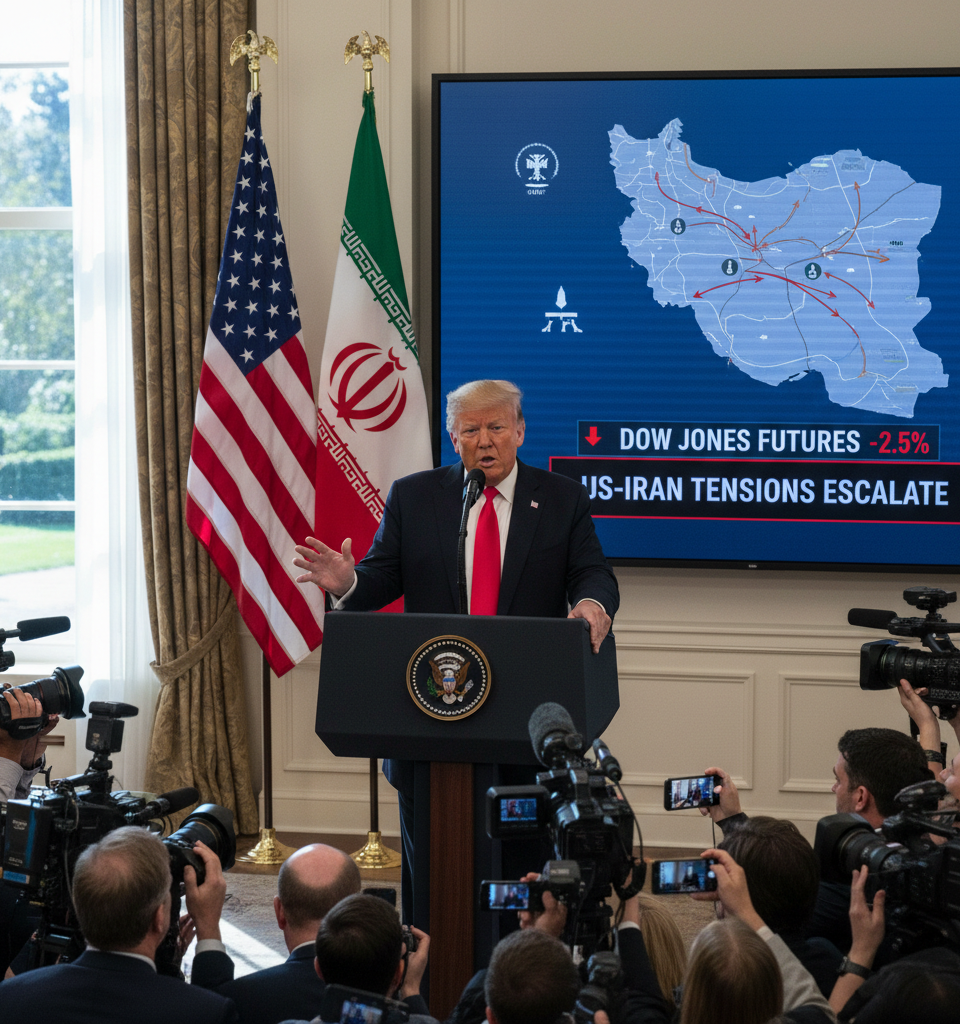
Dow futures declined on the heels of the initial day of US-Iran talks, as President Trump issued assertive rhetoric concerning the critical Strait of Hormuz. The President's statements, which included threats of military intervention and demands for financial compensation, introduced a significant layer of uncertainty into the unfolding diplomatic process.
Geopolitical Tensions and Market Reaction
The market’s negative reaction underscores the profound sensitivity of global financial systems to geopolitical instability, particularly when it involves major oil transit routes. The Strait of Hormuz, a narrow waterway between the Persian Gulf and the Arabian Sea, is a choke point for a substantial portion of the world’s oil supply. Even the suggestion of its closure, or military confrontation within it, is sufficient to send ripples through energy markets and broader economic indicators.
President Trump's aggressive stance, conveyed publicly, articulated a direct challenge to Iran should it attempt to close the Strait. “You close it and you won’t have a country,” he reportedly stated, a powerful declaration that signals the severity of the US position. He further escalated the threat by suggesting the US might assume control of the strait under such circumstances. His warning, “I’ll blow the s-t out of them. If they don’t make a deal, we’ll collect tolls,” unequivocally outlines a potential military and economic response if negotiations falter or if Iran disrupts maritime traffic.
The Strategic Importance of Hormuz
The Strait of Hormuz is recognized as one of the world's most strategically important chokepoints, through which approximately one-fifth of global oil consumption passes daily. Its closure, even temporarily, would severely disrupt international oil supplies, leading to sharp price increases and potentially triggering a global economic crisis. The mere threat of such an event can drive up insurance premiums for tankers, hike oil prices, and deter investment in the region, impacting commodity markets worldwide. The statements from the US President directly address this critical vulnerability, indicating a preparedness to safeguard international shipping lanes at all costs.
Historically, tensions in the region frequently correlate with fluctuations in global markets. Previous confrontations or threats to shipping in the Persian Gulf have often led to spikes in oil prices and broader market instability. The current situation, with high-stakes negotiations concurrent with bellicose rhetoric, creates a particularly volatile environment. Investors typically shy away from uncertainty, and the prospect of military confrontation in a region vital for global energy supply is a prime example of such a deterrent to market confidence.
Impasse in Diplomacy
The confrontational remarks come amidst a fragile period of diplomatic engagement between the two nations, aiming to de-escalate long-standing animosities and potentially revive discussions over nuclear agreements or regional stability. Such forceful statements from a head of state, particularly during nascent talks, can either be interpreted as a strategic negotiating tactic designed to exert maximum pressure or as a genuine reflection of a hardline stance that could jeopardize ongoing diplomatic efforts. The immediate market reaction suggests investors perceive it as the latter, at least in the short term.
Future Implications and Market Outlook
The path forward appears fraught with challenges. The current situation hinges precariously on the outcome of the ongoing, yet embattled, negotiations. Should a diplomatic resolution emerge, market confidence could rebound swiftly. Conversely, a continued impasse combined with escalating threats of military action could lead to sustained market volatility and increased global economic uncertainty. The international community, including major oil-importing nations, will be closely watching for any further developments, as the implications extend far beyond the immediate parties involved.
Analysts are likely to continue scrutinizing every statement and development from both Washington and Tehran. The impact on oil prices, particularly, will be a key indicator of market sentiment regarding the likelihood of conflict versus cooperation. The long-term stability of global energy supplies and the broader geopolitical landscape hang in the balance.