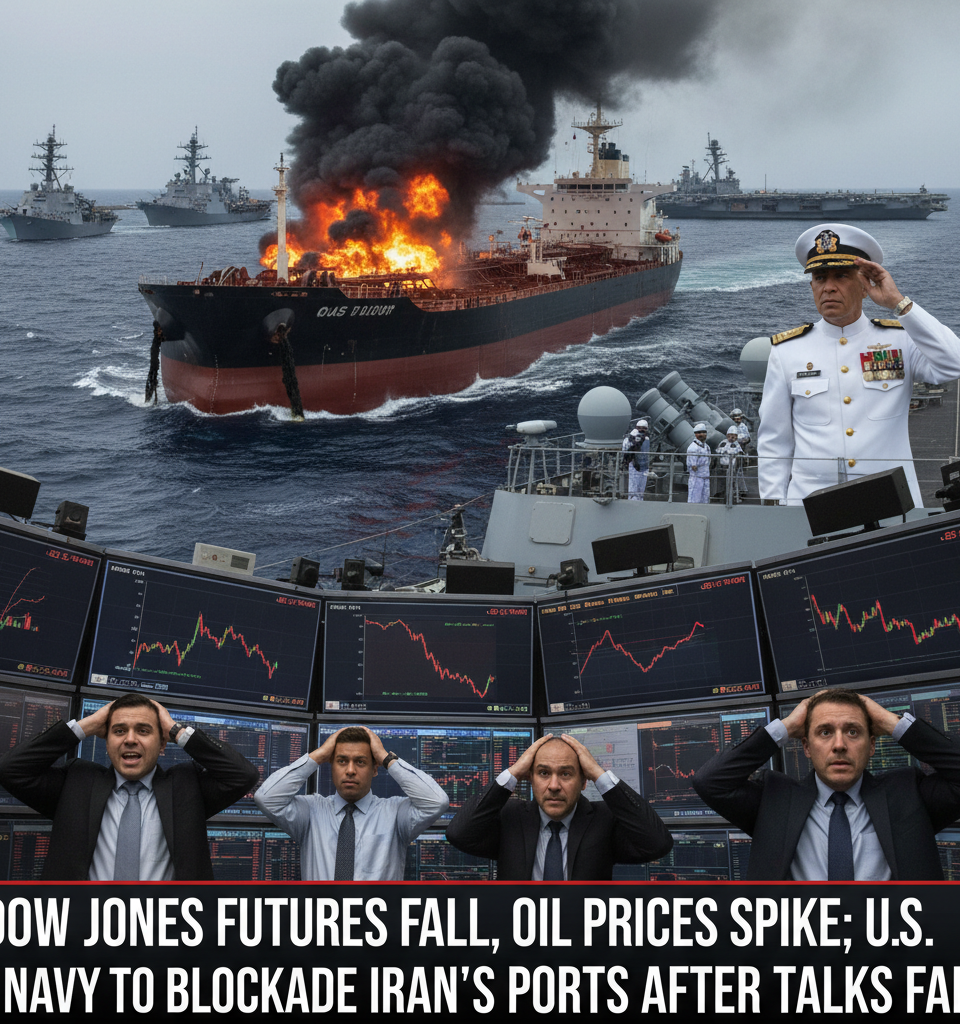
Global financial markets are reacting with palpable alarm today, May 19, 2026, as Dow Jones futures registered a precipitous fall, coinciding with a sharp spike in crude oil prices. This market volatility follows the breakdown of critical diplomatic talks and an assertive move by the United States, with reports indicating that the U.S. Navy is preparing to impose a blockade on Iran's ports. The development signals a dramatic escalation in geopolitical tensions, with far-reaching implications for international trade, energy markets, and regional stability.
The immediate market response underscores the profound anxiety among investors regarding the potential for widespread disruption. The prospect of a naval blockade around a major oil-producing region invariably sends shockwaves through the energy sector, directly translating to higher crude prices. Concurrently, the broader economic uncertainty spurred by such a significant geopolitical confrontation is leading investors to divest from riskier assets, including equities, hence the decline in futures markets. The failure of negotiations suggests a lack of diplomatic off-ramps, pushing the situation toward a potentially confrontational phase.
Geopolitical Flashpoint Intensifies
Details surrounding the collapse of the diplomatic talks remain sparse, but the U.S. government's subsequent decision to deploy its naval assets to enforce a blockade indicates a clear shift in strategy. The objective of such a blockade would likely be to exert extreme economic pressure on Tehran, particularly by disrupting its oil exports and maritime trade. This action would follow a long history of international efforts to influence Iran's policies, but a naval blockade represents a significant intensification, carrying with it the risk of direct confrontation on the high seas.
The strategic waterway of the Persian Gulf, through which a substantial portion of the world's oil supply transits, becomes an immediate flashpoint. Any disruption here would not only affect oil prices but could also imperil global supply chains reliant on maritime shipping through the region. The Strait of Hormuz, a critical chokepoint at the mouth of the Persian Gulf, would undoubtedly be central to any blockade operations, making it a high-stakes zone for international commerce and military maneuvers.
Market Repercussions and Energy Sector Impact
The financial implications are already being felt globally. The Dow Jones Futures' immediate decline reflects concerns about economic growth slowing under the weight of higher energy costs and increased geopolitical risk. Businesses, particularly those with global supply chains, will be bracing for potential disruptions and increased operational costs. The surge in oil prices is a direct consequence of perceived supply threats, and if sustained, it could stoke inflationary pressures worldwide, complicating monetary policy decisions for central banks already grappling with economic recovery and stability.
Energy companies that are net importers of crude oil will face substantial increases in input costs, which may be passed on to consumers, further impacting disposable income. Conversely, oil-exporting nations and companies might see a temporary boost, though the inherent instability poses long-term risks even for them. The shipping industry is also poised for significant upheaval, with increased insurance premiums, altered routes, and heightened security concerns becoming immediate realities. Container shipping and tanker operations through the Persian Gulf would face unprecedented challenges.
What Lies Ahead: A Volatile Outlook
The immediate future depends heavily on the specifics of the U.S. Navy's blockade implementation and Iran's response. Any miscalculation or aggressive counter-move could rapidly escalate the situation beyond economic pressure into direct military engagement. International diplomacy, though having failed in its latest iteration, will likely continue underground as global powers seek to de-escalate or manage the crisis. The United Nations, along with other influential nations, will undoubtedly be called upon to mediate or condemn the actions, depending on their strategic alignments.
Businesses and governments alike will be closely monitoring developments, with contingency planning becoming a top priority across a multitude of sectors. The prospect of prolonged instability in one of the world's most critical energy regions ensures that markets will remain highly sensitive to every news update. Today's market movements are likely just the initial tremors of a potentially long-lasting period of economic and geopolitical uncertainty stemming from this significant escalation in the standoff between the U.S. and Iran.