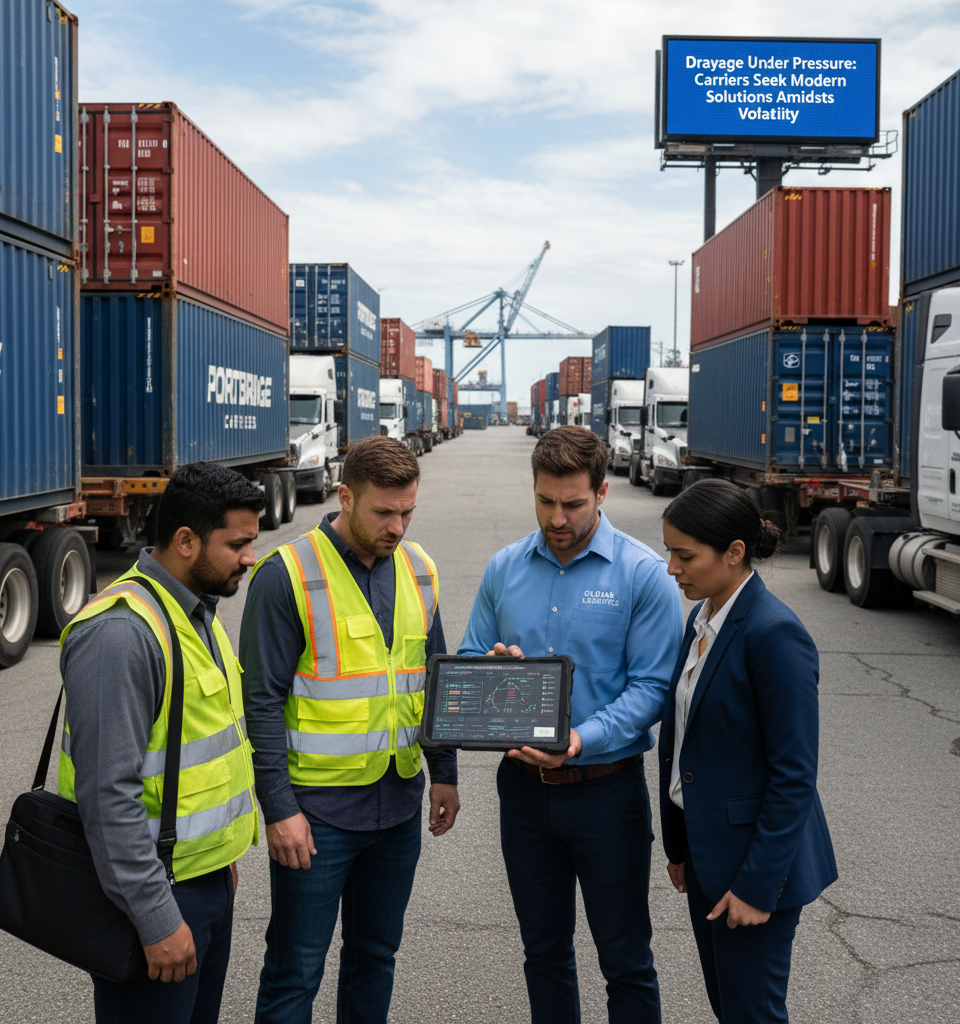
Drayage operators are confronting escalating demands to optimize efficiency amidst a complex landscape of operational hurdles. This challenging environment, characterized by demand volatility, persistent terminal congestion, a critical driver shortage, and shrinking profit margins, is rendering reliance on outdated manual processes increasingly untenable. A collaborative survey conducted by FreightWaves and CargoWise Landside delves into how drayage professionals are navigating these formidable obstacles.
The Shifting Sands of Drayage Operations
The context for these mounting pressures is a global supply chain still recalibrating from years of disruption. The drayage industry, a vital link between ports and inland logistics hubs, finds itself at the critical nexus of these challenges. Historically, many drayage operations have relied on established, often manual, procedures for dispatching, tracking, and communication. However, the sheer pace and unpredictability of modern freight movement are exposing the limitations of these methods, leading to inefficiencies, increased costs, and frustrated stakeholders. The current operational climate demands not just adaptation, but a fundamental transformation of drayage practices to ensure sustainability and profitability.
Survey Sheds Light on Industry Responses
To understand the industry's evolving response, FreightWaves partnered with CargoWise Landside to conduct a comprehensive survey of drayage professionals. While specific data points and percentage figures from the report are not detailed in the description, the overarching insight is clear: carriers are actively seeking and implementing new strategies to overcome day-to-day operational challenges. The explicit mention that "relying on manual processes is no longer sustainable" underscores a pivotal shift in industry mindset. The report aims to uncover these specific modernizations and best practices being adopted across the sector, offering a benchmark for other operators.
Broader Supply Chain Implications
The struggles and adaptations within the drayage sector have significant ripple effects across the entire supply chain. Terminal congestion, for instance, not only delays drayage operators but also impacts port efficiency, vessel turnaround times, and the on-time delivery of goods to warehouses and distribution centers. A constricted drayage arm can lead to higher inventory holding costs, missed production schedules, and increased consumer prices. Conversely, improvements in drayage efficiency, driven by technological adoption and streamlined processes, promise to alleviate bottlenecks, enhance predictability, and inject greater resilience into the broader logistics ecosystem.
The Imperative for Modernization
Industry analysts consistently point to digital transformation as the critical pathway forward for drayage. Solutions that offer real-time visibility, automated dispatch, electronic data interchange (EDI) capabilities, and predictive analytics are no longer luxury add-ons but essential tools. CargoWise Landside, as a partner in this survey, likely champions technology-driven solutions that integrate various facets of drayage operations, from order management to driver communication, aiming to create a more cohesive and responsive framework. The industry experts contributing to or analyzing this report would likely emphasize that proactive investment in such technologies is key to differentiating successful carriers in an increasingly competitive market.
What Comes Next for Drayage
Looking ahead, the drayage industry is poised for continued evolution. The insights from the FreightWaves and CargoWise Landside report are expected to serve as a roadmap for carriers looking to not just survive, but thrive in this challenging environment. The focus will likely remain on optimizing truck utilization, improving driver retention through better working conditions facilitated by technology, and leveraging data to make more informed business decisions. Future developments will undoubtedly center on further automation, improved predictive capabilities to mitigate demand spikes and lulls, and stronger collaboration across all supply chain stakeholders to collectively address systemic inefficiencies. The "next era of drayage" will undoubtedly be defined by its embrace of innovation and operational agility.