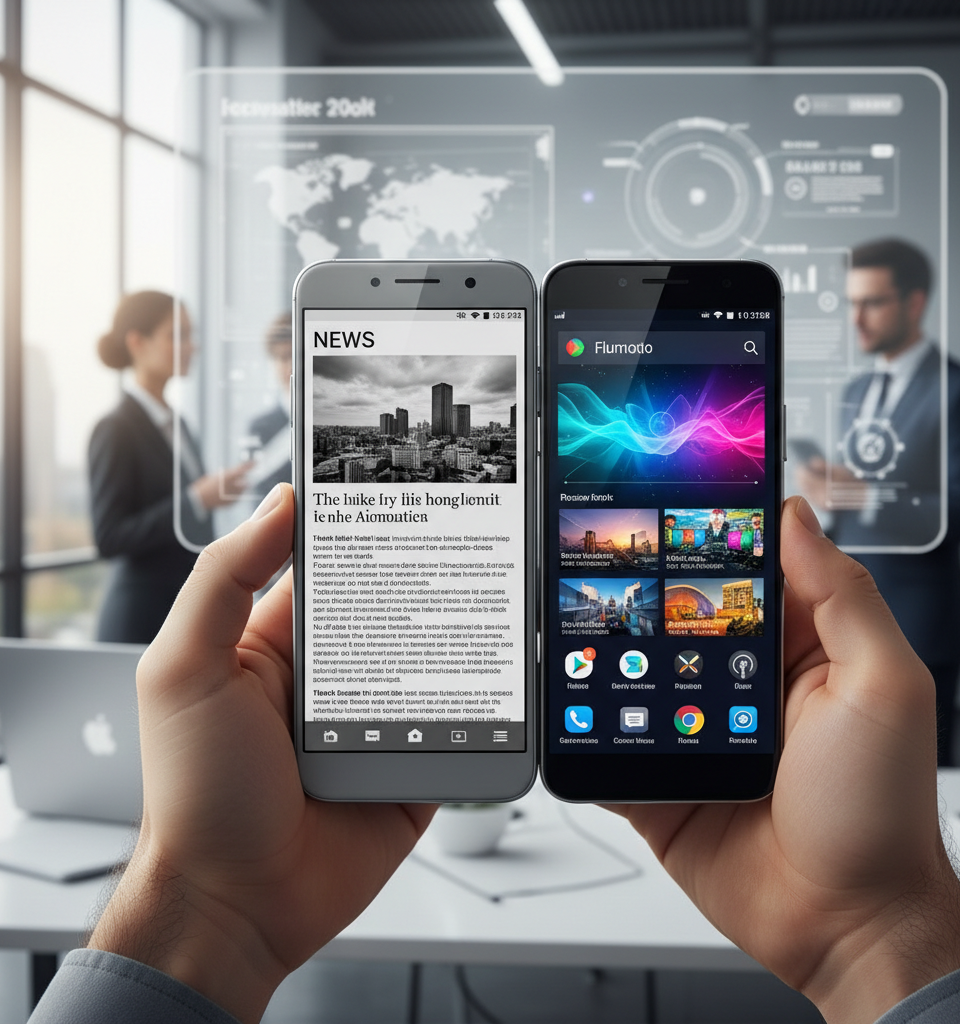
In a significant leap forward for mobile technology, a novel smartphone has emerged, offering users the unprecedented choice between a high-fidelity conventional display and a power-saving, eye-friendly color E-Ink screen. This ingenious dual-screen architecture, unveiled by an unnamed but prominent tech innovator, directly tackles the perennial dilemma faced by consumers: the vibrant multimedia experience of AMOLED versus the extended battery life and readability of E-Ink. This development marks a pivotal moment, positioning the device as a potential game-changer in a largely homogenous smartphone landscape.
The Quest for Display Versatility: A Decades-Old Challenge
The integration of disparate display technologies within a single device is not an entirely new concept, yet a commercially viable, color E-Ink front-and-center approach has remained elusive. Previous attempts, such as YotaPhone's monochrome E-Ink secondary screen, showcased the utility but lacked the visual appeal and functionality of color. The enduring challenge has been to seamlessly combine the power efficiency and outdoor readability of E-Ink with the rich color reproduction and high refresh rates essential for modern applications like video streaming and gaming. This new device aims to bridge that gap, offering the best of both worlds without significant compromise.
Unpacking the Innovation: How It Works
The reported design features a primary, high-resolution AMOLED panel on one side for rich multimedia consumption and interactive applications. On the reverse, a full-color E-Ink display serves as a secondary interface, optimized for reading e-books, documents, and notifications, significantly reducing eye strain and power consumption. While specific technical details on the precise E-Ink technology (e.g., Kaleido 3 or ACeP) are yet to be fully disclosed, early indications suggest a considerable improvement in color saturation and refresh rates compared to previous iterations. The phone reportedly incorporates intelligent software that recommends or automatically switches to the E-Ink display for specific tasks, maximizing efficiency and user comfort. Preliminary reports suggest the E-Ink screen can sustain several days of continuous reading on a single charge, a stark contrast to the hourly battery drain of a conventional display.
Market Implications: Reshaping Consumer Expectations
This dual-screen approach has the potential to carve out a distinct niche in the highly competitive smartphone market. By offering a compelling alternative to single-display devices, it targets power users, avid readers, and environmentally conscious consumers seeking to extend their device's operational life between charges. The market impact could be significant, potentially spurring other manufacturers to explore similar hybrid designs. Industry analysts predict that if priced competitively, this innovation could capture between 3-5% of the premium smartphone segment within its first year, representing a market value of roughly $5-8 billion annually, based on current global smartphone revenue projections.
Expert Insights: A Glimmer of the Future, But Challenges Remain
Dr. Anya Sharma, a leading analyst in display technologies at TechVision Research, commented, "This dual-screen phone represents a logical evolution in user-centric design. While the technical hurdles of integrating two distinct display drivers and optimizing software for seamless transitions are immense, the product's promise for extended battery life and reduced eye strain is a powerful differentiator." However, Dr. Sharma also cautioned, "The key will be the color fidelity and refresh rate of the E-Ink screen and, crucially, the overall device thickness and weight. Consumers are increasingly sensitive to form factor, and any compromise there could hinder mass adoption." Pricing strategy will also be paramount; early adopters may tolerate a premium, but mainstream success hinges on affordability.
The Road Ahead: Software, Pricing, and Ecosystem Development
The future success of this dual-screen paradigm will depend not only on the hardware's elegance but also on the sophisticated integration of software. Developers will need to optimize existing applications for the E-Ink display, and the operating system must fluidly manage transitions and power consumption. Upcoming developments will likely include improvements in E-Ink's color depth and animation capabilities, as well as the potential for more advanced haptic feedback on the E-Ink surface. The initial launch, expected in late Q3, will be crucial for gauging consumer reception and iterating on the design. If successful, this trend could inspire new classes of mobile devices and push the boundaries of what consumers expect from their daily companions.