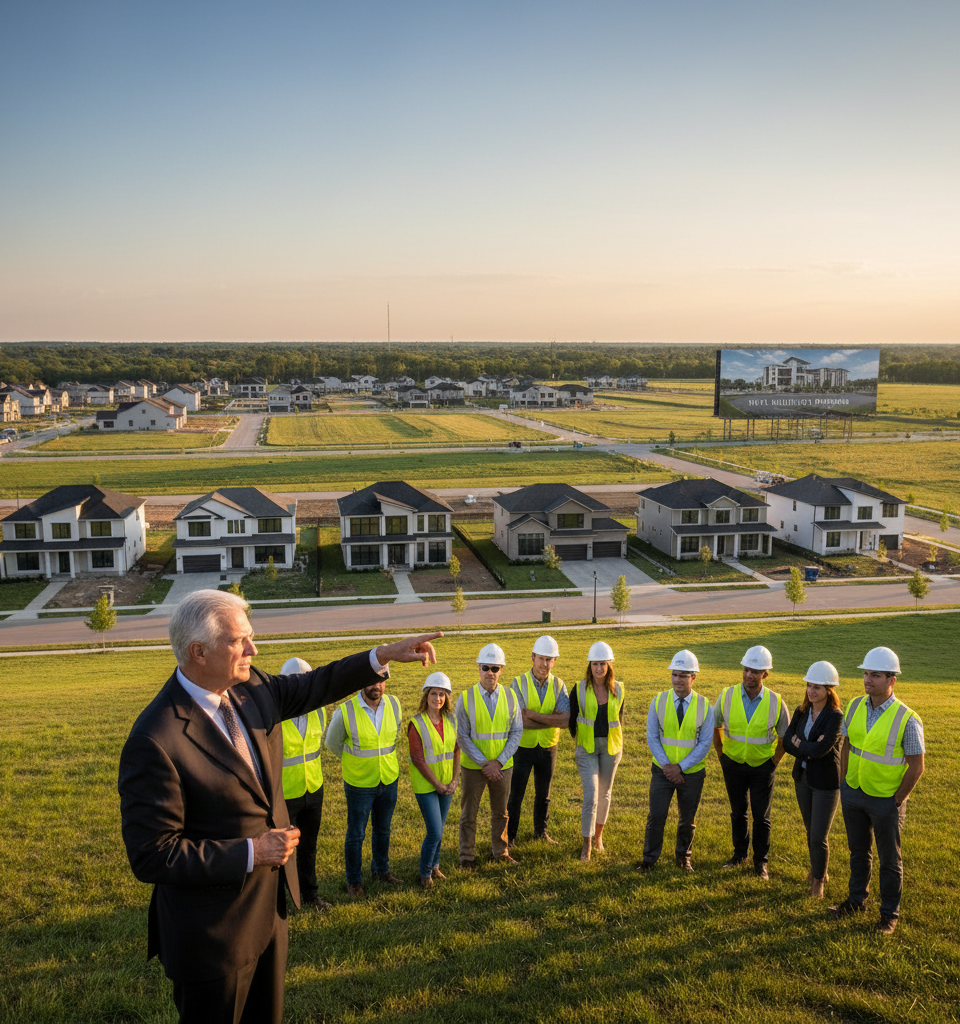
Dwight Schar, the formidable founder and former chairman of NVR, Inc. (NYSE: NVR), stands as a towering figure whose strategic genius fundamentally reshaped the landscape of modern homebuilding in America. Through an innovative, land-light business model, Schar pioneered an approach that decoupled the inherent risks of land ownership from the advantages of home construction, a move that delivered consistent profitability and resilience for NVR, particularly during volatile market cycles. His enduring legacy is one of rigorous financial discipline, a deep understanding of market dynamics, and an unwavering commitment to efficiency that continues to influence the sector today.
Schar's groundbreaking methodology emerged from a profound recognition of the cyclical nature of the housing market and the immense capital demands and risks associated with traditional land development. Historically, homebuilders tied up significant capital in large land banks, exposing them to substantial debt, fluctuating land values, and prolonged development timelines. Schar's counterintuitive insight was to prioritize land optioning and just-in-time acquisition, effectively shifting the balance of power and risk. This model allowed NVR to maintain lean balance sheets, weather downturns more effectively, and achieve superior returns on equity compared to many of its capital-intensive peers.
At the core of NVR's success under Schar's leadership was a strategic pivot towards a sophisticated land optioning system. Rather than outright purchasing vast tracts of land, NVR would secure options to buy specific parcels from land developers, typically through non-refundable deposits. This allowed the company to control prime locations without incurring the full carrying costs, debt, and inventory risks associated with outright ownership. The builder then purchased lots only as needed, driven by firm sales contracts, minimizing speculative risk and optimizing cash flow. This model is often cited as a key differentiator, contributing to NVR's consistently strong financial performance, even during periods of housing market stress.
This land-light strategy has profound implications for the broader housing industry, demonstrating that capital efficiency can be a powerful competitive advantage. While many traditional builders struggled with asset-heavy balance sheets during the 2008 financial crisis, NVR's model provided a buffer, allowing it to navigate the downturn with greater stability. The company's disciplined approach to growth, focusing on operational excellence and managed expansion, became a case study for business schools and a benchmark for industry analysts. This strategic rigor not only fostered NVR's incredible growth but also prompted other builders to re-evaluate their own land acquisition and development strategies, seeking greater flexibility and risk mitigation.
Industry experts and analysts frequently credit Schar with ushering in a new era of financial prudence within homebuilding. John Burns, CEO of John Burns Research and Consulting, once noted, "NVR's model proved that you don't need to be a land developer to be a successful homebuilder. Their strategy reduced risk and boosted returns, creating a blueprint for efficiency." Similarly, financial analysts often point to NVR's superior return on invested capital (ROIC) and lower debt-to-equity ratios as evidence of the model's efficacy, reinforcing its status as a top-tier performer in a notoriously cyclical industry. NVR's annualized return on equity, for example, frequently exceeds 25%, significantly outpacing the industry average.
The long-term implications of Schar's innovative model are substantial. As the housing market continues to evolve with pressures from rising interest rates, material costs, and labor shortages, the demand for capital-efficient, less risky operational models intensifies. Future homebuilders may increasingly adopt hybrid approaches, combining elements of NVR's land optioning with selective land purchases, to maintain agility and profitability. The emphasis on build-to-order homes, reducing speculative inventory, is another critical lesson from the NVR playbook that is gaining traction across the sector, ensuring that resources are allocated precisely to meet market demand.
Looking ahead, the principles championed by Schar – financial discipline, risk mitigation through optimized land strategies, and customer-centric building – will remain paramount. The increasing integration of technology, from modular construction to advanced supply chain management, will further refine these efficiencies. However, the fundamental interplay between land, capital, and market demand, as masterfully navigated by Schar, will continue to serve as the genomic key guiding the success of homebuilding enterprises for generations to come. NVR, under its current leadership, continues to embody these principles, cementing Dwight Schar’s legacy as one of the most influential figures in modern American business.