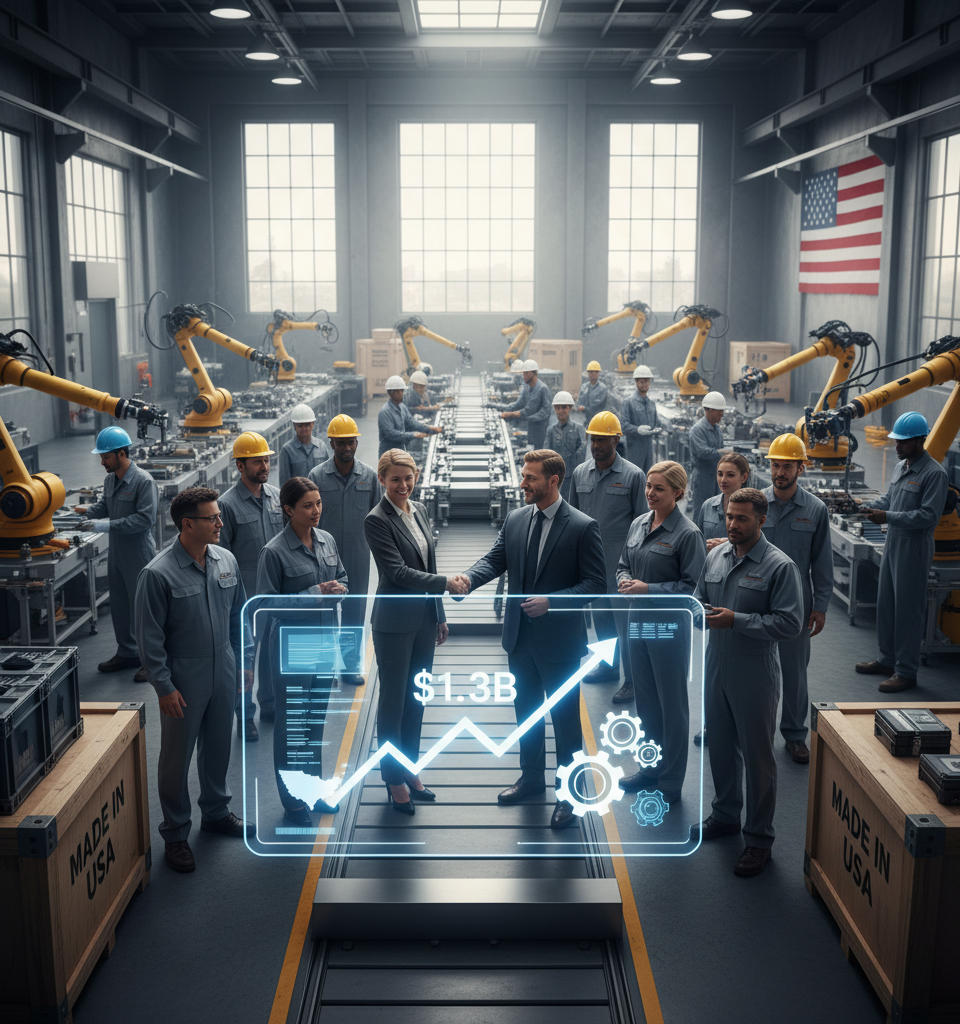
Eclipse, a prominent venture capital firm dedicated to operational technology, has successfully closed $1.3 billion in new funding. The capital, primarily sourced from a consortium of U.S. universities and foundations, will be strategically deployed to invest in early-stage companies and growth-stage enterprises that are actively developing solutions in robotics, industrial automation, additive manufacturing, and other critical technologies. This significant financial commitment underscores a concerted effort to reshor manufacturing capabilities, reduce reliance on overseas production, and build a more resilient domestic supply chain, a priority underscored by recent global disruptions.
Driving Domestic Production and Innovation
The funding round arrives at a crucial juncture for global economics and national security. The COVID-19 pandemic, coupled with geopolitical tensions and trade disputes, exposed critical vulnerabilities in global supply chains, particularly the over-reliance on single-source suppliers and offshore production. This has catalyzed a strong push for reshoring and nearshoring manufacturing activities, particularly in sectors deemed strategic, such as semiconductors, pharmaceuticals, and critical minerals. Eclipse's investment strategy directly addresses this imperative, seeking to empower the next generation of industrial innovators who can contribute to strengthening the U.S.'s manufacturing base and technological leadership.
Investment Strategy and Key Areas The $1.3 billion raised will be allocated across a range of investments, with a focus on companies that leverage deep technological expertise to solve complex industrial problems.
Eclipse's portfolio typically includes startups working on cutting-edge robotics for factory automation, advanced materials science, artificial intelligence for predictive maintenance, and sustainable manufacturing processes. The firm's partners emphasize a hands-on approach, often providing operational expertise alongside capital to help nascent companies scale their innovative solutions. This capital infusion demonstrates strong investor confidence in the long-term potential of industrial innovation and the strategic importance of building more robust domestic production capabilities.
Broader Industry and Economic Impact
This substantial capital commitment by Eclipse is expected to create a ripple effect across the industrial technology landscape. By providing crucial early-stage and growth capital, it will foster the development of new technologies and business models that can revolutionize manufacturing processes. This initiative is anticipated to generate high-skilled jobs domestically, attract further investment into the operational technology sector, and ultimately enhance the overall competitiveness of U.S. industry. The focus on automation and robotics is also poised to address persistent labor shortages in manufacturing while simultaneously boosting productivity and efficiency.
Expert Perspectives on Reshoring
Industry analysts widely view this type of investment as essential for long-term economic stability. Dr. Sarah Chen, a leading economist specializing in supply chain resilience, commented, "Investments like Eclipse's are not just about funding startups; they're about national strategic interests. Strengthening domestic manufacturing through technological innovation is crucial for resilience against future shocks and for maintaining technological leadership." She added that the involvement of universities and foundations signals a long-term commitment to nurturing a robust innovation ecosystem, beyond short-term market cycles. Experts also note that while reshoring might initially incur higher costs, the long-term benefits in terms of reliability, intellectual property protection, and reduced geopolitical risk outweigh these initial expenditures.
Future Outlook and Challenges
Looking ahead, the success of Eclipse's strategy will hinge on its ability to identify and nurture truly transformative technologies. While the capital is significant, scaling industrial innovations often faces challenges including high capital expenditure, lengthy development cycles, and the need for specialized talent. However, the firm's established track record and deep industry networks position it well to navigate these hurdles. The expectation is that over the next five to ten years, these investments will lead to a noticeable resurgence in U.S. manufacturing capabilities, particularly in advanced sectors. The focus will remain on developing solutions that can make domestic production both economically viable and globally competitive, potentially marking a pivotal shift in the global industrial landscape.