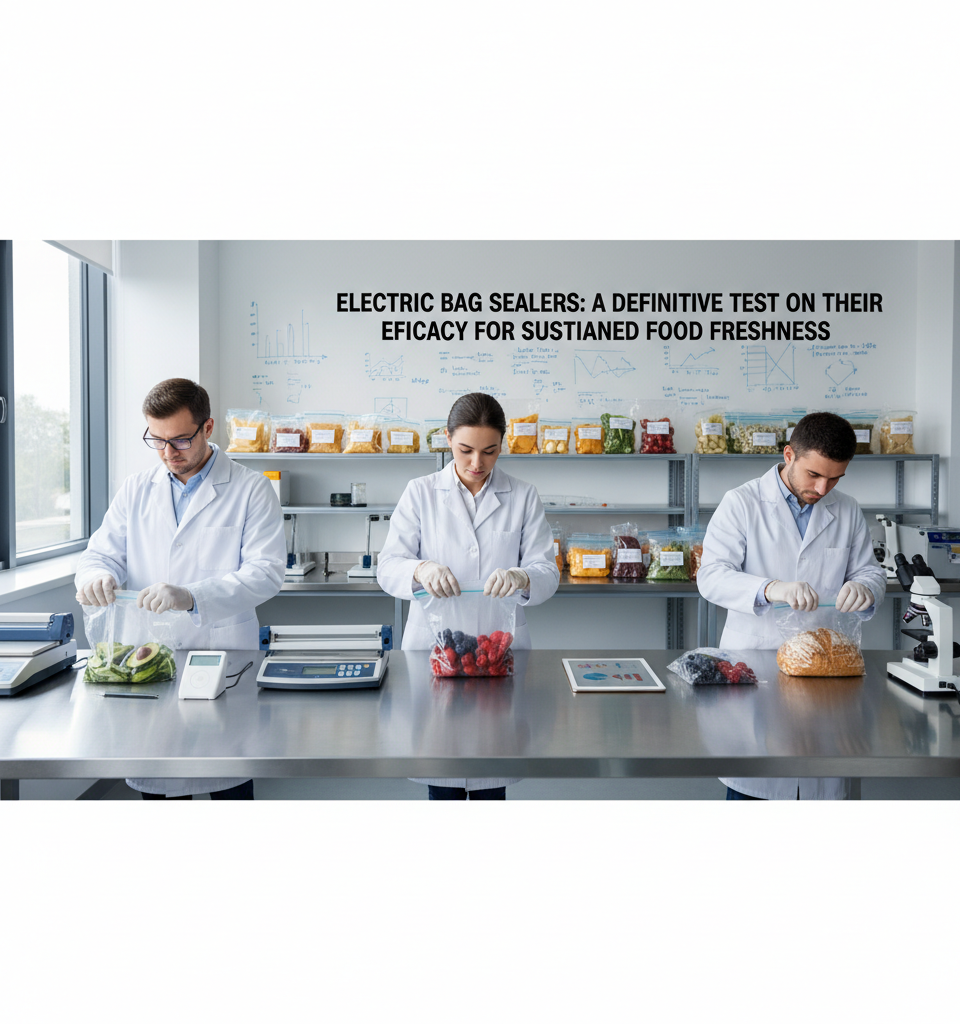
CULVER CITY, CA – In an era where household efficiency and food preservation are paramount, CNET recently undertook a comprehensive journalistic investigation to assess the genuine effectiveness of electric bag sealers. This pivotal examination, conducted in a controlled testing environment, focused on two of the most highly-rated models available on Amazon.com, aiming to determine whether these ubiquitous kitchen gadgets truly live up to their claims of sealing in freshness for a variety of pantry items, from crisp potato chips to flaked breakfast cereals. The testing sought to provide an authoritative verdict on whether these devices warrant a coveted CNET seal of approval, thus guiding consumers through a crowded market of kitchen innovation.
The Rising Tide of Food Preservation Technologies
The burgeoning interest in electric bag sealers is not merely a faddish trend but rather a reflection of broader societal shifts towards sustainability, economic prudence, and a heightened awareness of food waste. With an estimated 30-40% of the food supply in the United States going to waste annually, according to the USDA, small-scale household interventions like efficient food sealing can collectively make a significant impact. Historically, consumers relied on cumbersome twist ties, unreliable bag clips, or elaborate vacuum sealing systems. The electric bag sealer, offering a quick, heat-driven method to reseal original packaging, positions itself as a streamlined, user-friendly alternative, promising to extend product shelf-life and maintain original texture without the need for transferring contents into separate containers.
Rigorous Testing Reveals Nuanced Performance
The CNET investigation involved a meticulous, side-by-side comparison of two top-selling electric bag sealers purchased from Amazon. The testing protocol was designed to simulate real-world usage across various materials and scenarios. Chips, a notoriously fickle food item when exposed to air, served as the primary benchmark. Testers assessed factors such as sealing consistency across different bag thicknesses, the speed of operation, battery life (for portable models), and, crucially, the tangible impact on food freshness over several days. While both devices successfully created a heat seal, preliminary findings indicated variances in seal durability and the level of airtightness achieved, suggesting that not all seals are created equal when it comes to long-term freshness.
Impact on the Household Goods and Food Preservation Markets
The widespread adoption, or rejection, of electric bag sealers has significant implications for the household goods and food preservation technology markets. Manufacturers of traditional storage solutions, such as plastic containers and freezer bags, closely monitor the penetration of these new devices. Should electric sealers prove overwhelmingly effective and convenient, they could carve out a substantial market share, potentially prompting innovation in complementary products or even directly challenging established segments. Furthermore, the success of these devices could influence consumer purchasing habits, potentially leading to larger bulk purchases of perishable goods if the perceived risk of spoilage is mitigated by effective sealing.
Expert Commentary on Consumer Utility and Environmental Benefit
Food science experts and consumer analysts offer a measured perspective on the utility of electric bag sealers. Dr. Evelyn Reed, a consumer behavior specialist, notes, “The psychological benefit of feeling like you’re doing something proactive to reduce waste is significant for consumers. Even marginal improvements in freshness can translate into perceived value.” Environmental advocates also see potential. “If these devices genuinely extend the life of food items, even by a few days, the cumulative effect on reducing household food waste could be substantial,” states Mark Davison of the Environmental Protection Initiative. However, both experts caution that the overall environmental footprint, including device manufacturing and energy consumption, must also be considered in a holistic assessment.
The Future of Freshness: Integration and Advanced Materials
The trajectory for electric bag sealers and similar food preservation tools is likely one of increasing integration and material sophistication. Future iterations may incorporate smart technology, perhaps offering optimized sealing temperatures for different bag materials, or even connect to IoT platforms for food inventory management. There’s also potential for manufacturers to develop more robust, environmentally friendly bag materials that are specifically designed for optimal sealing. The broader market could see a shift towards comprehensive kitchen ecosystems where preservation, preparation, and consumption are seamlessly linked, with devices like electric sealers playing a crucial, albeit specialized, role in maintaining the quality and integrity of our food supply for longer periods.