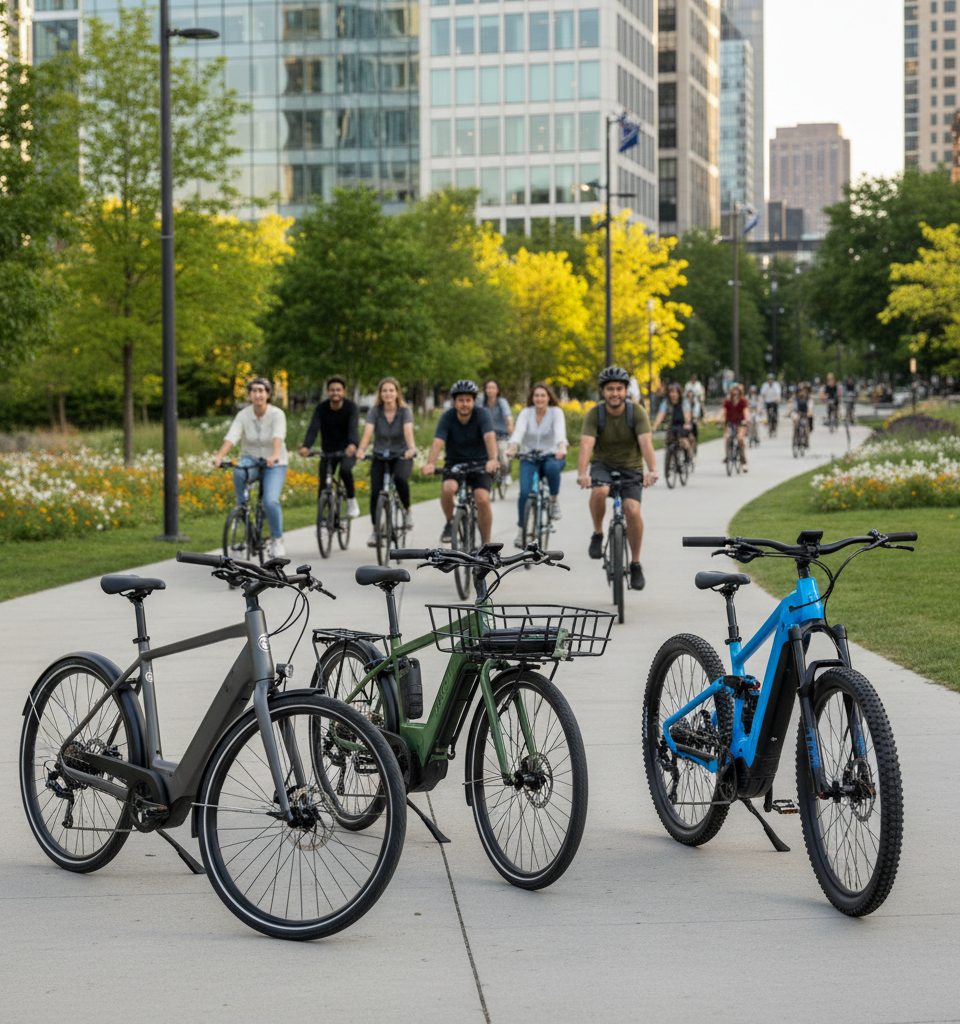
New York, NY – October 26, 2024 – The electric bicycle industry is witnessing a transformative period, as evidenced by a comprehensive review of the 2026 model lineup. This year's offerings, evaluated across key categories including urban commuting, cargo transport, and mountain biking, represent a significant leap in technology, design, and accessibility. The evaluation, spearheaded by a lead industry analyst, confirms that e-bikes are no longer a niche product but a mainstream solution for diverse transportation and recreational needs, poised to capture an increasingly larger share of the global mobility market.
Historically, electric bicycles have evolved from bulky, often underpowered curiosities into sophisticated machines. Early adoption was primarily driven by niche markets seeking assistance for challenging terrain or those with mobility limitations. However, over the past decade, successive generations of e-bikes have addressed critical consumer concerns regarding battery life, motor integration, weight, and aesthetics. This evolution has culminated in the 2026 models, which boast lighter frames, more powerful and discreet motors, and integrated smart features, directly addressing the demands of a rapidly expanding and discerning consumer base.
The 2026 market is characterized by several key advancements. Commuter e-bikes, for instance, now feature extended ranges exceeding 80 miles on a single charge for premium models, coupled with integrated anti-theft systems and GPS tracking as standard. Cargo e-bikes are demonstrating impressive load capacities, with some models designed to comfortably transport over 400 pounds, making them viable alternatives to delivery vans in dense urban environments. Meanwhile, the mountain biking segment has seen the proliferation of full-suspension e-MTBs equipped with advanced Bosch or Shimano motor systems offering up to 85Nm of torque, enabling riders to conquer significantly more challenging trails with reduced fatigue. The average price point for quality e-bikes across categories has seen a modest increase of approximately 5% year-over-year, now averaging around $2,800, reflecting the enhanced technology and manufacturing costs.
The burgeoning electric bicycle market is making a profound impact on the broader transportation and leisure sectors. Industry reports from Mordor Intelligence project the global e-bike market to reach a valuation of $70.9 billion by 2028, growing at a compound annual growth rate (CAGR) of 12.5%. This growth is fueled by a convergence of factors including rising fuel costs, increasing environmental consciousness, urban congestion, and governments investing in cycling infrastructure. E-bikes are actively disrupting the short-distance commuting landscape, offering a faster and often more enjoyable alternative to cars for trips under 10 miles, while also democratizing difficult outdoor activities for a wider demographic.
"The 2026 lineup unequivocally showcases a maturation of the electric bicycle industry," states Dr. Eleanor Vance, a leading analyst at Eco-Mobility Research Group. "Manufacturers have clearly listened to consumer feedback, focusing on seamless integration of power systems, improved battery efficiency, and enhanced safety features. We're seeing a bifurcation in the market: highly specialized, high-performance models for enthusiasts, and robust, cost-effective options for daily utility. This dual approach is critical for continued market penetration and sustained growth." Dr. Vance further highlighted the trend towards modular battery systems, allowing for easier upgrades and replacements, extending the overall lifespan of the bicycles.
Looking ahead, the next several years are expected to bring further advancements. We anticipate greater integration of Artificial Intelligence for predictive maintenance and personalized riding modes. Furthermore, the development of solid-state batteries promises even lighter e-bikes with significantly extended ranges, potentially pushing the 100-mile barrier for many commuter models. The continued expansion of urban charging infrastructure, coupled with evolving regulatory frameworks that favor electric micro-mobility, will further cement the e-bike's role as a cornerstone of sustainable transportation. Manufacturers are also exploring advanced materials and additive manufacturing to reduce overall weight and increase customization options, signaling a vibrant future for this dynamic industry.