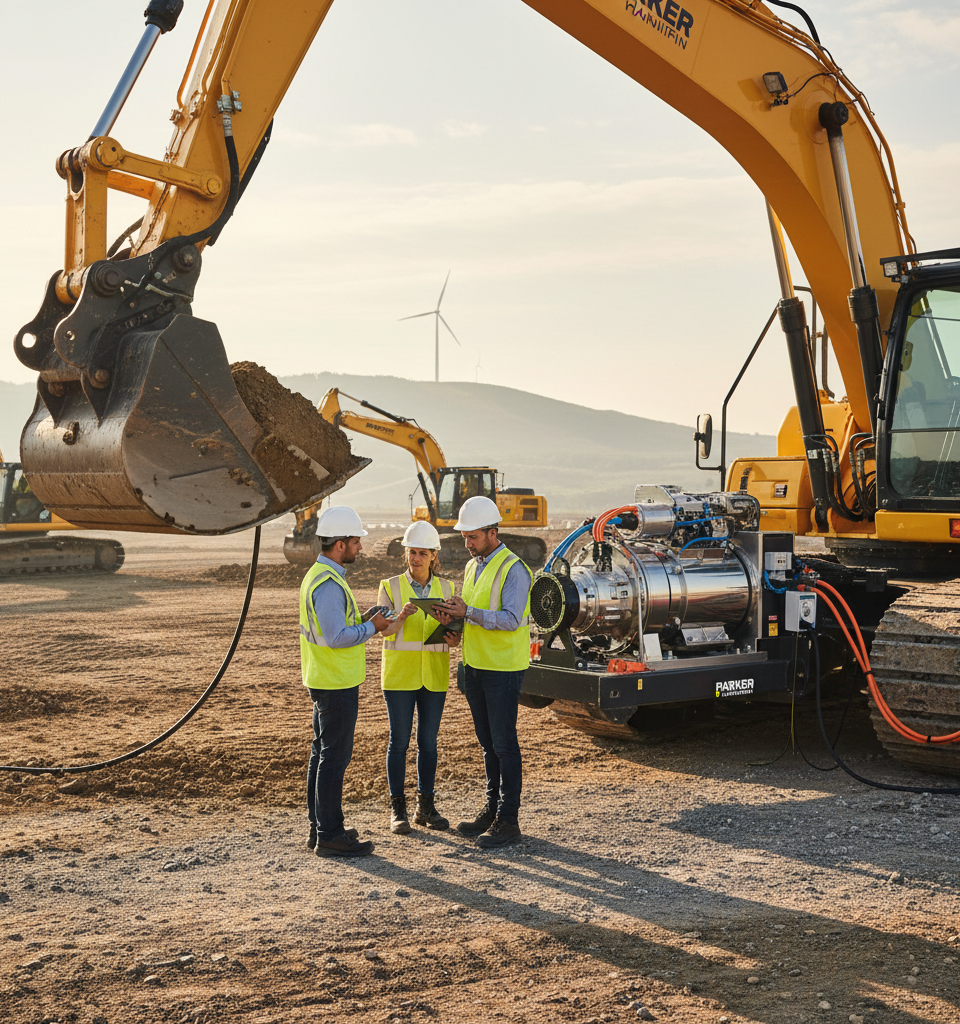
The heavy equipment sector is undergoing a profound transformation, with electrification emerging as the definitive path forward. Industry giant Parker Hannifin is leading the charge, showcasing how its integrated systems approach is delivering robust, high-performance electric solutions for both on- and off-highway machinery. This paradigm shift, propelled by tightening global environmental regulations, significant strides in battery technology, and an increasing corporate demand for operational sustainability, is not merely an incremental change but a fundamental re-engineering of the workhorse machines that underpin modern infrastructure and agriculture.
The impetus for this electrification wave is multi-faceted. Historically, heavy machinery has been a significant contributor to greenhouse gas emissions and noise pollution. Governments worldwide are responding with increasingly stringent mandates, such as the European Union's ambitious emissions targets and various national commitments to carbon neutrality. Concurrently, technological breakthroughs in lithium-ion battery density, charging speeds, and cost-effectiveness are making electric powertrains not just feasible, but economically compelling. Manufacturers are recognizing that electrification offers a crucial competitive advantage, providing not only regulatory compliance but also enhanced operational efficiency through lower fuel costs, reduced maintenance, and improved operator environments.
Parker Hannifin, with its extensive expertise in motion and control technologies, is uniquely positioned to capitalize on and drive this transition. The company's strategy revolves around a 'systems-level thinking' approach, moving beyond individual components to integrate entire electrical architectures. This comprehensive vision encompasses battery thermal management, power distribution, electric motors, inverters, and the intelligent control systems that orchestrate their seamless operation. For instance, Parker's recent innovations include advanced electric motor-pump combinations designed for optimal hydraulic power delivery in demanding applications, and sophisticated thermal management solutions crucial for extending battery life and performance in extreme operating conditions. These integrated solutions are reportedly delivering efficiency gains of up to 20-30% compared to traditional diesel-hydraulic systems in certain applications, alongside significant reductions in noise and vibration.
The implications for the broader industry are substantial. Large-scale OEMs in construction, agriculture, material handling, and mining are now actively developing and deploying electric models, shifting investment away from traditional internal combustion engine (ICE) research. This pivot is creating new supply chain dynamics, fostering innovation in areas like high-voltage safety, charging infrastructure, and predictive maintenance for electric drivetrains. The market for electric off-highway vehicles, estimated at over $10 billion in 2023, is projected to grow at a compound annual growth rate (CAGR) exceeding 25% over the next decade, indicating a rapid and sustained shift across all segments.
Industry analysts and experts are uniformly optimistic about the trajectory of heavy equipment electrification. Dr. Elena Petrova, a lead analyst at Global Market Insights, states, "The move to electric is not a niche trend; it's an industry imperative. Companies like Parker Hannifin that offer truly integrated, robust systems are not just selling components, they're selling complete, future-proof solutions that address the core challenges of performance, cost, and environmental impact." She further emphasizes that OEM partnerships with experienced electrification specialists will be critical for accelerating development cycles and ensuring the reliability of these complex machines.
Looking ahead, the next phase of this electrification journey will focus on standardization of charging infrastructure, further optimization of battery technology for extreme conditions, and the integration of artificial intelligence for predictive maintenance and autonomous operation. Parker Hannifin is actively investing in these areas, exploring next-generation power electronics and intelligent control algorithms that will enable even greater levels of efficiency and connectivity. The goal is not just to replace diesel engines with electric motors, but to reimagine what heavy equipment can achieve in terms of productivity, environmental footprint, and human safety. The shift promises a future where heavy machinery operates not only with zero emissions but with unprecedented levels of intelligence and reliability, truly embodying the idea of machines that "don't take days off" in a dramatically cleaner and more efficient manner.
This robust movement toward electrification suggests a significant shake-up in market leadership and a premium on innovation. Companies that can effectively integrate and scale electric powertrain solutions, while also providing the necessary support infrastructure, will be best positioned for long-term success. The heavy equipment industry is not just electrifying its machines; it is recalibrating its entire vision for sustainable and productive operations.