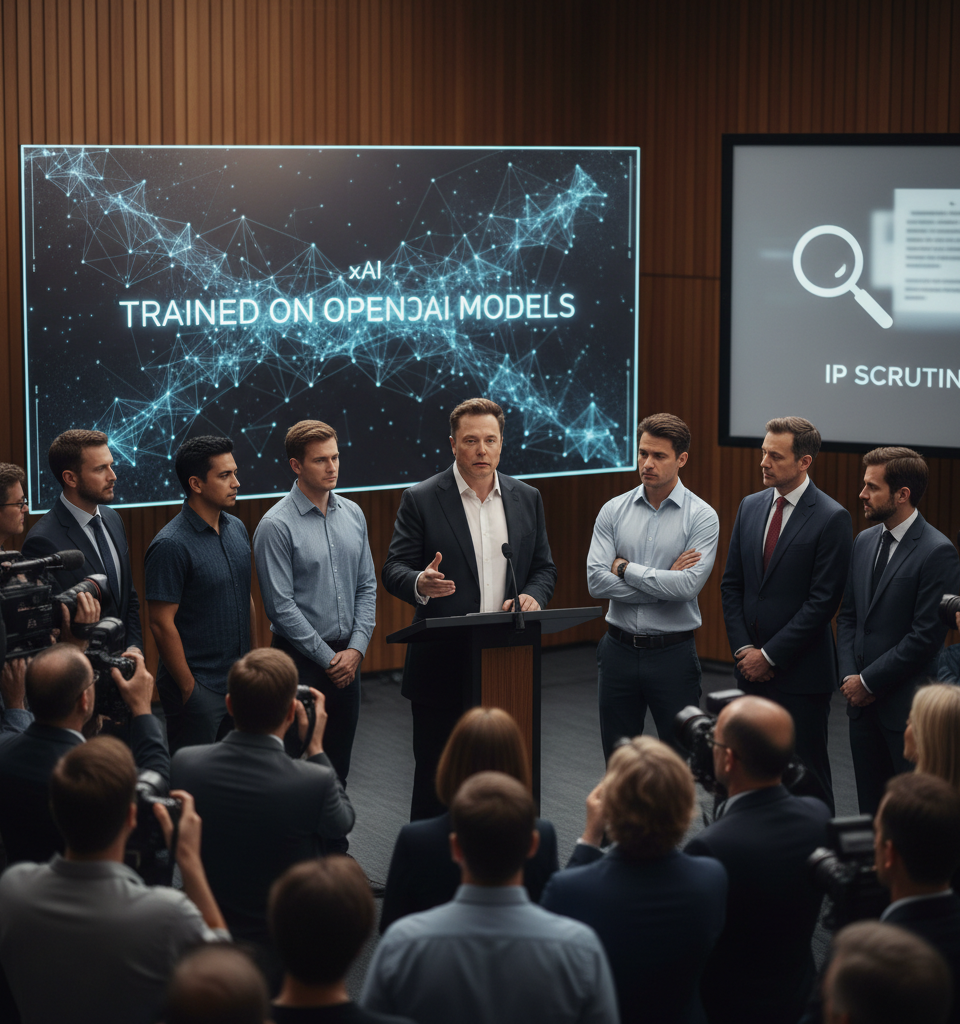
In a significant development echoing through the artificial intelligence industry, Elon Musk, CEO of xAI, has confirmed under oath that his company's large language model, Grok, was partially trained using proprietary models developed by OpenAI. The admission came during a recent deposition related to the lawsuit Musk filed against OpenAI, alleging a departure from its original non-profit mission. This testimony directly addresses persistent industry speculation regarding the provenance of Grok's foundational knowledge and ignites further questions about data sourcing and competitive ethics among leading AI developers.
The Heart of the Distillation Debate
Musk's testimony plunges directly into the contentious issue of “distillation” — a practice where one AI model learns by replicating the outputs or internal representations of another. While the specifics of xAI's methodology remain under wraps, the mere acknowledgment of using OpenAI's models as a training input underscores the challenges faced by AI innovators in safeguarding their intellectual property. Smaller, newer entrants often seek to leverage or learn from the advanced capabilities of frontier models, creating a grey area between legitimate research and potential copyright infringement. The competitive landscape for AI at the forefront of this technological revolution is marked by intense pressure to accelerate development, often leading to ethically ambiguous practices.
Key Details from the Deposition
While the full transcript of Musk's deposition has not been publicly released, sources close to the litigation indicate that the billionaire entrepreneur acknowledged the use of OpenAI's models in Grok's developmental phases. This admission is particularly noteworthy given Musk's highly public and often critical stance on OpenAI, a company he co-founded before his acrimonious departure. His lawsuit against OpenAI, filed in California in March 2024, alleges that the company, now valued at over $80 billion, has abandoned its founding principles by pursuing a for-profit structure and partnering with Microsoft for a staggering $13 billion investment.
The specific models utilized by xAI and the extent of their influence on Grok's architecture remain key points of interest. It is understood that xAI employed various techniques to "learn" from these models rather than direct copying, though the legal distinction is often blurred.
Industry Impact and Regulatory Scrutiny
This disclosure is set to send ripples across the AI sector, amplifying calls for clearer regulations on data provenance, model training, and intellectual property. Major players like Google, Meta, and Anthropic have invested billions in developing proprietary datasets and computational infrastructure, and any perceived unauthorized use presents a significant threat to their competitive edge. The market could brace for increased litigation regarding AI model similarity and training data use. Investors, already sensitive to the rapid shifts in AI, will be closely watching how courts interpret existing IP laws in the context of advanced machine learning. Concerns about market concentration may also rise, as smaller firms potentially rely on the output of larger, more financed entities.
Expert Analysis and Legal Precedents
Legal experts suggest that this case could establish important precedents for how intellectual property is defined and protected in the age of generative AI. Professor Anya Sharma, an expert in AI law at Columbia University, noted, "The concept of 'distillation' is a technological advancement that significantly complicates traditional copyright and trade secret law. Courts will need to discern if learning from a model's output constitutes infringement, especially if the original model's training data was protected." Analysts at Gartner estimate that by 2027, over 75% of new AI applications will face IP-related legal challenges, a substantial increase from current figures. The outcome of the Musk v. OpenAI lawsuit, particularly concerning this revelatory testimony, will be closely scrutinized by legal and technological communities worldwide.
The Road Ahead for AI IP
Looking forward, the implications of Musk's testimony are profound. It will likely intensify efforts by frontier AI labs to implement more robust safeguards against model copying and data leakage. This could include developing sophisticated embedded watermarks, cryptographic provenance tracking, or entirely novel legal frameworks tailored to AI intellectual property.
Simultaneously, regulatory bodies globally are under increasing pressure to establish clear guidelines for AI development, including fair use principles and ethical data sourcing. xAI, having launched Grok in late 2023 with a distinct, often satirical, personality, now faces heightened scrutiny regarding its foundational training. The ongoing legal battle will not only shape the future of OpenAI but also set a critical benchmark for intellectual property rights and competitive dynamics within the burgeoning artificial intelligence industry for years to come.
Future developments could include new industry consortiums dedicated to defining best practices for ethical AI model development and data usage, potentially leading to self-regulatory initiatives in the absence of rapid governmental action.