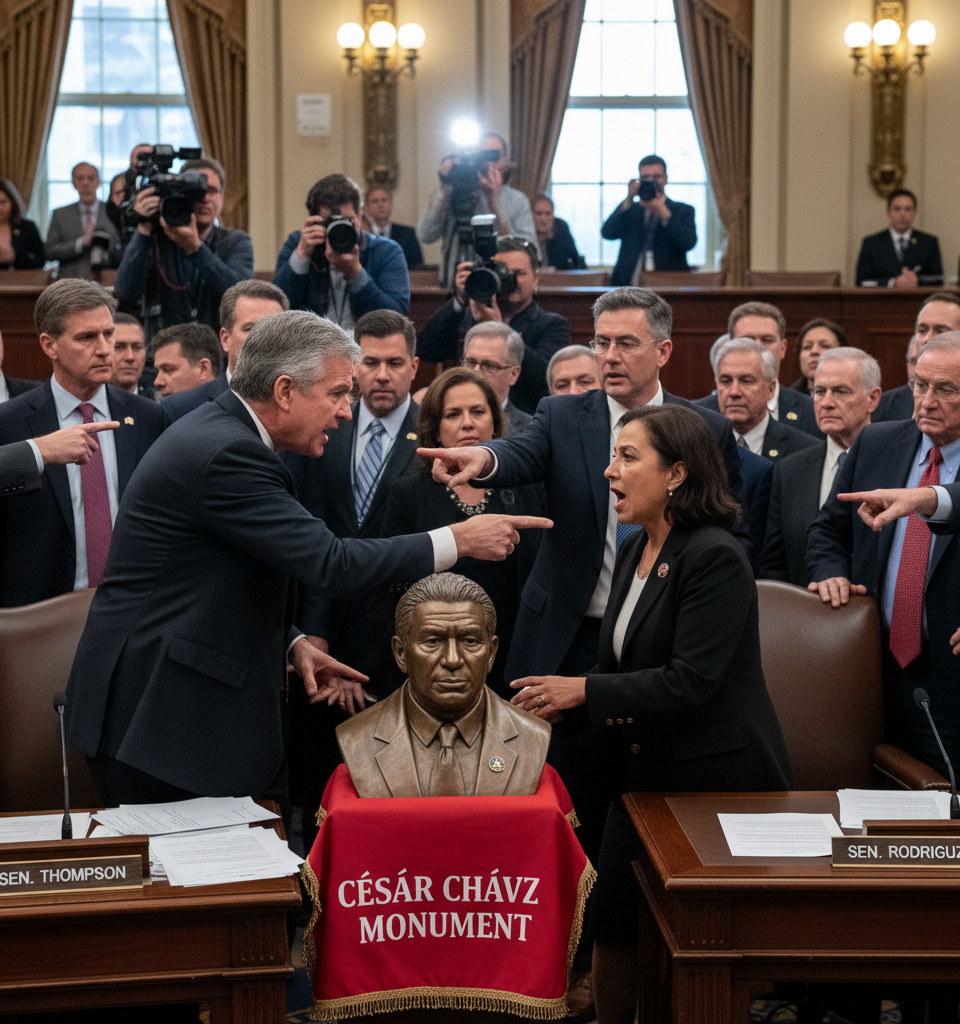
Washington D.C. – Allegations surrounding the late convicted sex offender Jeffrey Epstein unexpectedly permeated a Senate discussion today, diverting attention from a legislative proposal to temporarily close the César Chávez National Monument and re-evaluate the federal government's approach to honoring the farm labor movement. The dramatic turn of events unfolded as lawmakers debated an amendment that sought to reassess the monument's current status and explore options for a broader, more impactful tribute to a pivotal social justice movement.
Senator Martin Heinrich (D-NM) introduced the amendment, which proposed a temporary cessation of operations at the César Chávez National Monument in Keene, California. The core of his proposal was to mandate a comprehensive governmental examination into the creation of a new, potentially grander, national monument dedicated to commemorating the entirety of the farm labor movement. This initiative aimed to ensure that the struggles and triumphs of countless individuals, beyond just the iconic figure of César Chávez, receive appropriate federal recognition.
Unforeseen Allegations Disrupt Proceedings
The Senate proceedings, initially focused on the merits of historical preservation and recognition, took an abrupt and unforeseen detour when the Epstein accusations surfaced. Details regarding the exact nature of these accusations and their purported connection to the monument debate remain largely unclear from public records of the session. However, their introduction immediately heightened the political tension and underscored the volatile nature of legislative discourse, where seemingly unrelated issues can swiftly become intertwined.
The legislative effort to reassess the César Chávez National Monument comes at a time of heightened national dialogue surrounding historical representation and the appropriate mechanisms for federal acknowledgment of significant societal contributions. Advocates for the farm labor movement have long argued for more expansive and inclusive recognition, often pointing to the collective efforts and sacrifices that underpinned the movement's successes. Senator Heinrich's amendment sought to address these calls directly, offering a path toward a more comprehensive national tribute.
Broader Implications for National Monuments
Beyond the immediate legislative skirmish, this incident highlights the complex political landscape surrounding national monuments. These designations, often intended to unite and inspire, can sometimes become flashpoints for broader societal debates, partisan wrangling, and even unrelated controversies. The introduction of Epstein-related allegations into this particular discussion could cast a shadow over future legislative efforts concerning national heritage sites, making it more challenging to forge bipartisan consensus on ostensibly apolitical matters.
For the farm labor movement and its proponents, the unexpected turn of events could either delay or, paradoxically, even galvanize support for more robust federal recognition. The potential for a new national monument, thoroughly examining the movement's historical trajectory, remains a significant prospect. However, the current detour into unrelated allegations underscores the unpredictable path legislative initiatives often take in the nation's capital.
The Path Forward for the Amendment
The immediate future of Senator Heinrich's amendment, and indeed the broader debate concerning the César Chávez National Monument, now appears less certain. The Senate's handling of the Epstein accusations, and whether they are deemed pertinent to the legislative matter at hand, will undoubtedly influence the trajectory of the monument proposal. Lawmakers will need to navigate this new layer of complexity while attempting to advance legislation that addresses legitimate concerns about historical representation and federal land designation.
Observers of parliamentary procedure will be keenly watching how the Senate addresses the newly introduced allegations. The incident could prompt discussions about decorum, relevance in debate, and the mechanisms by which unrelated, highly sensitive topics are introduced into legislative proceedings. The long-term impact on the push for a new farm labor monument remains to be seen, but the day's events have undoubtedly added a significant and unexpected chapter to the ongoing story of historical recognition in the United States Senate.