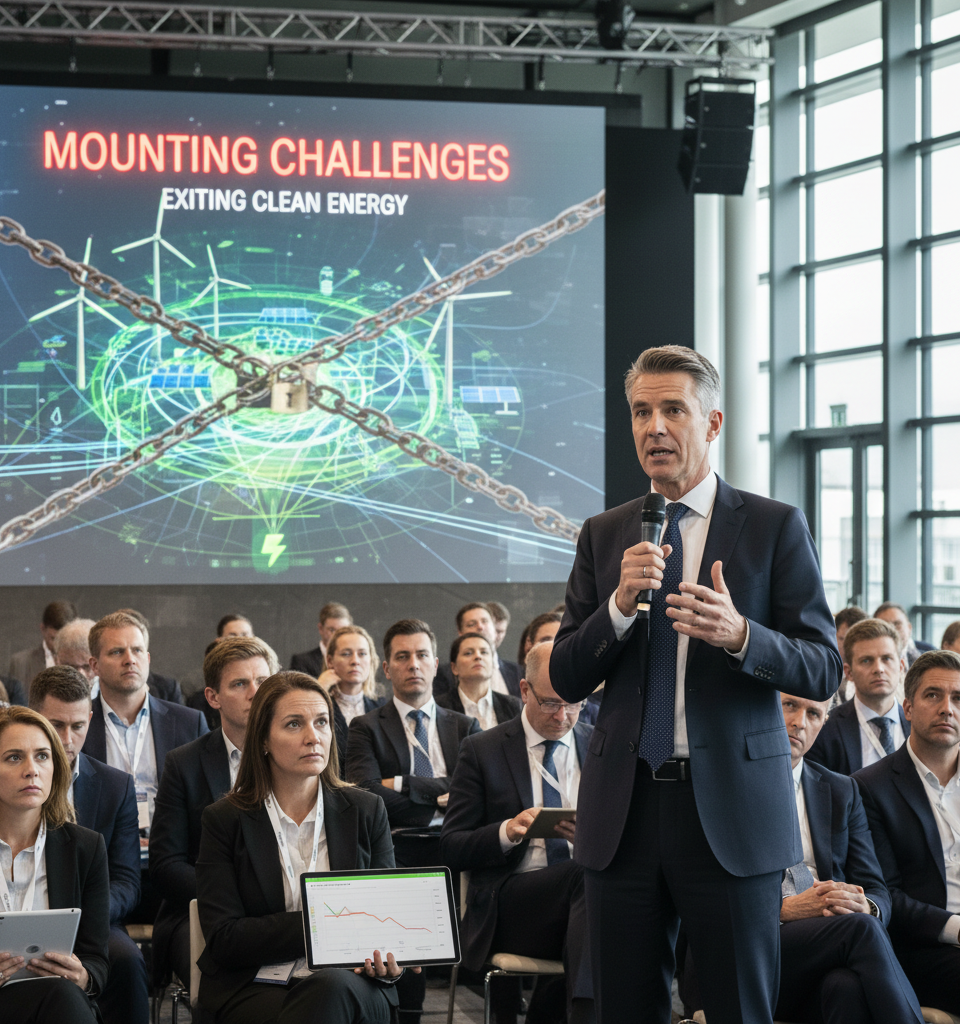
Stockholm, Sweden – EQT AB, Europe’s behemoth private equity firm managing over €230 billion ($250 billion) in assets, has alerted the market to a growing array of obstacles confronting the divestment of its alternative energy holdings. The firm, a significant investor in renewable energy infrastructure and developers, highlighted a tightening exit landscape amidst increasing capital costs, regulatory complexities, and a saturated buyer pool, potentially impacting future returns and the pace of clean energy development.
A Critical Juncture for Sustainable Investments
This declaration arrives at a critical juncture for the global energy transition. Private equity has emerged as a cornerstone of financing for the burgeoning clean energy sector, injecting billions into projects ranging from offshore wind farms to solar parks and battery storage solutions. EQT's concerns underscore a broader industry apprehension about the liquidity and long-term viability of these capital-intensive investments. The firm's stature lends significant weight to this assessment, suggesting that the headwinds faced by EQT are likely reflective of challenges across the entire private equity clean energy investment landscape.
Navigating a Challenging Divestment Environment
Sources within EQT, speaking on background, pointed to several key impediments. Rising interest rates have driven up borrowing costs, making project financing and acquisitions more expensive for potential buyers. Furthermore, increasingly complex environmental regulations and permitting processes, while crucial for sustainable development, can prolong deal timelines and introduce unforeseen costs. The growing number of private equity players and institutional investors actively pursuing renewable energy assets has also led to a more competitive, and at times crowded, market for exits, making it harder to secure premium valuations. EQT's recent divestment activities, while still successful, have reportedly encountered longer sales cycles than in previous years, an anecdote that substantiates their public warning.
Ripple Effects Across the Renewable Sector
The implications of EQT's warning could ripple throughout the entire renewable energy ecosystem. Should private equity firms face prolonged or less profitable exit routes, it could temper their appetite for new investments, potentially slowing the deployment of critical clean energy infrastructure. This could, in turn, impact national decarbonization targets and the speed at which grids transition away from fossil fuels. Developers reliant on private capital for early-stage funding might find securing financing more challenging, necessitating more innovative capital structures or increased reliance on public funding mechanisms.
Expert Analysis: A Shift in Market Dynamics
Industry analysts concur with EQT's assessment, noting a palpable shift in market dynamics. Dr. Anya Sharma, Head of Renewable Energy Research at Capital Insights Group, commented, "The 'green premium' once easily commanded by clean energy assets is facing downward pressure. While the underlying fundamentals of the energy transition remain strong, the financial engineering required for profitable exits is becoming increasingly sophisticated. We're moving from a period of relatively straightforward growth to one demanding greater operational efficiency and strategic asset management from investors." She further added that a bifurcation might emerge, with premium, derisked assets continuing to attract strong bids, while more nascent or complex projects face greater scrutiny.
The Path Forward: Innovation and Strategic Adjustments
In response to these emerging challenges, private equity firms are likely to explore diversified exit strategies, including secondary sales, public listings for portfolios of assets, and partnerships with strategic corporate buyers. EQT itself is reportedly enhancing its internal operational teams to optimize asset performance and value creation during the holding period, aiming to present more robust and attractive packages to potential acquirers. Future developments could also see a greater emphasis on “build-and-hold” strategies for certain assets, moving away from purely financial engineering to long-term ownership and operation.
Looming Policy and Economic Considerations
The long-term solution may also involve policy interventions to streamline permitting processes and incentivize further institutional investment through favorable tax treatments or risk-sharing mechanisms. As global central banks continue to grapple with inflation, the trajectory of interest rates will remain a crucial variable influencing the cost of capital. EQT's candid warning serves as a significant bellwether, signaling that while the commitment to clean energy remains unwavering, the financial pathways to achieve it are becoming increasingly intricate and demand evolving strategies from the world's largest private investors.