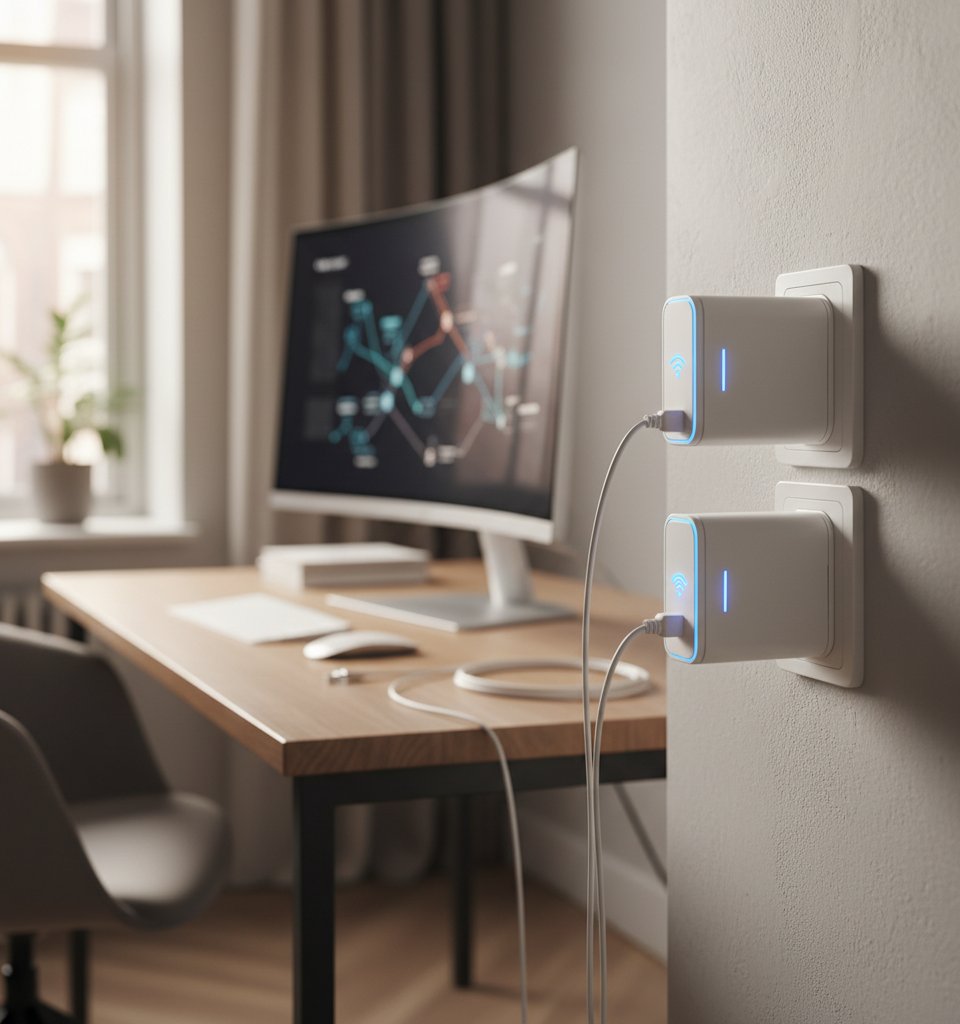
Home and office users grappling with the perennial struggle for faster, more reliable internet connectivity are on the cusp of a significant shift, as new generations of network adapters promise the performance benefits of wired ethernet without the accompanying hassle of cable runs. This technological leap addresses a long-standing pain point for many, potentially allowing users to bypass the inherent limitations of Wi-Fi for demanding tasks such as high-definition streaming, online gaming, and large file transfers, simply by plugging into existing electrical infrastructure.
The Persistent Allure of Wired Connections
The appeal of wired internet has always stemmed from its superior stability, lower latency, and generally higher throughput compared to wireless alternatives. While Wi-Fi technologies like Wi-Fi 6 and the upcoming Wi-Fi 7 have made significant strides in bandwidth and efficiency, they remain susceptible to interference, signal degradation through walls, and contention from multiple devices. For many, the desire for an uncompromised connection has often led to the laborious and unsightly process of routing ethernet cables through walls, floors, and ceilings—a considerable deterrent for most homeowners and renters.
Historically, solutions like Powerline adapters have attempted to bridge this gap by using a home's electrical wiring to transmit data. However, earlier iterations often suffered from inconsistent performance, susceptibility to electrical noise, and significantly lower speeds than direct ethernet. These limitations prevented them from gaining widespread adoption as a true replacement for dedicated cabling or even robust Wi-Fi.
A New Era for Adapter Technology
The current generation of advanced adapters represents a marked improvement over their predecessors. These newer devices incorporate sophisticated signal processing, enhanced noise cancellation, and often employ multiple electrical phases within a home's wiring for more stable and faster data transmission. While specific speeds can vary widely depending on the age and quality of a home's electrical system, some modern Powerline communication technologies are now capable of delivering speeds well into the gigabit range, rivalling direct ethernet connections in many real-world scenarios. This jump in performance signifies a critical turning point, moving these solutions from niche alternatives to viable primary connectivity options.
The core innovation lies in the continued refinement of protocols and hardware that can efficiently modulate data signals over electrical lines, which were not originally designed for such purposes. Engineers have focused on creating robust solutions that can intelligently adapt to varying electrical circuit conditions, ensuring more consistent throughput even in historically challenging environments. This sophisticated engineering is key to their improved reliability and speed.
Market Impact and User Empowerment
This evolution in adapter technology is poised to have a substantial impact on the consumer networking market. It presents a compelling challenge to the dominance of pure Wi-Fi solutions, especially in larger homes or dwellings with architectural features that impede wireless signals. For internet service providers and networking hardware manufacturers, it could unlock new opportunities for product bundles and service offerings focused on enhancing in-home wired connectivity without structural modifications. Small businesses and remote workers could also benefit immensely, gaining enterprise-grade networking stability in unconventional setups.
Furthermore, these solutions empower users who previously felt constrained by the limitations of Wi-Fi or the impracticality of extensive cabling. Homeowners can now easily reposition demanding devices—such as smart TVs, gaming consoles, or desktop computers—anywhere with a power outlet, confident in receiving a strong, wired connection. This flexibility was previously unattainable without considerable effort or expense.
Expert Perspectives on Adoption
Industry analysts suggest that increased awareness and continued performance improvements will drive adoption. "The key hurdle has always been performance inconsistency and consumer perception," stated a leading telecommunications analyst recently. "As these new adapters consistently deliver speeds comparable to direct ethernet in real-world conditions, and as prices become more competitive, we anticipate a significant uptake. It solves a genuine problem for a large segment of the population." Experts agree that while Wi-Fi will remain indispensable for mobile devices, these advanced adapters could become the go-to solution for stationary devices requiring optimal performance.
The Future of the Hybrid Network
Looking ahead, the trajectory of these adapter technologies suggests a future where hybrid home networks become the norm. Users could leverage robust Wi-Fi for their mobile devices while seamlessly integrating high-performance wired connections via electrical wiring for fixed devices. Continued advancements are expected to further improve speeds, reduce latency, and potentially integrate with other smart home technologies, creating an even more cohesive and high-performing home network ecosystem. This evolving landscape promises a future where slow, unreliable internet becomes a relic of the past, even without the structural commitment of traditional cabling.