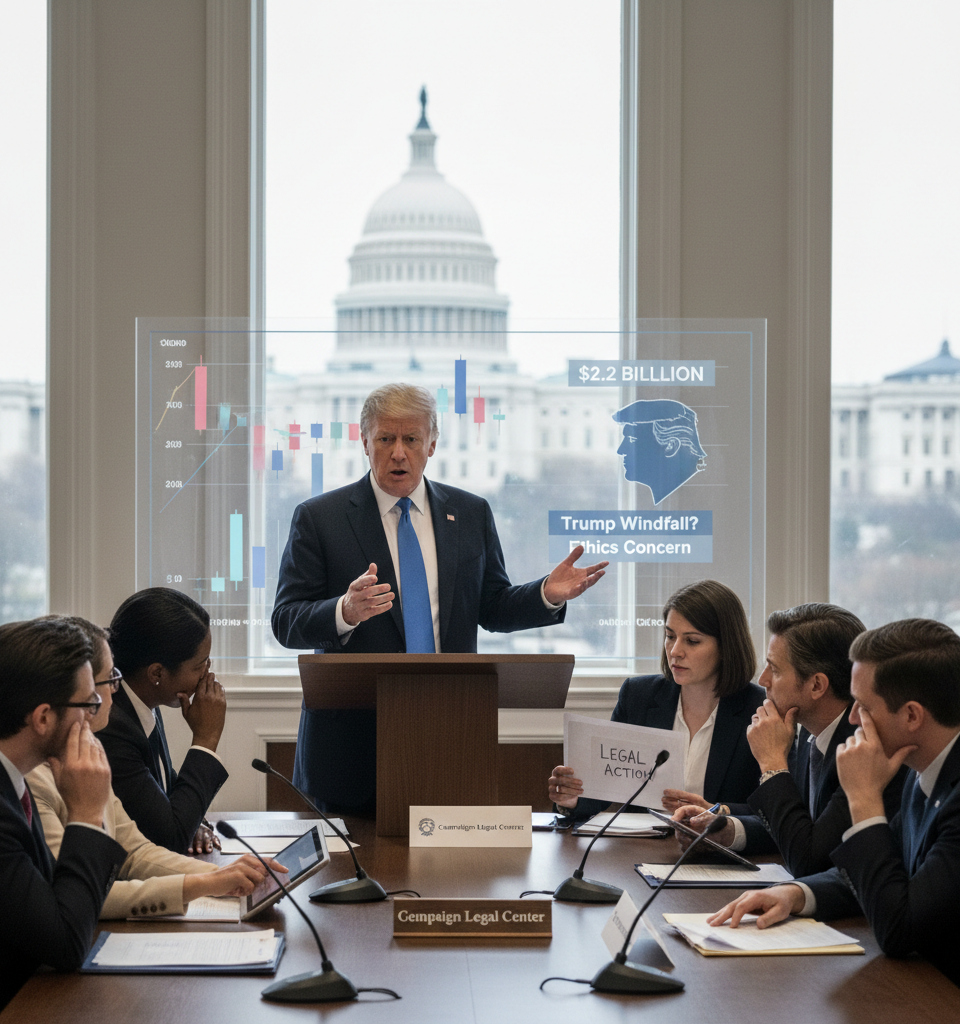
The ethics landscape in Washington D.C. is ablaze with controversy following revelations of former President Donald Trump's substantial $2.2 billion windfall. This significant financial development has drawn sharp condemnation from ethics watchdogs, with legal remedies anticipated as a direct response to what one prominent figure has labeled a "startling state of affairs."
The reaction from the capital's ethics establishment has been unequivocal, described by insiders as a blend of shock and a weary sense of déjà vu. The sheer scale of the financial gain, coupled with the former president's history of navigating complex ethical boundaries, has fueled widespread concern over the integrity of public service and post-presidency conduct. Critics argue that such a considerable financial influx raises pertinent questions about potential undue influence or the appearance thereof, irrespective of the legality of the transactions.
Norm Eisen, a former ethics czar and a vocal critic of what he perceives as a erosion of ethical standards in government, did not mince words. "It's all heinous," Eisen stated, encapsulating the outrage felt by many within the ethics community. His use of strong language underscores the gravity with which these developments are being viewed. Furthermore, Eisen explicitly indicated that the legal community is already marshaling its resources: "You can anticipate that we'll be looking at legal remedies for this startling state of affairs." This suggests a proactive and potentially aggressive pursuit of accountability, signaling a new front in the ongoing debate over presidential ethics.
The context surrounding this windfall is critical. Discussions around the financial dealings of former presidents have long been a sensitive topic, but the magnitude of Trump's reported gain has amplified these concerns. Standard protocols and precedents regarding post-presidency earnings typically aim to mitigate conflicts of interest and maintain public trust. However, the details of how this $2.2 billion was amassed are currently under intense scrutiny, with ethics experts questioning whether existing regulations are robust enough to address such large-scale financial activities involving former heads of state.
The potential impact of this development extends beyond the immediate legal and ethical challenges. It could profoundly influence future policy debates regarding government transparency, financial disclosure requirements for high-ranking officials, and the limitations placed on former public servants. The perception of unchecked financial enrichment, particularly after holding the nation’s highest office, risks eroding public confidence in democratic institutions and the ethical framework governing them. Lawmakers and advocacy groups may be spurred to propose new legislation or strengthen existing ones to prevent similar situations from arising.
Expert Perspectives and Anticipated Actions
Ethics experts are largely unified in their assessment that this situation demands a thorough examination. While specific legal avenues are yet to be fully disclosed, the mention of "legal remedies" by Eisen suggests a broad range of potential actions, from civil litigation challenging the nature of the financial transactions to calls for investigations by relevant oversight bodies. The focus will likely be on whether any laws, regulations, or established ethical guidelines were circumvented or exploited, particularly concerning the interactions between corporate interests and political influence.
The Broader Implications
This incident is poised to reignite broader discussions about the revolving door phenomenon between government service and lucrative private sector roles. The sheer volume of this financial gain could set a precedent, or at least force a re-evaluation of ethical norms for former commanders-in-chief. It also highlights the persistent tension between an individual's right to pursue private endeavors and the public's expectation of unimpeachable conduct from those who have held significant power.
What Comes Next
The immediate future is expected to involve intensive legal analysis and public advocacy from ethics organizations. The promise of "legal remedies" indicates that this is not merely a rhetorical condemnation but a prelude to concrete actions. These actions could include filings, public pressure campaigns for legislative reform, and potentially investigations by governmental watchdog groups. The coming weeks and months will reveal the specific strategies employed by those seeking to address what they universally deem an ethically compromised situation, potentially shaping the future of ethics enforcement in Washington for years to come.