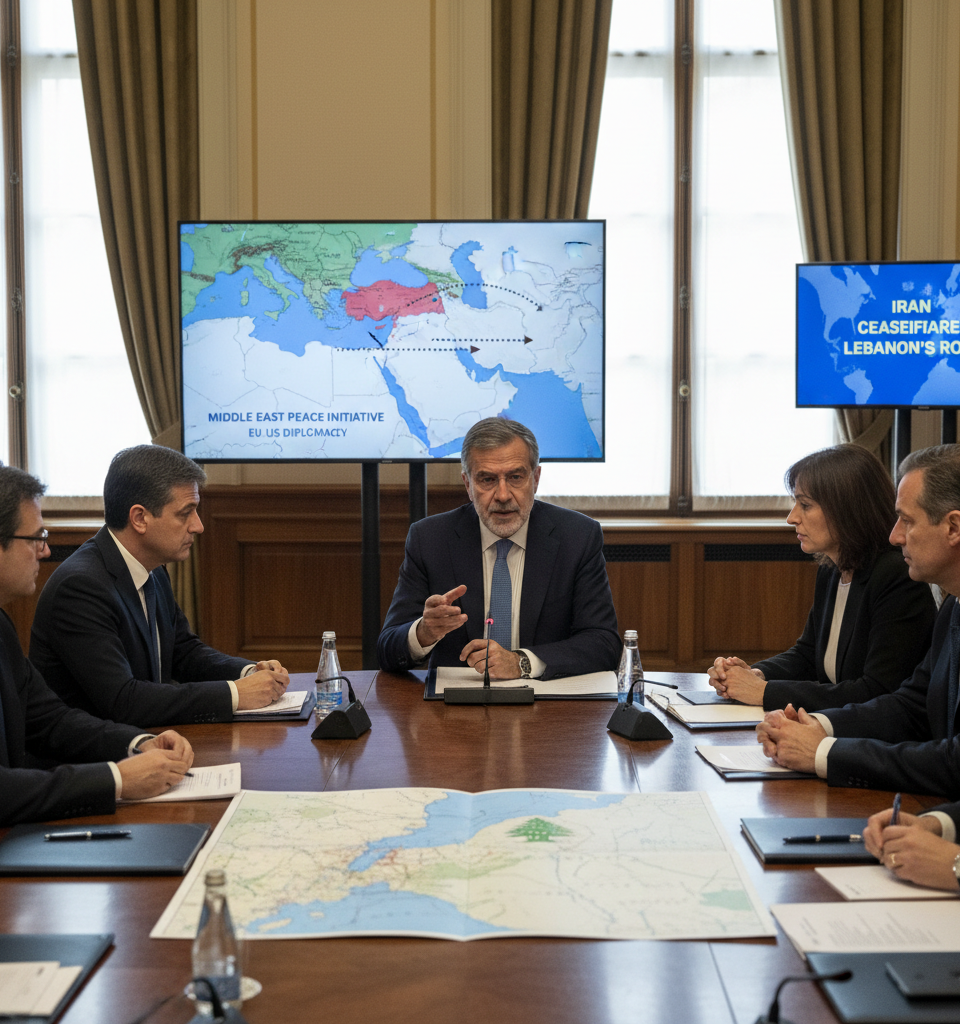
Brussels, Belgium – April 2, 2024 – In a significant diplomatic maneuver, key European nations, including Britain, France, and the broader European Union, have formally admonished the United States, advocating for any forthcoming ceasefire agreement with Iran to explicitly encompass Lebanon. This collective stance follows strong condemnation of recent Israeli military actions targeting Hezbollah within Lebanese territory, which European leaders assert directly jeopardize ongoing truce negotiations and risk wider regional escalation.
Contextualizing the Crisis: A Volatile Region
This demand underscores the escalating volatility in the Middle East, a region already grappling with multifaceted conflicts. The historical entanglement of Iran with various proxy groups, notably Hezbollah in Lebanon, has made the latter a critical flashpoint in regional power dynamics. European concern stems from the recognition that a piecemeal ceasefire, neglecting Lebanon, would be inherently fragile and prone to breakdown, potentially igniting a broader proxy war that could draw in international actors. The current appeals are a direct response to a perceived disconnect between Washington's focus on broader détente with Tehran and the immediate, kinetic realities on the ground in Lebanon, where cross-border hostilities between Israel and Hezbollah have intensified significantly in recent months.
Escalating Tensions and Diplomatic Interventions
Recent Israeli strikes against Hezbollah targets in southern Lebanon and Beirut have been met with swift and unequivocal condemnation from European capitals. Officials from the Élysée Palace in Paris reportedly cited these operations as 'grossly destabilizing,' while British Foreign Office statements emphasized the imperative of 'de-escalation through comprehensive understanding, not selective engagement.' The European Union's High Representative for Foreign Affairs, Josep Borrell, echoed these sentiments, stating, "Any ceasefire must be robust and address all active fronts. Lebanon is not an auxiliary theatre; it is central to regional stability." While specific figures on recent casualties were not yet publicly disclosed by all parties, reports indicate dozens of fatalities and significant infrastructure damage since late 2023, exacerbating humanitarian concerns in an already beleaguered Lebanon.
Broader Market and Geopolitical Repercussions
The ripple effects of continued instability have been keenly felt across global markets. Energy prices, particularly crude oil, have exhibited heightened volatility, with Brent crude briefly touching nearly $88 per barrel last week, largely attributed to geopolitical premiums. Shipping routes through the Suez Canal and adjacent maritime corridors remain subject to elevated security risks, impacting supply chains and insurance premiums, which have reportedly surged by an average of 15-20% for transiting vessels since the onset of intensified regional conflicts. Furthermore, the prospect of a protracted conflict threatens to divert vital humanitarian aid and reconstruction funds away from other pressing global crises, exacerbating economic woes in already fragile states.
Expert Analysis: A Precarious Balance
Security analysts and Middle East experts largely concur on the European assessment. Dr. Helena Schmidt, a senior fellow at the Royal Institute of International Affairs, commented, “The European position is strategically sound. Ignoring Lebanon in a broader Iran-U.S. ceasefire is akin to building a house on quicksand. Hezbollah’s inextricable links to Iran and its significant military capabilities mean that any regional peace architecture must explicitly factor in Beirut’s security concerns and the cessation of all hostilities involving the group.” She further elaborated that a failure to do so could inadvertently empower hardline factions within both Israel and Iran, making future diplomatic breakthroughs even more challenging and increasing the probability of miscalculation.
The Road Ahead: Navigating a Complex Diplomatic Landscape
The immediate future hinges on the US response to this European clarion call. Washington has yet to issue a formal directive explicitly amending its ceasefire parameters, but diplomatic channels are undoubtedly ablaze with intense discussions. Future developments could include trilateral (US-EU-Iran) or quadrilateral (US-EU-Iran-Israel) diplomatic initiatives aimed at forging a more inclusive and durable peace. The urgency is accentuated by forthcoming regional elections in several nations and the potential for domestic political pressures to derail nascent peace efforts. Observers will be closely watching for any definitive statements or policy shifts from the White House in the coming weeks, as the delicate balance of power in the Middle East teeters on the brink of wider conflict or potential de-escalation.
The Economic and Humanitarian Stakes
Beyond the geopolitical implications, the economic and humanitarian stakes are astronomically high. Lebanon, already reeling from a severe economic crisis and the aftermath of the Beirut port explosion, cannot withstand further conflict. The World Bank estimates that the Lebanese economy contracted by 58% between 2019 and 2021, and renewed hostilities threaten to push millions more below the poverty line. International aid organizations have warned of dwindling resources and increasing difficulty in delivering essential services, further underscoring the critical need for a comprehensive and sustainable ceasefire that addresses all parties involved.