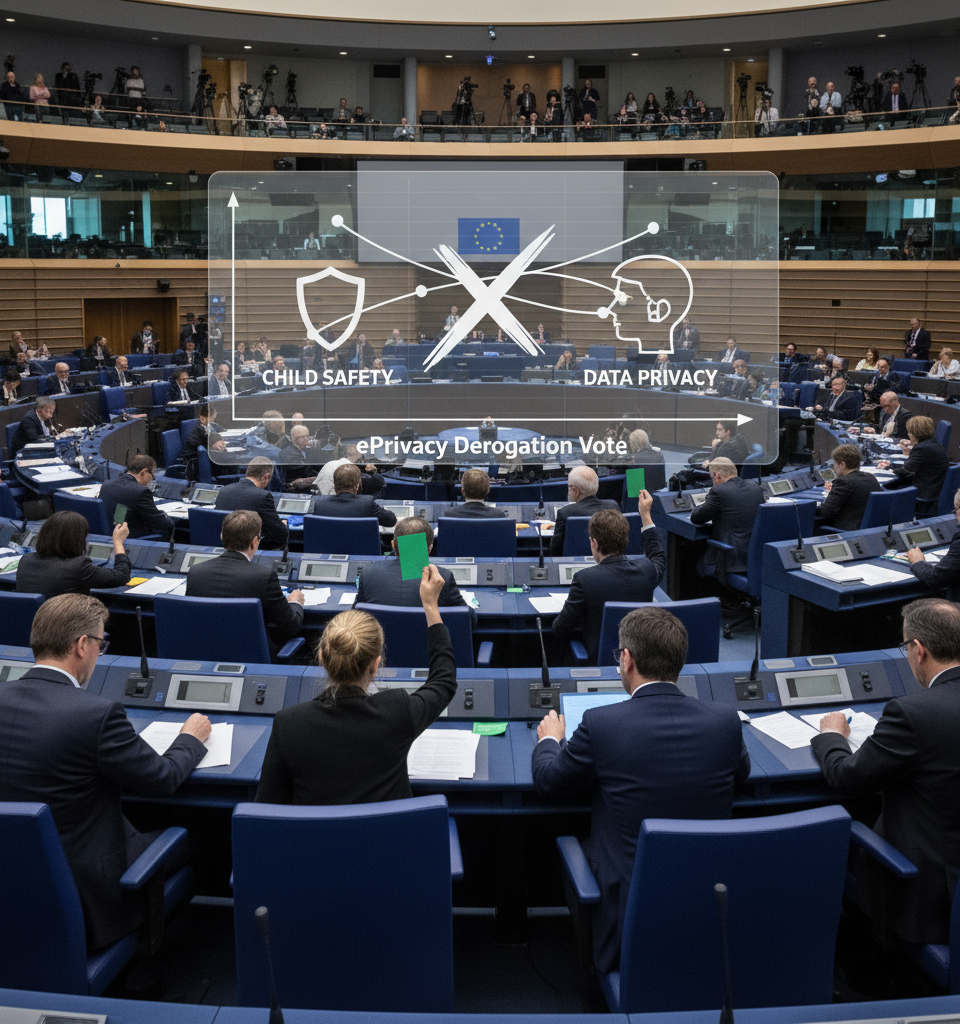
The European Union is grappling with a profound legislative paradox as its drive to protect children from online harms increasingly collides with its own stringent data privacy laws. This tension intensified significantly after April 3, when a crucial ePrivacy derogation that permitted voluntary scanning for child sexual abuse material (CSAM) lapsed following a decisive parliamentary vote of 311-228 against its extension. Further compounding the issue, a newly launched EU age verification application, announced on April 15, was reportedly compromised within mere minutes of its public debut, raising serious questions about the technical viability and security of proposed solutions.
Meanwhile, the controversial CSA Regulation, widely known as "Chat Control," continues to navigate a challenging political landscape, emblematic of the broader struggle to balance child protection with fundamental rights. This intricate legislative landscape underscores a critical dilemma: how to effectively combat illicit online activities without eroding the privacy principles enshrined in landmark legislation like the General Data Protection Regulation (GDPR). The expiring ePrivacy derogation had offered a temporary, albeit contentious, legal basis for platforms to proactively identify and report CSAM.
Its rejection by the Parliament signals a strong inclination towards upholding privacy, even when confronted with compelling child safety arguments. The quick hacking of the age verification app, intended to provide a standardized tool for digital platforms, further highlights the formidable technical and security challenges inherent in implementing such large-scale identity verification systems across the bloc. These events collectively demonstrate a fundamental misalignment between policy aspiration and practical execution within the EU's digital governance framework.
The legislative debate surrounding these issues is characterized by fierce disagreement among policymakers and civil society organizations. Proponents of extended scanning capabilities and robust age verification argue that such measures are indispensable tools in the fight against child exploitation and grooming. They emphasize the scale of the problem and the urgent need for proactive intervention.
Conversely, privacy advocates and many MEPs contend that broad, indiscriminate scanning of private communications constitutes mass surveillance, undermining the core tenets of digital privacy and potentially leading to mission creep. The vote on the ePrivacy derogation, narrowly defined as a vote on its extension, became a proxy battle for these larger philosophical differences, with 311 votes against extension reflecting a significant portion of MEPs prioritizing privacy. The implications for the broader tech industry and the digital economy are substantial.
Technology companies operating within the EU face increasing uncertainty regarding their legal obligations and technical requirements. Without a clear and harmonized legal framework, platforms might adopt disparate approaches, leading to an inconsistent patchwork of compliance across member states. This fragmentation could stifle innovation, increase operational costs, and create significant liability risks for companies caught between competing legal demands.
Furthermore, platform developers and security experts face the arduous task of designing privacy-preserving technologies that can simultaneously meet child safety objectives, a challenge underscored by the swift compromise of the new age verification app. Expert analysis suggests that the EU's current approach risks creating an unworkable regulatory environment. Dr.
Evelyn Trauner, a cybersecurity legal expert, commented, "The EU is attempting to solve 21st-century digital problems with 20th-century legal tools. The emphasis on either/or solutions — either absolute privacy or absolute scanning — misses the nuance required for effective digital governance." Other analysts point to the need for greater investment in privacy-enhancing technologies (PETs) and a more collaborative approach between policymakers, tech companies, and cybersecurity experts to develop solutions that genuinely balance competing interests without compromising fundamental rights.
There's a growing consensus that simply extending contentious derogations or introducing easily circumvented tools will not address the root causes of online harm. The immediate future will see intensified debate around the CSA Regulation, or "Chat Control," which proposes mandatory scanning of private communications for CSAM. Its path through the legislative process is expected to be contentious, with strong opposition voiced by civil liberties groups and a significant number of MEPs.
The recent legislative setbacks and technical failures are likely to fuel this opposition, pressing for more privacy-centric alternatives. Additionally, the EU will need to reassess its strategy for age verification, potentially exploring decentralized identity solutions or more robust, verifiable credential systems that avoid central points of failure displayed by the recent app hack. The ongoing dialogue will shape the future of digital regulation, not just in Europe, but potentially globally, as other jurisdictions watch the EU's attempts to navigate this complex terrain.
Ultimately, the EU's ability to forge a path that effectively protects its youngest citizens online while steadfastly upholding its commitment to privacy will serve as a crucial test case for democratic digital governance. The current legislative and technical hurdles underscore the urgent need for innovative, rights-respecting solutions that move beyond binary choices, fostering a safer yet freer digital environment for everyone.