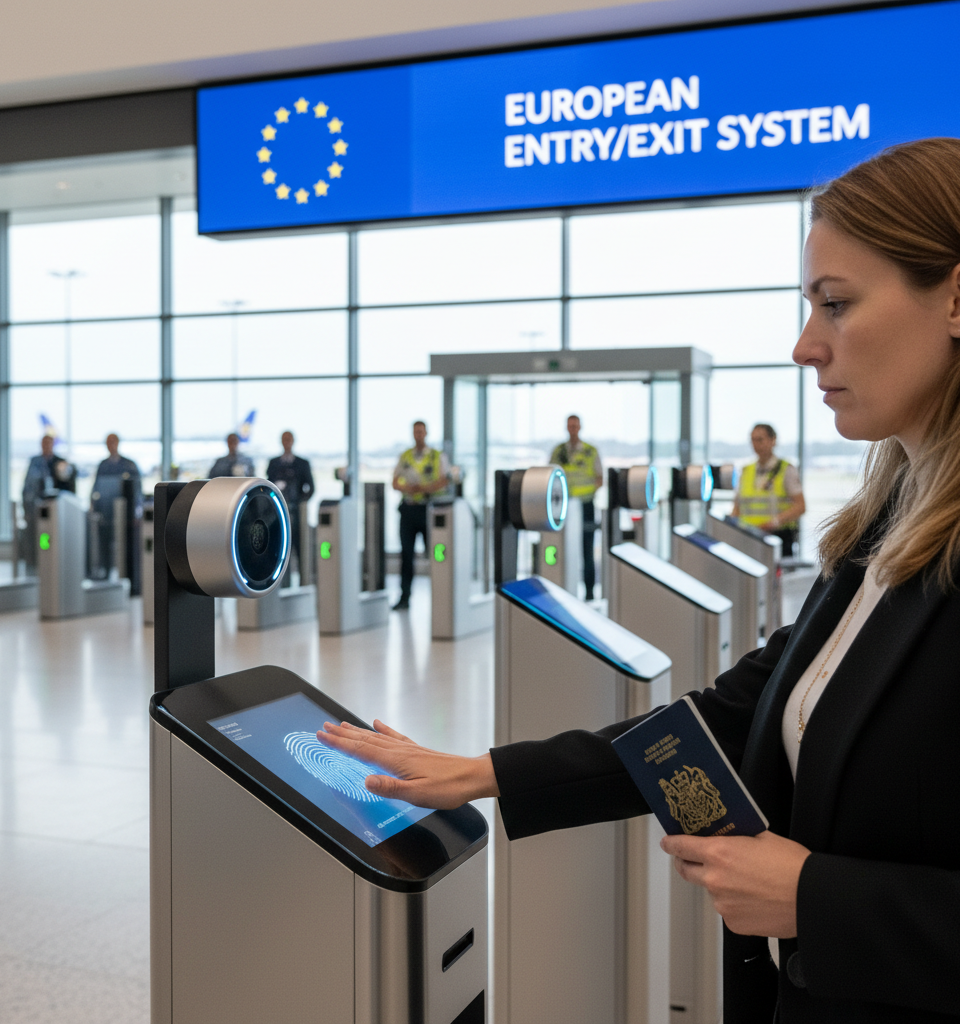
Brussels, Belgium – The European Union's ambitious Entry/Exit System (EES) has formally commenced operations, fundamentally transforming border control procedures for non-EU travelers, including millions of UK citizens, entering the Schengen Area. As of, the digital biometric system now mandates the collection of fingerprints and facial scans from third-country nationals at external borders of 29 participating member states. This significant technological overhaul, years in the making and marked by multiple delays, is positioned by EU authorities as a crucial step towards bolstering security, improving border management, and more accurately tracking short-stay allowances.
Context and Significance of the EES Implementation
The EES represents a pivotal shift from the traditional passport stamping system, which has been deemed inefficient and prone to human error. Its genesis lies in the EU's broader strategy to modernize its external border management and enhance the security of the Schengen zone, particularly in response to evolving geopolitical and migratory challenges. The system is designed to create a centralized database of travel information, allowing for more precise monitoring of individuals' entries and exits, thereby identifying overstayers and persons of interest more effectively. The lengthy development and implementation period underscore the complexity of integrating such a vast system across numerous national borders and diverse technological infrastructures, with initial targets for launch dating back to 2022.
Key Operational Details and Traveler Impact
Under the new regulations, non-EU citizens, including all UK passport holders, will be required to submit their biometric data – a facial image and four fingerprints – upon their initial entry into the Schengen Area. This data will be stored for three years after their last departure or for five years if they have overstayed. The system will automatically calculate the remaining days within the 90-day visa-free allowance within any 180-day period. While subsequent entries within the same period will not require re-submission of biometrics, travelers will still need to verify their data. The EU has emphasized that the system aims to automate processes and reduce waiting times in the long term, yet initial phases are widely expected to introduce bottlenecks, especially at high-traffic crossings like the Channel Tunnel and major airports. Special provisions are being considered for certain groups, such as children under 12, who are exempt from fingerprinting, and individuals with disabilities.
Industry and Market Impact: Aviation, Ferries, and Tourism
The launch of EES carries significant implications for the travel and tourism sectors, particularly for companies operating routes between the UK and the Schengen Area. Airlines, ferry operators, and Eurostar are directly impacted, requiring substantial adjustments to their check-in and boarding processes. These companies have invested heavily in new infrastructure, including automated kiosks and enhanced staffing, to facilitate biometric data collection before travelers reach the actual border crossings. For instance, Eurostar has reportedly invested millions in new biometric gates at St Pancras. The potential for increased processing times could deter spontaneous trips and short breaks, impacting revenue streams for travel companies and tourism-dependent businesses in popular EU destinations. Industry associations have expressed concerns over potential disruptions, advocating for clear communication and robust support from EU member states.
Expert Analysis and Preparedness Concerns
Security and travel industry experts have offered mixed perspectives on the EES rollout. Dr. Eleanor Vance, a border security analyst at the European Policy Centre, stated, "While the EES is a necessary evolution for EU border management and security, its success hinges critically on the preparedness of frontline staff and the robustness of the technological infrastructure at individual member state borders. Initial delays, especially at peak travel times, are almost inevitable before the system matures." Concerns have also been raised about the privacy implications of extensive biometric data collection and the potential for data breaches, although EU authorities assert that the system adheres to stringent General Data Protection Regulation (GDPR) standards. Industry bodies like Airlines for Europe (A4E) have called for greater coordination and harmonized implementation across all Schengen states to prevent disparate traveler experiences and further delays.
The Road Ahead: ETIAS and Future Travel Landscape
The EES is but one component of the EU's broader digital border transformation. Its full implementation paves the way for the European Travel Information and Authorisation System (ETIAS), anticipated to launch in. ETIAS will require non-EU citizens, including those from the UK, to obtain online travel authorization for a fee before their journey, similar to the US ESTA system. This phased approach to digitalizing border controls signifies a permanent shift in how non-EU citizens will interact with Schengen borders. Future developments will undoubtedly focus on integrating these systems seamlessly, minimizing friction for legitimate travelers while maximizing security. The coming months will be critical in assessing the system's effectiveness, identifying pain points, and making necessary adjustments to ensure a smooth and secure travel experience across the continent.