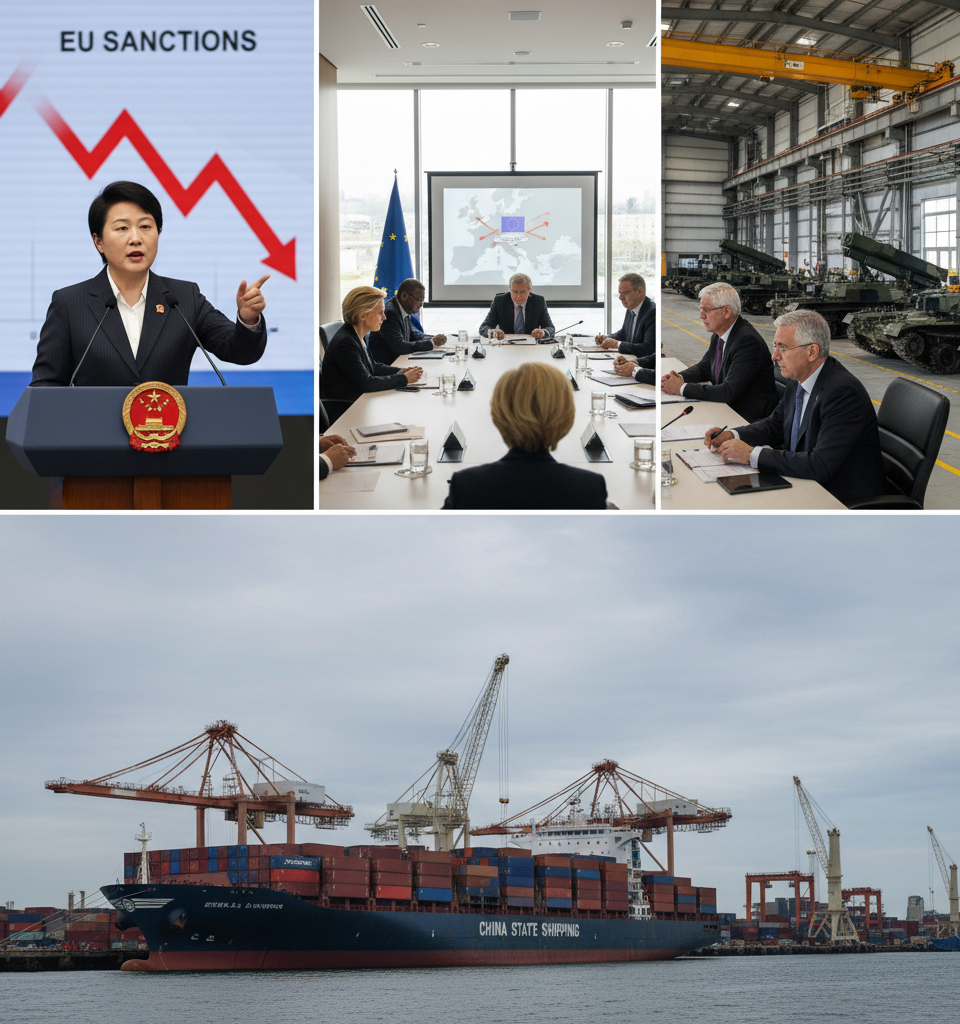
The European Union’s decision to include 27 Chinese and Hong Kong entities in its 20th sanctions package against Russia has provoked a sharp and immediate response from Beijing. Announced on Saturday, this significant expansion of punitive measures targets firms alleged to be supporting Russia's military and industrial complex. China's Ministry of Commerce swiftly issued a formal condemnation, asserting that the EU's actions "run counter to the spirit of the consensus reached between Chinese and EU leaders."
This diplomatic escalation signals a deepening rift between two major global economic powers, with potential repercussions for international trade and geopolitical stability. This development is particularly significant given the ongoing efforts by Western nations to curtail Russia's ability to wage war in Ukraine. The inclusion of Chinese firms directly implicates Beijing in the conflict, raising questions about China's commitment to neutrality and its relationship with Moscow.
Historically, China has walked a careful line, officially expressing non-alignment while facing increasing scrutiny over its economic ties to Russia. The EU's move suggests a growing impatience with this stance and a willingness to impose direct consequences on entities perceived to be aiding Russia's war machine. The EU's latest sanctions round marks its largest in two years, specifically targeting companies accused of providing dual-use goods and technologies to Russia.
While the exact nature of the goods supplied by the Chinese entities has not been fully detailed, the implication is that they are contributing to Russia's military-industrial base. Beijing’s retaliatory threat, hinting at actions that could jeopardize Europe's ability to arm itself, suggests a potential clampdown on crucial supply chains, possibly involving rare earth minerals or other components vital for defense manufacturing. This tit-for-tat dynamic could lead to a broader economic confrontation.
The immediate industry impact is one of heightened uncertainty, particularly for European companies reliant on Chinese suppliers or operating within the Chinese market. Companies involved in dual-use technologies, electronics, and even seemingly unrelated sectors could face increased scrutiny and potential disruptions. The European defense industry, heavily dependent on global supply chains, may be particularly vulnerable if China chooses to restrict exports of critical materials or components.
This situation also creates a complex operational environment for multinational corporations trying to navigate diverging regulatory landscapes. Analysts are largely in agreement that this move reflects a more assertive EU policy toward China's role in the Ukraine conflict. Dr. Eleanor Vance, a geopolitical strategist at the Global Policy Institute, commented, "The EU is sending a clear message: material support for Russia, regardless of the source, will have consequences.
Beijing's strong reaction, however, indicates a willingness to escalate, which could lead to a more fragmented global trade system." Other experts suggest that this could push China closer to Russia, potentially solidify an anti-Western bloc, and further complicate efforts to de-escalate the conflict. Looking ahead, the immediate future will likely involve intense diplomatic maneuvers.
The EU will watch closely for any direct retaliatory actions from China, which could manifest as trade restrictions, increased customs checks, or even tit-for-tat sanctions on European companies or individuals. Beijing's threat suggests a calculated move beyond mere verbal condemnation, signaling a readiness to impose economic pain. Companies with significant exposure to both the European and Chinese markets will need to prepare for potential supply chain disruptions, increased compliance costs, and a more challenging operational environment.
The long-term implications could include a re-evaluation of global supply chain resilience, an acceleration of "de-risking" strategies, and a further polarization of international trade blocs, potentially altering the global economic landscape for years to come.