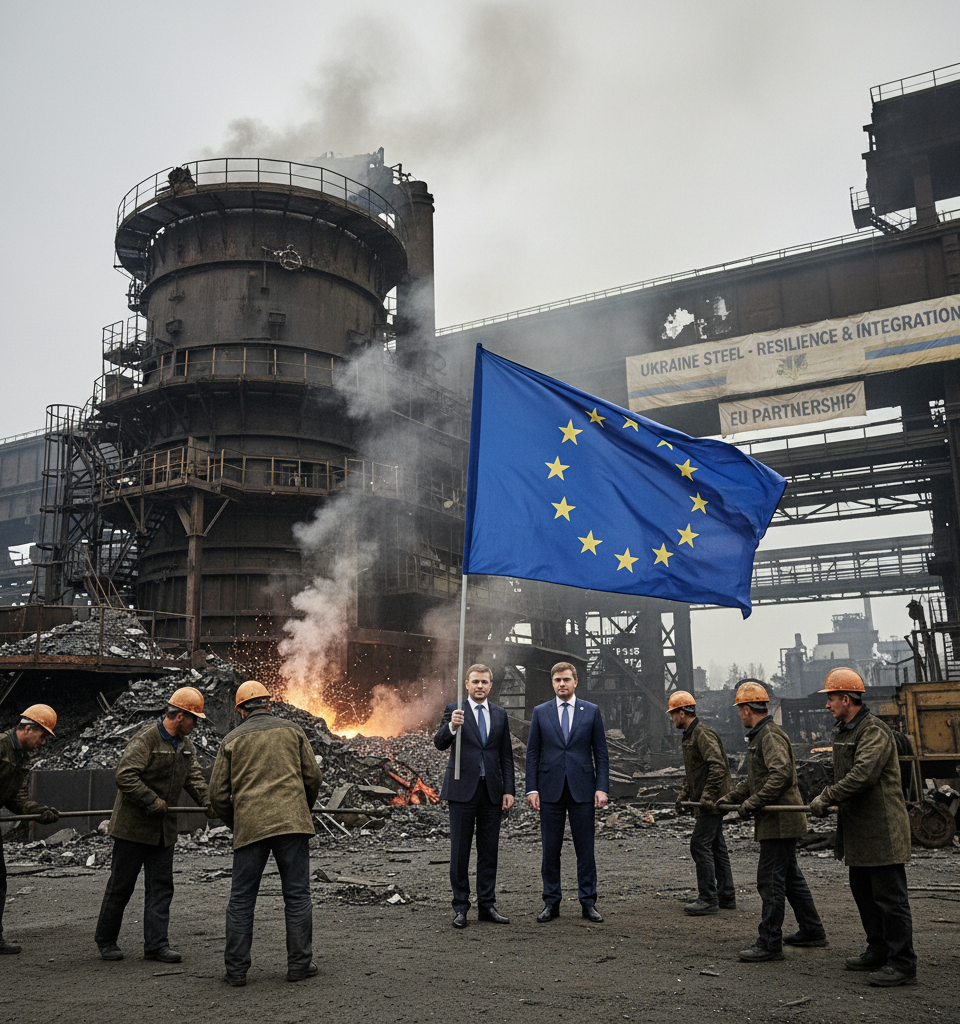
Ukrainian officials have issued a stark warning regarding a new European Union proposal to significantly reduce its steel import quotas, contending that the measure could inflict a substantial financial blow to Ukraine's struggling economy. Kyiv estimates that the proposed changes could result in a loss of up to €1 billion in annual export revenue, a critical sum for a nation grappling with the devastating economic impact of ongoing conflict.
Context of Conflict and Economic Strain
Ukraine's metallurgical industry has historically been a cornerstone of its economy, particularly its heavy industrial regions in the east. However, the ongoing full-scale invasion has severely disrupted production, damaged infrastructure, and choked off traditional export routes. Prior to the conflict, steel and iron products represented a significant portion of Ukraine's export earnings. The EU, through various solidarity lanes and trade preferences, has been a vital market for Ukrainian goods, including steel, offering a lifeline amidst the war. This new proposal, therefore, arrives at a moment of extreme vulnerability for the Ukrainian state, threatening to undermine the very economic resilience it is attempting to build.
Details of the Proposed EU Cuts
The specifics of the EU's plan involve a reduction in the current tariff-free import quotas for steel, a measure initially designed to protect domestic European steel producers. While the EU has generally maintained open trade channels with Ukraine as a gesture of support, this particular policy aims to rebalance the market. Ukrainian representatives argue that applying these reductions to a country fighting for its survival is incongruous with the broader spirit of EU solidarity. They highlight that Ukrainian steel producers, many operating under arduous conditions, already face significant logistical challenges and increased production costs. The prospective €1 billion loss would be equivalent to several months of critical humanitarian aid or a substantial portion of the nation's reconstruction budget.
Industry and Market Implications
The European steel market has been navigating its own set of challenges, including high energy costs, environmental regulations, and global oversupply. The push to reduce import quotas is partly driven by a desire to secure the competitiveness of EU-based steelmakers. However, applying these cuts to Ukraine could have unintended consequences. It might force Ukrainian steel producers to seek alternative markets, potentially at lower prices, further compressing their margins. Moreover, it raises questions about the long-term viability of Ukrainian metal enterprises, many of which are vital employers in regions grappling with widespread unemployment and displacement. The move could also be perceived as a mixed signal from the EU, potentially undermining the bloc's broader geopolitical objectives of supporting Ukraine's economic recovery and integration.
Expert Perspectives
Analysts note that while the EU's rationale for protecting its domestic industry is understandable, the timing and application of these quotas to Ukraine present a significant dilemma. "This isn't merely about trade numbers; it's about geopolitical stability and the ability of a frontline state to sustain itself," stated a senior trade policy expert specializing in Eastern European economies. "While the proposed quota reduction might offer marginal relief to specific EU steel producers, the cost to Ukraine's war-battered economy, and by extension, to European strategic interests, could be far greater." There's a strong argument being made for a more nuanced approach that differentiates between steel imported from aggressive-state actors and that from allies like Ukraine, which relies on such exports for survival.
Future Implications and Diplomatic Efforts
Ukrainian officials are actively engaging with their EU counterparts to negotiate a more favorable outcome, emphasizing the unique circumstances of their nation. Diplomatic efforts are underway to secure exemptions or alternative mechanisms that would mitigate the adverse impact of the proposed quota reductions. The outcome of these discussions will not only determine a significant portion of Ukraine's immediate export earnings but also serve as a critical test of the EU's ability to balance its internal economic policies with its broader foreign policy objectives and commitments to its allies. The decision could set a precedent for how the EU navigates complex trade-offs between domestic protectionism and international solidarity, particularly in times of conflict.