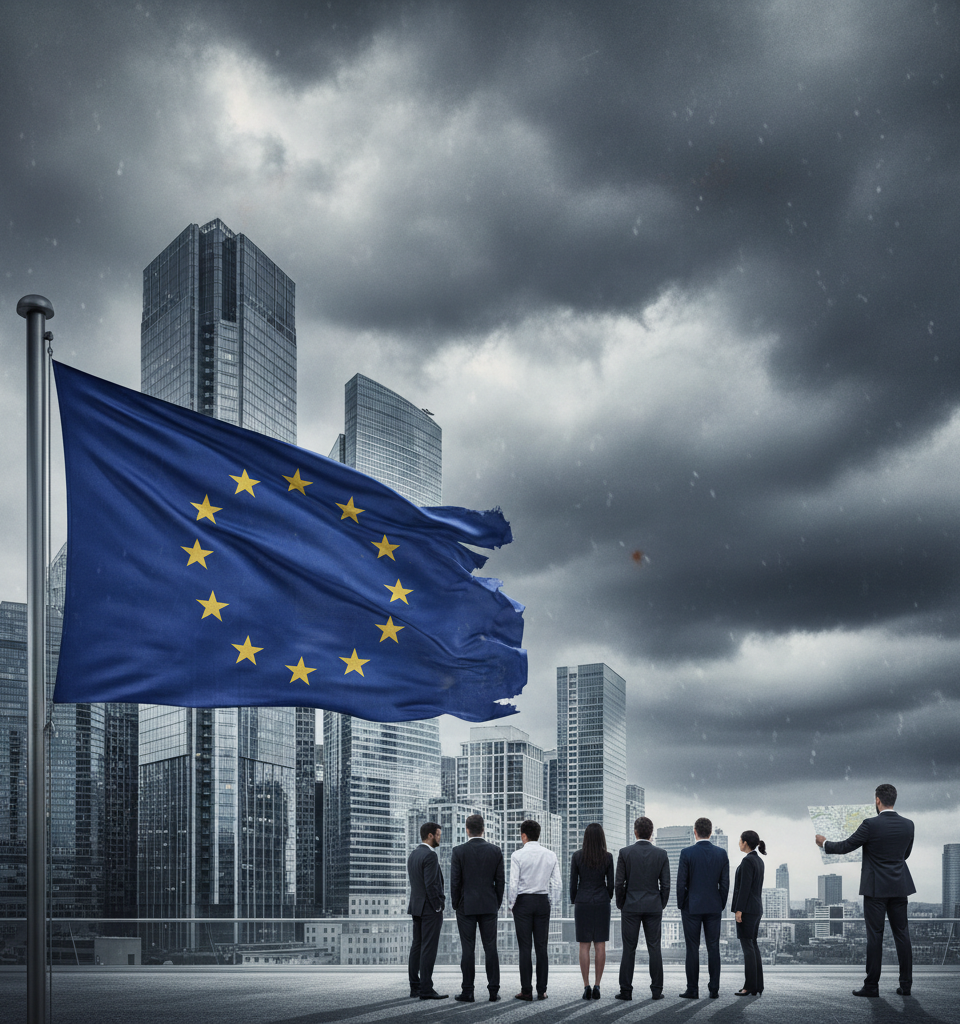
Europe finds itself at a critical juncture, facing a complex confluence of geopolitical and economic headwinds that threaten to redefine its global standing. The ongoing conflict in Ukraine has fundamentally reshaped its relationship with Russia, while growing tensions with China over trade and human rights, coupled with a perceived drift from the United States under evolving political landscapes, are creating a potent mix of economic strain and political isolation. This multi-front challenge is generating unprecedented pressure on European policymakers struggling to chart a course through an increasingly fragmented world order.
The Erosion of Traditional Alliances and Its Historical Context
The current predicament marks a significant departure from the post-Cold War era, where Europe largely operated within a clearly defined transatlantic framework and pursued a strategy of engagement with emerging powers. The weaponization of energy by Russia in response to sanctions following the Ukraine invasion has exposed deep energy dependencies, while China's growing economic and political assertiveness presents a dilemma between market access and strategic alignment. Simultaneously, a resurgent American 'America First' impulse, regardless of administration, has sown seeds of doubt regarding the unwavering commitment of its long-standing ally, pushing Europe to reconsider its strategic autonomy. This triangulation of strained relationships is unprecedented in recent memory, forcing a re-evaluation of fundamental foreign policy tenets.
Economic Repercussions: Energy Crises, Trade Barriers, and Inflation
Economically, the fallout is stark. The cessation of Russian gas supplies has triggered an energy crisis, with wholesale gas prices in the EU surging by over 300% in 2022 compared to pre-war levels, leading to record high inflation. The Eurozone's annual inflation rate peaked at 10.6% in October 2022, severely impacting consumer purchasing power and industrial competitiveness. Furthermore, escalating trade disputes with China, exemplified by recent EU investigations into Chinese subsidies and potential retaliatory tariffs, threaten crucial export markets. According to Eurostat, China was the EU's third-largest partner for exports of goods in 2022, amounting to €230 billion. The redirection of supply chains and the need to decouple from certain hostile economies are also imposing significant capital expenditures and operational inefficiencies on European businesses.
Industry and Market Impact: From Manufacturing to Financial Services
The ripple effects of this geopolitical instability are being felt across various sectors. Energy-intensive industries, such as chemicals and steel manufacturing, have seen production cuts and even temporary closures across Germany and other industrial hubs. The automotive sector, reliant on complex global supply chains and access to both Russian raw materials and Chinese markets, faces significant disruption. Financial markets exhibit heightened volatility, with investor confidence wavering amidst uncertainty regarding future economic growth and geopolitical stability. The European Central Bank has been forced into aggressive interest rate hikes, impacting borrowing costs and potentially stifling investment, risking a prolonged period of stagflation.
Expert Perspectives: Analysts Warn of Protracted Challenges
Economists and geopolitical analysts are largely in agreement that Europe faces a protracted period of adjustment. Dr. Eleonore Blanc, a senior fellow at the European Council on Foreign Relations, notes, "Europe's luxury of strategic ambiguity has evaporated. It must now define its hard interests and build resilience, even if that means short-term economic pain." Others, like financial analyst Mark Jensen of Blackwood Capital, highlight the challenge of balancing economic pragmatism with democratic values: "The allure of cheap energy from Russia and inexpensive goods from China was a powerful economic engine. Replacing those foundational elements without compromising democratic principles is Europe’s defining test for the next decade."
The Path Forward: Strategic Autonomy and Diversification
Looking ahead, Europe's strategic trajectory hinges on several key imperatives. The aggressive pursuit of energy diversification, including investments in renewables and liquefied natural gas (LNG) infrastructure, is paramount to reduce reliance on adversarial states. Enhanced domestic industrial policy, aimed at strengthening critical supply chains and fostering technological sovereignty, will be crucial. Diplomatically, Europe is likely to intensify efforts to fortify alliances with other like-minded democracies, including Canada, Japan, and South Korea, while also seeking to recalibrate its relationship with the United States to ensure a more balanced and mutually beneficial transatlantic partnership. The forthcoming European Parliament elections in 2024 will also play a significant role in shaping the political will and strategic direction needed to navigate these complex challenges.
Ultimately, Europe's ability to maintain its economic prosperity and political influence will depend on its capacity to formulate a cohesive and robust strategy in response to a rapidly changing global chessboard. The journey promises to be challenging, demanding significant political will, economic sacrifice, and a clear vision for its place in the 21st century.