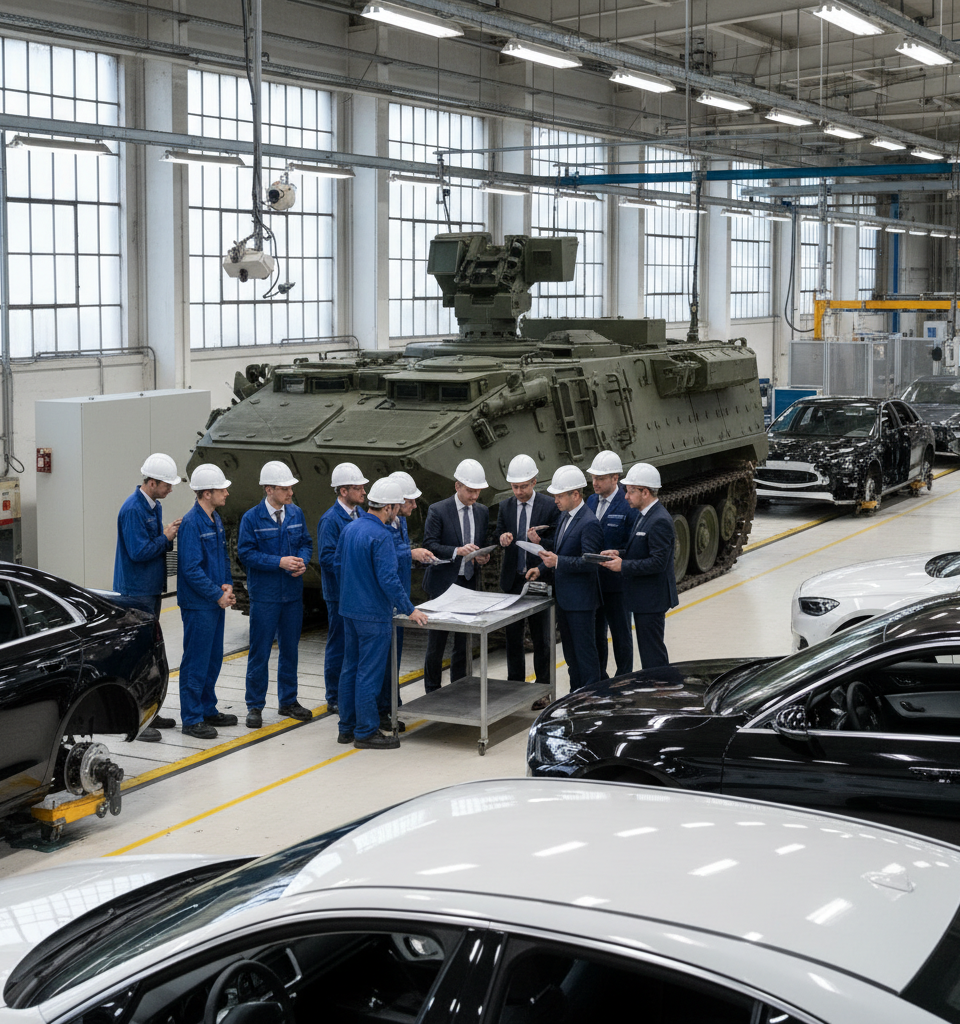
FRANKFURT, GERMANY – October 26, 2023 – Europe's beleaguered automotive sector, a cornerstone of the continent's industrial might for over a century, is reportedly exploring a significant, perhaps even transformative, shift towards defense manufacturing. This reorientation, driven by intense competition from Asian rivals, the costly transition to electric vehicles (EVs), and a resurgent demand for military hardware, represents a strategic reevaluation of industrial capabilities. Sources close to several major European automotive groups indicate preliminary discussions are underway regarding the repurposing of factories and the reallocation of skilled labor, marking a potential defensive play for an industry under siege.
The Driving Forces Behind the Pivot
The move comes at a critical juncture for European automakers. The industry faces unprecedented headwinds, including tightening emissions regulations, the multi-billion-euro investment required for EV development, and escalating competition from Chinese manufacturers flooding the market with lower-cost electric vehicles. Furthermore, Russia's protracted war in Ukraine has underscored the geopolitical imperative for European nations to bolster their defense capabilities, leading to increased military spending across the continent. This confluence of factors has created a unique opportunity for synergy between two seemingly disparate industries, with defense spending in NATO countries alone projected to exceed €1.2 trillion in 2023.
Transferable Skills and Industrial Capacity
Experts suggest that the transition from automotive to defense production is more feasible than it might appear. Many of the underlying manufacturing processes, engineering disciplines, and supply chain management techniques are highly transferable. "Building a complex vehicle, whether it's an electric car or an armored personnel carrier, requires precision engineering, robust materials science, and sophisticated systems integration," explains Dr. Anya Sharma, an industrial economist at the Stockholm School of Economics. "The automotive sector possesses a vast pool of highly skilled engineers, metallurgists, software developers, and assembly line workers whose expertise can be directly applied to defense systems, from heavy vehicle platforms to advanced electronics and composites." The sheer industrial capacity of automotive giants, accustomed to mass production, could also significantly accelerate the output of defense matériel.
Economic Implications and Market Dynamics
For the broader European economy, this potential shift carries significant implications. The automotive industry employs over 13 million people, representing 6.1% of the EU's total employment, and contributes a substantial portion to its GDP. A successful pivot could safeguard jobs, stimulate innovation in new materials and technologies, and reduce reliance on external defense suppliers. From a market perspective, the defense industry, often characterized by long-term contracts and stable demand, could offer a new revenue stream and a degree of insulation from the cyclical nature of consumer markets that plague the automotive sector. Major European defense contractors, such as Rheinmetall and BAE Systems, have already seen their stock prices surge amid increased orders and geopolitical tensions.
Expert Perspectives on Feasibility and Challenges
Analyst consensus, while cautiously optimistic, also highlights significant challenges. "While the technical overlaps are undeniable, the regulatory landscape, certification processes, and ethical considerations in defense manufacturing are vastly different, and far more stringent, than in automotive," states Philippe Moreau, a defense industry consultant based in Paris. "Companies would need to navigate complex export controls, national security requirements, and potentially face public scrutiny over their involvement in defense." Furthermore, the cultural shift from a consumer-facing industry to one focused on national security would require deep organizational changes and strategic partnerships.
Looming Geopolitical Imperative and Future Industrial Landscape
Looking ahead, the impetus for this diversification is likely to intensify. With geopolitical instability showing no signs of abating and national governments prioritizing defense capabilities, the demand for military equipment is expected to remain robust for the foreseeable future. The integration of automotive production lines into defense supply chains could also foster greater resilience in Europe's industrial base, mitigating vulnerabilities exposed by recent global crises. This strategic reorientation could fundamentally reshape the identity of Europe's industrial heartland, transforming its iconic auto factories into dual-purpose facilities capable of producing both the vehicles of tomorrow and the defense systems of a new security era.
Unlocking New Opportunities and Strategic Partnerships
Several automotive suppliers are already actively involved in defense-adjacent technologies, providing components for armored vehicles, missile systems, and even aerospace applications. Expanding these existing capabilities into full-scale defense system integration represents a logical progression. Potential strategic partnerships between established defense contractors and automotive powerhouses could combine deep defense expertise with high-volume manufacturing efficiency. This cross-sector collaboration could unlock new opportunities for innovation, particularly in areas like autonomous systems, advanced sensor technologies, and electric-powered military vehicles, blurring the lines between commercial and military applications and ushering in a new era for European industry.