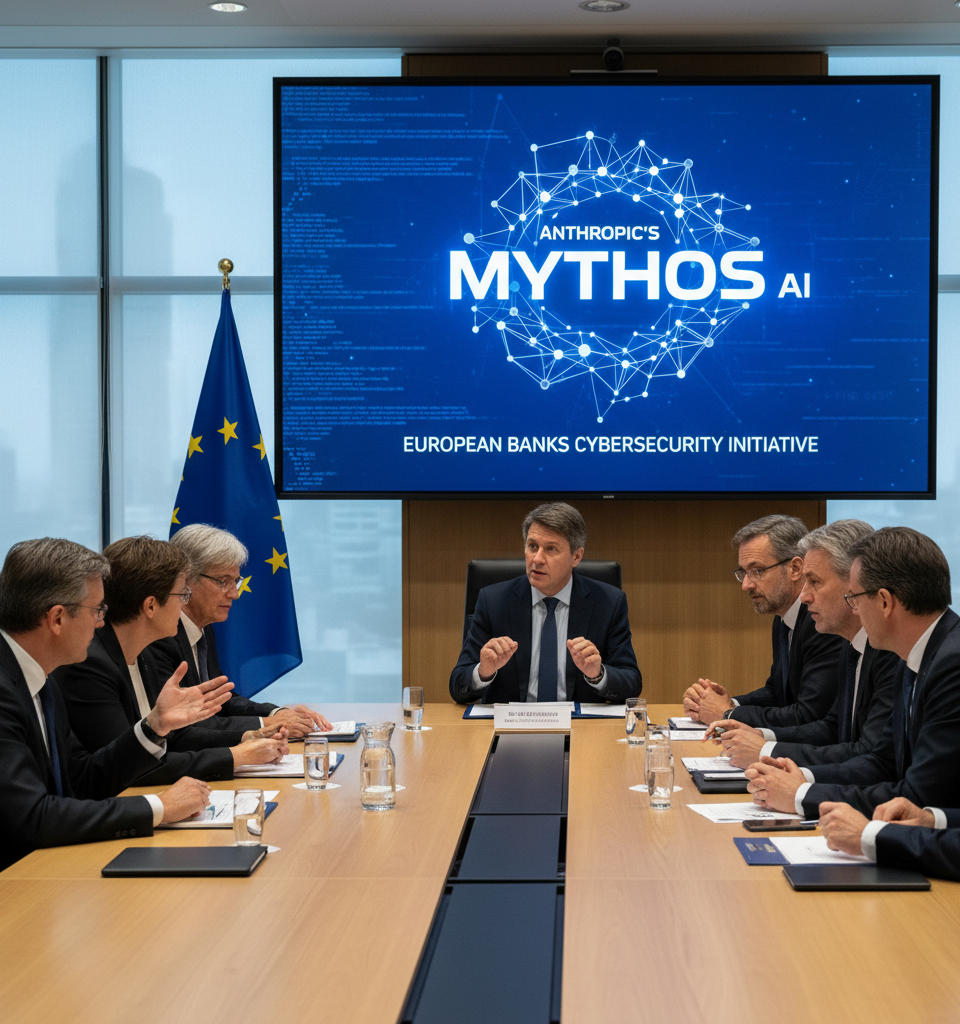
European finance ministers convened in Brussels this week, intensifying their pleas for access to 'Mythos,' a groundbreaking AI model developed by Anthropic, amidst growing concerns over the cybersecurity vulnerabilities of the continent's banking sector. The discussions, which took place during a regularly scheduled Eurogroup meeting, highlighted a stark divergence between European urgency and U.S. apprehension regarding the deployment of such powerful AI, particularly its potential for detecting 'zero-day' exploits across major operating systems.
The Geopolitical Stakes of AI
This isn't merely a technical debate; it's rapidly evolving into a significant geopolitical and prudential challenge. European financial regulators and central bankers are advocating for Mythos as a crucial defensive tool, arguing that its unparalleled ability to identify previously unknown software vulnerabilities is essential for safeguarding trillions of euros in assets and maintaining financial stability. The underlying fear is that without such advanced protective measures, European banks could become prime targets for highly sophisticated cyberattacks, potentially triggering systemic crises. The U.S. Commerce Department, however, has expressed reservations, citing concerns over dual-use technology and the potential for unintended consequences or misuse should such a potent AI fall into the wrong hands.
Mythos: A Double-Edged Sword
Anthropic's Mythos represents a significant leap in AI capabilities, reportedly demonstrating an unprecedented aptitude for uncovering vulnerabilities that human analysts often miss. Its developers claim it can identify zero-day exploits—software flaws unknown to those who should be interested in mitigating them—across a wide array of operating systems with remarkable efficiency. This very power, while a boon for defense, also presents a national security dilemma for the U.S. government. Granting access to foreign entities, even allies, introduces complexities around data sovereignty, intellectual property, and the potential for reverse engineering or compromise. European officials, however, argue that their need is immediate and existential, pointing to recent surges in state-sponsored and sophisticated cyber threats targeting financial institutions globally.
Impact on the Financial Industry
The financial sector is particularly vulnerable given its reliance on complex, interconnected digital systems and the high value of the data it manages. Banks and other financial entities are constantly battling evolving cyber threats, with breaches costing billions annually. The European banking industry, which collectively manages over €30 trillion in assets, stands to benefit immensely from a tool like Mythos, reducing exposure to exploits that could lead to data theft, service disruptions, or massive financial losses. Without it, European institutions might trail behind counterparts in jurisdictions with similar advanced defensive capabilities, potentially weakening their competitive standing and increasing systemic risk across the EU financial market.
Expert Opinions on AI Regulation and Access
Cybersecurity experts and AI ethicists are divided on the issue. Some argue that restricting access to advanced defensive AI tools among close allies is counterproductive, potentially creating security disparities that could destabilize the global financial system. Dr. Anya Sharma, a senior fellow at the Global Cyber Policy Institute, commented, "In an interconnected world, a vulnerability in one major financial hub can quickly cascade. Restricting tools that enhance collective security is a short-sighted approach." Others, including U.S. national security analysts, emphasize heightened scrutiny over powerful AI, advocating for robust safeguards and strict export controls. They suggest that the potential for such technology to be repurposed for offensive capabilities, even inadvertently, necessitates extreme caution.
The Path Forward
The Eurogroup concluded its recent meeting without a definitive resolution, signifying that the transatlantic dialogue on Mythos access is ongoing and likely to be protracted. The next steps will likely involve further high-level diplomatic engagements between Brussels and Washington, possibly facilitated by technical experts and cybersecurity agencies from both sides. Discussions will likely center on establishing a framework for secure access, data sharing protocols, and mechanisms to prevent misuse.
The outcome will not only determine the future cybersecurity posture of European banks but also set a precedent for how advanced AI technologies are governed and shared across international borders, especially as AI continues to intersect with critical national infrastructure and economic stability. The urgency for a resolution remains high, with both sides acutely aware of the escalating threat landscape in cyberspace.