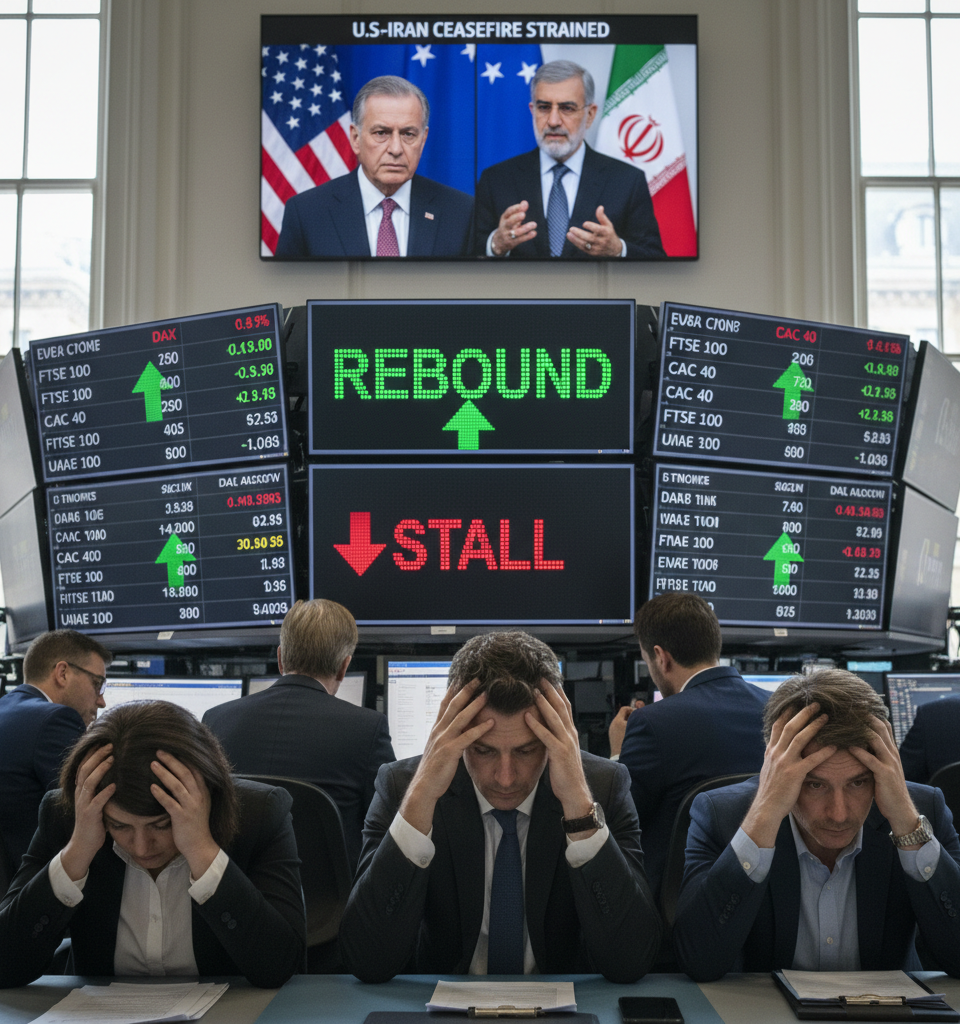
European stock markets are expected to open in mixed territory on Thursday, as a recently established ceasefire between the United States and Iran shows early signs of strain. This development introduces a new layer of geopolitical uncertainty that could significantly influence investor sentiment and market direction across the continent.
The fragility of the truce, intended to de-escalate tensions in a volatile region, has immediately caught the attention of global financial observers. A breakdown in diplomatic efforts between Washington and Tehran could have far-reaching implications, particularly for energy markets and international trade routes. The initial optimism that accompanied the ceasefire's announcement now appears to be dissipating, replaced by concerns over potential renewed hostilities and their economic consequences.
Geopolitical Ripples and Market Volatility
The current predicament highlights the ongoing interconnectedness of geopolitical events and financial market performance. Even a perceived weakening of a diplomatic agreement, especially one involving major global powers and critical resource-producing nations like the US and Iran, can trigger immediate reactions from investors. The anticipation of a mixed open suggests a division among market participants regarding the exact nature and severity of the impact, with some sectors potentially benefiting from perceived safe-haven flows while others face headwinds.
The broader context for this market reaction includes a global economy still navigating various post-pandemic challenges and persistent inflationary pressures. Central banks worldwide continue to grapple with managing economic growth alongside price stability, making any new external shock particularly unwelcome. The potential for elevated oil prices, should the US-Iran situation further deteriorate, poses a significant risk to inflation forecasts and consumer spending power, casting a shadow over recovery efforts in several European economies.
Impact on Energy Markets and Investor Confidence
One of the most immediate and critical areas of concern is the energy market. Iran is a significant oil producer, and any disruption to its output or to shipping routes in the Persian Gulf region due to heightened tensions could lead to a sharp increase in crude oil prices. Such a scenario would inevitably translate into higher fuel costs for businesses and consumers across Europe, potentially dampening economic activity and exacerbating existing inflationary trends. Investors are closely monitoring crude futures contracts for any indication of price volatility.
The strain on the US-Iran truce also has implications for broader investor confidence. Political instability in key regions often prompts a flight to safety, with capital moving away from riskier assets like equities and towards perceived safe havens such as government bonds or even certain commodities. This shift could lead to downward pressure on stock valuations and increased demand for stable-currency assets. Corporate decision-making, particularly concerning international investments and supply chain planning, could also become more cautious in such an environment.
Outlook and Potential Scenarios
Looking ahead, the immediate focus for markets will be on further developments surrounding the US-Iran relationship. Any official statements from either Washington or Tehran, or reports from international mediators, will be scrutinized for clues on whether the ceasefire can be salvaged or if the situation is indeed heading towards a more pronounced breakdown. The European Central Bank (ECB) and other monetary authorities will also be watching closely, as escalating geopolitical risks could complicate their efforts to manage inflation and support economic growth.
In the near term, analysts predict continued volatility until clearer signals emerge regarding the stability of the US-Iran agreement. Companies with significant exposure to Middle Eastern markets or those heavily reliant on stable oil prices could experience particular fluctuations. The market's mixed reaction indicates a wait-and-see approach from many investors, highlighting the deep uncertainty that now pervades the outlook for global stability and, by extension, the financial markets.