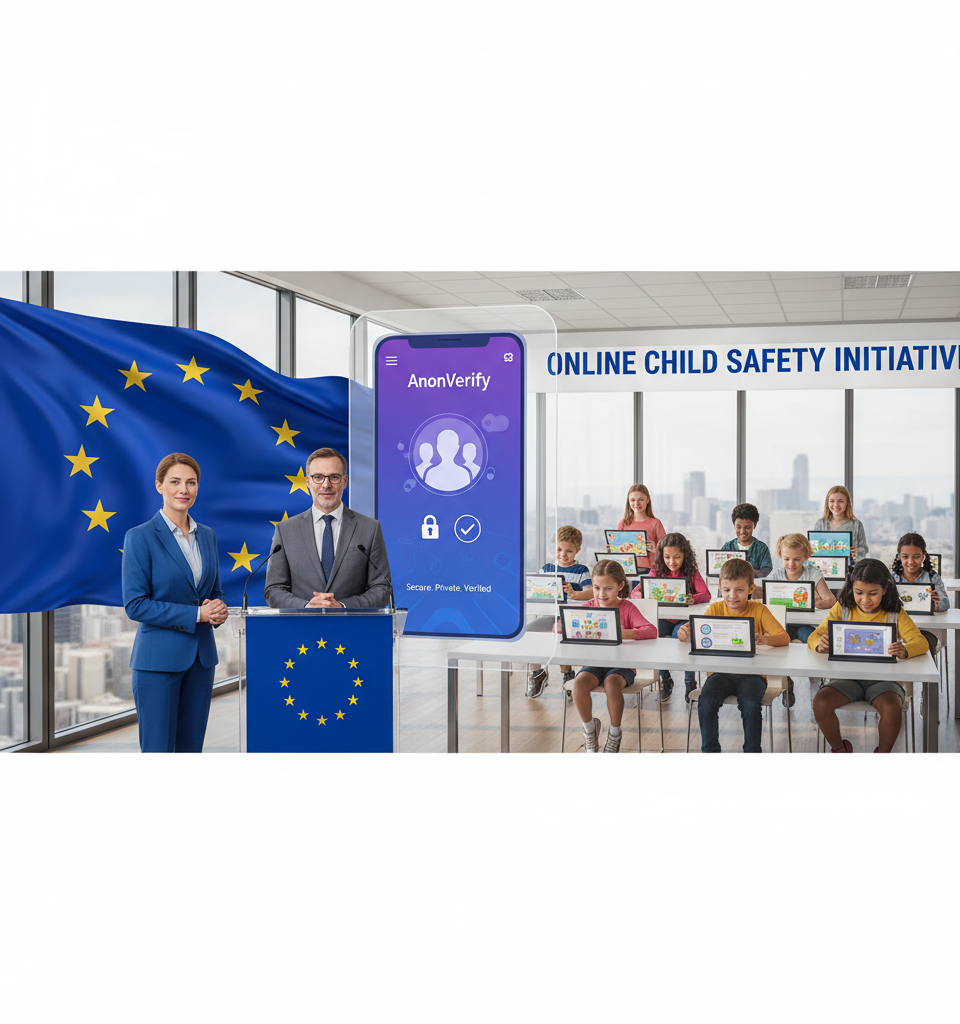
**Brussels, Belgium – ** – A significant stride in online child protection has been made with the official launch of a pan-European digital age verification application. Developed by a consortium of privacy advocates and tech experts, this free-to-use platform, designed to be "completely anonymous," is now available to any company operating within the European Union that seeks to comply with evolving age-restriction regulations. The initiative, announced today from Brussels, directly challenges adult content providers and social media platforms to implement more robust age-gating protocols, effectively raising the bar for safeguarding minors from inappropriate digital content.
This development arrives amidst a growing chorus of concern from parents, educators, and policymakers regarding the unfettered access children have to potentially damaging online material. Existing age verification methods have often been criticized for their ineffectiveness, ease of circumvention, or intrusive data collection practices. The launch of this new app, therefore, represents a concerted effort to provide a scalable, privacy-centric solution that can be widely adopted, thereby standardizing and strengthening protections for young users across the digital landscape. It addresses a critical void where self-declaration and rudimentary checks have long proven insufficient.
The core functionality of the new age verification app centers on a decentralized identity protocol, ensuring user anonymity. When a user creates a digital identity within the app, their age is cryptographically verified against official government-issued documents, but only a confirmation of whether they meet a specific age threshold (e.g., “18+” or “16+”) is shared with third-party services. No personal identifying information like names or birthdates is transmitted, adhering strictly to GDPR principles. Developers state the app boasts an incredibly low false-negative rate of less than 0.05% and is designed for seamless integration via a simple API, making it accessible even for smaller online service providers.
The implications for the broader online industry are profound. For years, social media platforms and adult entertainment sites have faced legislative and public pressure to prevent underage access, often responding with patchwork solutions that critics deem inadequate. With a free, robust, and privacy-compliant tool now readily available, the onus shifts dramatically. Companies that fail to integrate such solutions may face heightened regulatory scrutiny, including potential fines under new EU digital services acts, and significant reputational damage. This could trigger a wave of mandatory age verification integrations, reshaping how digital content is accessed across the continent.
Industry experts are largely welcoming the initiative, albeit with cautious optimism. Dr. Elara Vance, a cybersecurity privacy specialist at the European Institute for Digital Rights, noted, "This marks a crucial evolution. The anonymous nature of the app directly tackles the ‘privacy vs. protection’ dilemma that has plagued digital age verification for years. Its widespread adoption could significantly enhance child safety without compromising personal data." However, some analysts, like tech policy consultant Marcus Thorne, warn that "the success hinges on widespread adoption and enforcement. Without strong regulatory backing and a commitment from platforms, even the best technology can fall short of its potential." The European Commission has indicated it will closely monitor uptake and consider further legislative measures if adoption lags.
Looking ahead, the development team plans to expand the app's functionalities to include verifiable parental consent for children under specific ages, crucial for educational apps and child-focused online services. There are also discussions about integrating the system with digital wallets and exploring partnerships with national identity schemes to streamline the initial verification process. This European initiative is also expected to inspire similar efforts globally, potentially setting an international standard for privacy-preserving age verification technology. The coming months will be critical in observing how major platforms react and integrate this new standard into their operational frameworks, ultimately determining the app’s long-term impact on online child safety across Europe and beyond.