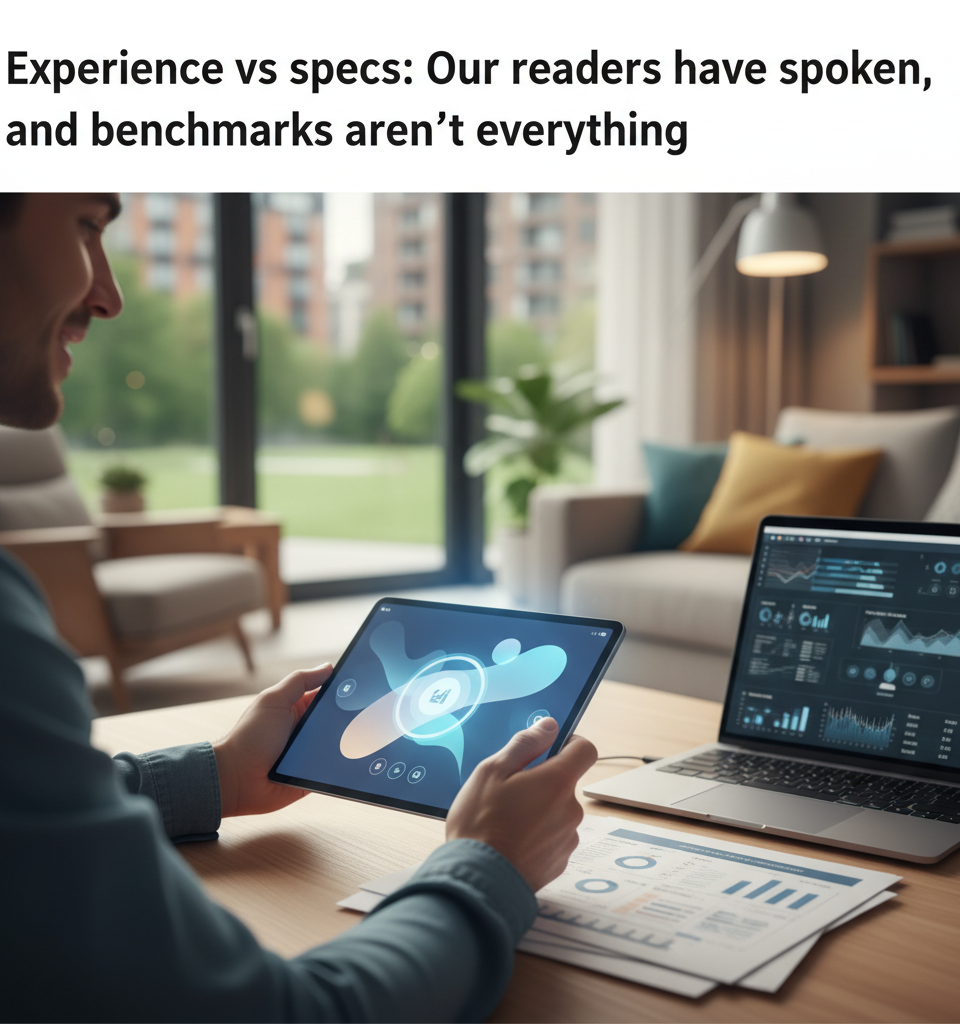
In a revealing insight into consumer priorities in the tech landscape, a recent reader survey has underscored a strong inclination towards tangible user experience over mere technical specifications. The survey, which polled a significant portion of the readership, found that over 70% of respondents unequivocally favored a "fluid experience" when interacting with their devices, rather than prioritizing raw processing power or benchmark scores. This finding challenges the long-held industry focus on quantifiable performance metrics and suggests a maturing understanding among consumers regarding what truly enhances their daily technological interactions.
Shifting Consumer Paradigms
For decades, the technology sector has predominantly emphasized incremental gains in processing speed, memory capacity, and graphical prowess as primary selling points. Marketing campaigns frequently highlighted benchmark scores and technical specifications as direct indicators of a product's superiority. However, the survey results suggest a notable shift in this paradigm. Consumers are increasingly discerning, understanding that high specifications do not always translate into a superior or even satisfactory user experience. This evolving perspective is particularly pertinent in an era where software optimization, intuitive design, and seamless integration are becoming critical differentiators.
The widespread adoption of sophisticated mobile devices and increasingly powerful personal computing platforms has democratized access to high-performance hardware. As the baseline for performance has risen across the industry, the novelty of sheer power has begun to wane. Instead, the focus has pivoted to how effectively that power is harnessed to deliver a smooth, responsive, and enjoyable user interface. This encompasses everything from application load times and multitasking efficiency to battery life and the overall aesthetic appeal of a device's operation.
Implications for Product Development
This strong consumer preference for experience over raw specifications carries significant implications for product development strategies across the technology industry. Hardware manufacturers and software developers alike may need to recalibrate their priorities, dedicating more resources to optimizing user interfaces, refining software algorithms, and ensuring robust system stability. Instead of merely chasing higher clock speeds or core counts, the emphasis could shift towards holistic system design that prioritizes real-world usage scenarios and user satisfaction.
Companies that successfully adapt to this consumer demand by delivering products that offer exceptional fluidity and responsiveness, even if their benchmark numbers aren't industry-leading, could gain a significant competitive advantage. This could manifest in innovative approaches to thermal management, more efficient power consumption, and operating systems designed for unparalleled user intuition. The challenge will lie in communicating these experiential benefits effectively to a market still heavily influenced by traditional performance metrics.
The Future of Benchmarking
The survey's findings also prompt a re-evaluation of the role and relevance of traditional benchmarking tools. While specifications and benchmark scores will undoubtedly remain important indicators for certain segments of the market, particularly enthusiasts and professionals requiring absolute maximum performance, their overarching significance for the average consumer might diminish. Industry analysts may need to develop new metrics that more accurately reflect real-world user experience, rather than relying solely on synthetic tests.
Forward-thinking companies might invest in developing and promoting new 'experience benchmarks' that measure aspects such as interface responsiveness, app launch speeds under typical load, or the smoothness of transitions and animations. This would provide consumers with more relevant information to make purchasing decisions aligned with their practical priorities. The industry is effectively being called upon to move beyond abstract numbers and towards a more tangible representation of product quality.
Market Dynamics and Competitive Strategy
From a competitive strategy standpoint, this shift presents both opportunities and risks. Brands traditionally known for their robust technical prowess might face pressure to enhance their experiential offerings, while companies that have historically prioritized design and user-centricity could see their market position strengthened. The focus on a fluid experience underscores the growing importance of integrated hardware and software ecosystems, where seamless interaction is paramount.
The findings suggest that a comprehensive understanding of user journeys and interaction patterns will be crucial for success. Companies that invest in extensive user research and iterative design processes, prioritizing the qualitative aspects of product usage over purely quantitative hardware metrics, are likely to resonate more strongly with the evolving consumer base. The market is increasingly rewarding products that simply feel good to use, irrespective of their internal architecture, marking a pivotal moment in consumer technology preferences.